
Pulpo a la Gallega
This dish exemplifies the art of boiling and seasoning octopus to create a tender and flavorful experience.
Contents (5 sections)▾
Ingredients
- 1 kg octopus
- 2 bay leaves
- 1 onion, quartered
- 1 teaspoon salt
- 4 medium potatoes
- 2 tablespoons olive oil
- 1 teaspoon smoked paprika
- Fresh parsley, chopped for garnish
Steps
Fill a large pot with water and add bay leaves, onion, and salt.
Bring the water to a boil, then add the octopus.
Boil the octopus for 20 minutes, then remove and cool slightly.
Simultaneously, boil the potatoes until tender, about 15-20 minutes.
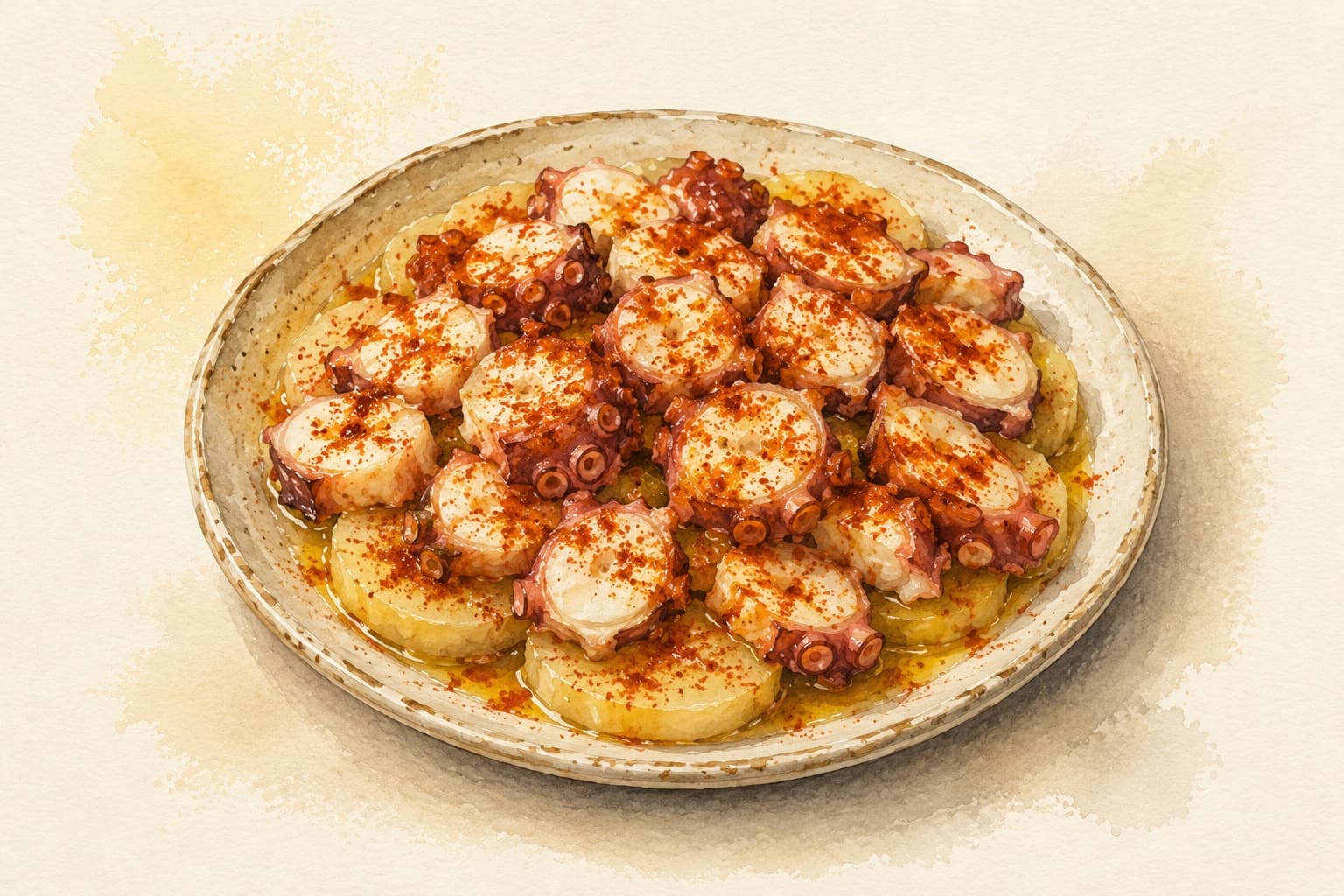
Slice the octopus into rounds and arrange on a plate with potatoes.
Drizzle with olive oil, sprinkle with smoked paprika and garnish with parsley.
Tools you'll want
Why this works
Boiling octopus requires precise temperature control. The initial high temperature tenderizes the meat while the subsequent simmering ensures even cooking. Maintaining a gentle boil prevents toughening. Seasoning the water enhances flavor absorption, creating a well-rounded dish.
The use of potatoes provides a hearty base and absorbs the flavors released during cooking. The octopus should be cooked until it is just tender, which allows for a delicate texture. Olive oil and smoked paprika add richness and depth to the flavor.
The visual presentation is essential. Arranging the octopus and potatoes artistically enhances the dish's appeal. The bright colors of paprika and parsley contrast with the octopus, making it visually inviting.
Common mistakes
Skipping the freeze-and-thaw step.
Target: Freeze octopus 24 hours, then thaw before cooking — or buy pre-frozen octopus (most are already frozen).
Why it matters: Freezing breaks down the muscle fibers — this is the traditional Galician tenderizing method. Fresh-cooked octopus is often tough; frozen-then-thawed octopus cooks to butter-soft.
What to do: Pre-frozen octopus is correct — defrost in fridge 24 hours. If fresh, freeze first.
Workarounds:
- Time-short → buy pre-frozen and thaw in cold water for 2 hours.
Boiling at full rolling boil.
Target: Bare simmer (85-90°C, small surface bubbles), not vigorous boil.
Why it matters: Hard boiling toughens octopus rapidly — the muscle contracts and squeezes out moisture. Slow simmer dissolves collagen (the tough connective protein in octopus muscle that turns to soft gelatin only with slow, gentle heat) gently, leaving the meat tender.
What to do: Bring water to boil briefly, then drop heat to maintain gentle bubbling. Cook 40-50 minutes for a 1 kg octopus.
Workarounds:
- Pressure cooker → 20 minutes at high pressure; reliable, faster, slightly less character.
Not "scaring" the octopus.
Target: Dip the octopus 3 times into the boiling water (hold by the head, dip-lift-dip-lift-dip) before fully submerging.
Why it matters: This traditional Galician technique (asustar el pulpo, "scare the octopus") curls the tentacles for a classic appearance and helps the skin contract evenly. Without it, the skin can sometimes slip off during cooking.
What to do: Hold octopus by the head with tongs. Dip into boiling water for 3 seconds, lift, repeat 3 times. Then submerge fully.
Workarounds:
- Without scaring → still cookable; expect uneven tentacle curl and looser skin.
Slicing too thick or too thin.
Target: 5-8 mm rounds of tentacle — chunky enough to chew, thin enough to absorb seasoning.
Why it matters: Thick slices are tough to bite through evenly. Thin slices lose the textural identity that makes pulpo special.
What to do: Slice with kitchen scissors (traditional Galician approach — cleaner cuts than a knife). Aim for uniform thickness.
Workarounds:
- Sharp knife works fine if scissors aren't available; just steady hand.
Wrong paprika.
Target: Spanish smoked paprika (pimentón de la Vera) — sweet (dulce) or hot (picante). NOT regular Hungarian or generic paprika.
Why it matters: The smoked oak-wood flavor of pimentón (Spanish paprika made from peppers dried over smouldering oak fires) is the signature of this dish. Regular paprika gives color but no smoke — completely different character.
What to do: Look for "pimentón de la Vera" specifically. Tin or jar from Spain is ideal.
Workarounds:
- No pimentón → smoked Hungarian paprika is the closest substitute (still not authentic).
Serving cold or on cold plate.
Target: Wooden plate, warm. Octopus and potato just-cooked, drizzled with warm oil + paprika at the table.
Why it matters: Cold pulpo loses its character — oil congeals, smoke aroma flattens. Traditional service uses warm wooden plates that gently warm the oil and release the paprika fragrance.
What to do: Warm plates in a low oven (60°C) before plating. Drizzle oil at the table.
Workarounds:
- No wooden plate → warmed ceramic plate works; just avoid cold/refrigerated plating.
What to look for
- Bright, vibrant color of the octopus.
- Tender texture when pierced with a fork.
- Potatoes should be soft but not mushy.
- A glossy sheen from the olive oil.
- A fragrant aroma of smoked paprika and fresh parsley.
Chef's view
"Pulpo a la Gallega" embodies the essence of Spanish coastal cuisine. Originating from Galicia, this dish highlights the region's rich maritime traditions. The careful preparation of octopus reflects a deep respect for ingredients.
The balance of simple yet bold flavors is a hallmark of Spanish cooking. Each component plays a crucial role, from the seasoning of the water to the finishing touches of paprika and parsley. This dish satisfies the palate and connects diners to the cultural heritage of Spain.
<!-- beginner-glossed v1 -->Get the essays in your inbox — free
Weekly notes on flavor, fermentation, and food history — the writing behind the Atlas of Flavor. No spam; unsubscribe anytime.