
Veal Piccata
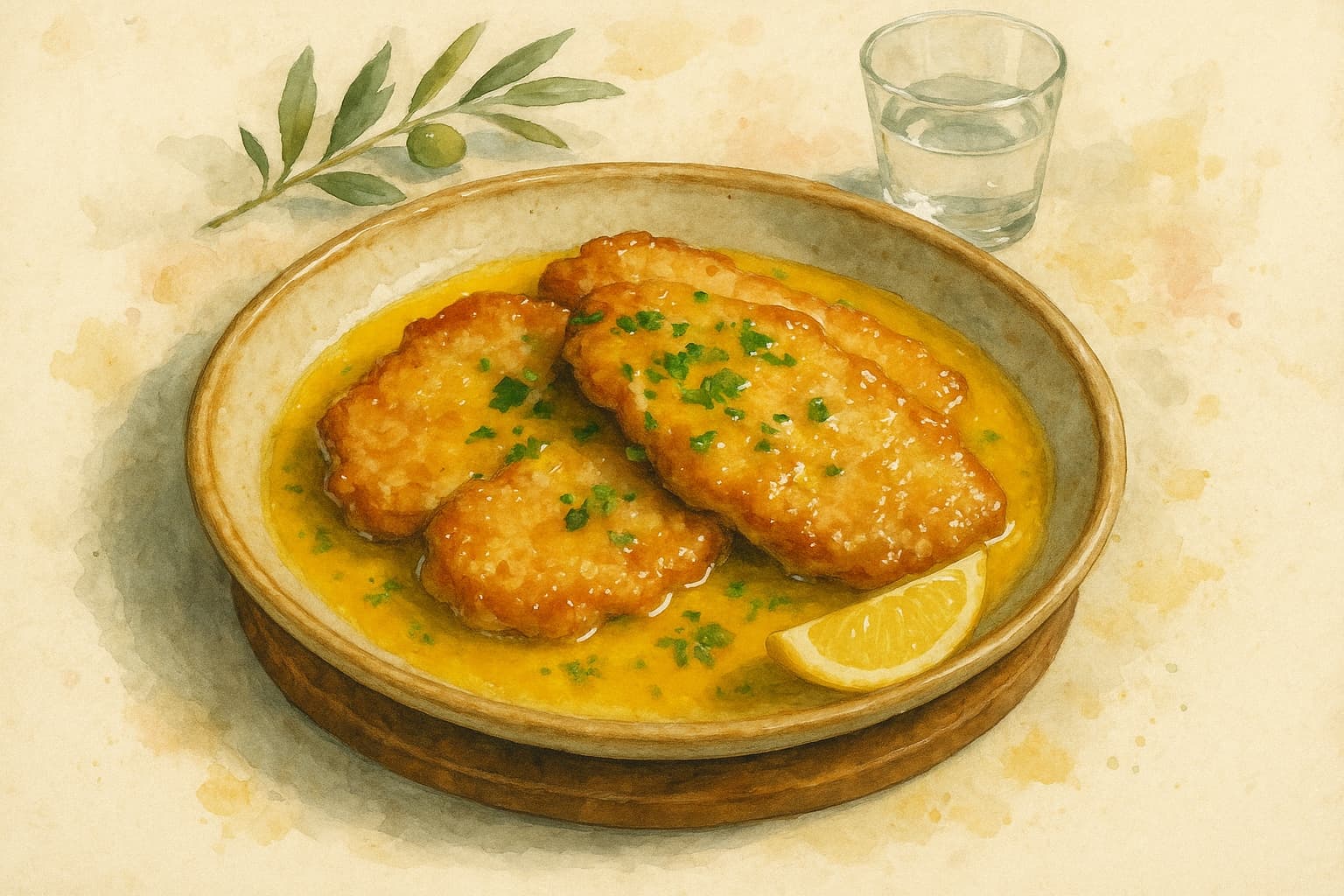
This recipe employs a simple technique of sautéing veal cutlets, enhancing flavor with a lemon-caper sauce.
Contents (5 sections)▾
Ingredients
- 1 lb veal cutlets, pounded thin
- 1/2 cup all-purpose flour
- 1/4 cup olive oil
- 1/4 cup unsalted butter
- 1/2 cup chicken broth
- 1/4 cup fresh lemon juice
- 2 tbsp capers, rinsed
- Salt and pepper, to taste
- Fresh parsley, for garnish
Steps
Season veal cutlets with salt and pepper.
Dredge each cutlet in flour, shaking off excess.
Heat olive oil and 2 tbsp butter in a skillet over medium-high heat.
Sauté cutlets until golden brown, about 3-4 minutes per side.
Remove cutlets and deglaze skillet with chicken broth, lemon juice, and capers.
Return cutlets to skillet, simmer briefly, and serve garnished with parsley.
Tools you'll want
- · Digital kitchen scale (gram precision)
Why this works
The key to a successful veal piccata lies in the technique of sautéing. Thinly pounded veal cooks quickly, allowing for a tender, juicy cutlet. The flour coating aids in browning and creates a light crust that enhances flavor. High heat is crucial; it promotes the Maillard reaction, resulting in a golden color and rich taste.
Deglazing the pan after cooking the veal captures the fond, the caramelized bits left behind. This adds depth to the sauce. Chicken broth and lemon juice combine for acidity, balancing the richness of the butter. Capers introduce a briny contrast, enhancing the dish's complexity.
Maintaining temperature is vital. The oil should shimmer but not smoke when cooking the veal. This prevents burning while ensuring proper searing. A brief simmer in the sauce melds flavors without overcooking the veal.
Common mistakes
Cutlets too thick.
Target: 3-5 mm thick — pounded between plastic wrap with a mallet to uniform thinness.
Why it matters: Thicker veal takes longer to cook → dries out before the exterior browns. Thin cutlets cook in 90 seconds per side, retaining tenderness while developing a golden crust.
What to do: Pound between plastic wrap with a meat mallet until uniformly thin.
Workarounds:
- No mallet → use the bottom of a heavy pan.
Flour applied wet or too thick.
Target: Light dust of flour just before frying. Shake off excess.
Why it matters: Heavy flour coats produce a gummy crust; wet/clumpy flour creates uneven browning. The flour's role is thin (form Maillard crust + provide sauce body when deglazed), not breading.
What to do: Pat veal dry first with paper towels. Dust, shake, fry immediately.
Workarounds:
- Gluten-free → rice flour or cornstarch work similarly.
Pan not hot enough.
Target: Oil shimmers but doesn't smoke before veal goes in — about 180°C.
Why it matters: Cool pan = veal poaches in its own juices, no Maillard crust. Too hot = burnt exterior, raw interior. The window is narrow because cutlets cook so fast.
What to do: Heat oil 1 minute in pan over medium-high before adding veal. Test with a flour scrap — should sizzle immediately.
Workarounds:
- Stove runs cool → preheat 2 min, use cast iron for thermal mass.
Overcrowding the pan.
Target: 2-3 cutlets max per batch in a 28 cm pan. Single layer with space.
Why it matters: Crowded pan drops temperature dramatically; cutlets steam instead of brown. Better to cook in two batches than overcrowd.
What to do: Work in batches. Reserve cooked cutlets on a warm plate while finishing the next batch.
Workarounds:
- Want to serve all at once → finish in a low oven (60°C) covered loosely with foil.
Boiling the sauce too long.
Target: Deglaze with stock + lemon juice + capers, simmer 60-90 seconds until lightly syrupy. Finish with cold butter off-heat.
Why it matters: Long reduction concentrates the lemon's bitter compounds and makes the sauce harsh. Short reduction keeps the brightness and the caper's marine pop.
What to do: Add liquids to hot pan, simmer briefly, off heat → butter swirl for the silky finish.
Workarounds:
- Want thicker sauce → cornstarch slurry (1 tsp), not longer reduction.
Skipping the parsley.
Target: Fresh parsley scattered at the end — flat-leaf preferred.
Why it matters: Beyond color, parsley adds a chlorophyll/grassy top note that cuts through the butter-lemon richness. The classic Italian finish.
What to do: Roughly chop just before serving; scatter generously.
Workarounds:
- No parsley → fresh basil or chervil work as alternatives, slightly different character.
What to look for
- Golden-brown crust on the veal.
- A fragrant, tangy aroma from the sauce.
- A glossy finish to the sauce, indicating emulsification.
- Tender veal that is firm but not tough.
- Fresh parsley garnish adding color and freshness.
Chef's view
Veal piccata (a thin-cutlet sauté finished in a lemon-and-caper pan sauce) represents the balance of simplicity and elegance in Italian cuisine. Originating from the southern regions, its bright flavors reflect the Mediterranean's bounty. The dish showcases how a few quality ingredients can create a sophisticated meal.
Traditionally, piccata can be made with other proteins, but veal (meat from young calves, prized for its mild flavor and tender texture) remains a classic choice. The technique involves respect for the meat, ensuring it retains moisture and tenderness. Capers (the small pickled flower buds of the caper bush, salty and briny) and a deglazing pass (pouring liquid into a hot pan to lift the browned bits into the sauce) are what tie the finish together. This dish satisfies hunger and evokes a sense of culinary heritage, making it a staple in Italian households.
<!-- beginner-glossed v1 -->Get the essays in your inbox — free
Weekly notes on flavor, fermentation, and food history — the writing behind the Atlas of Flavor. No spam; unsubscribe anytime.