
Patatas Bravas
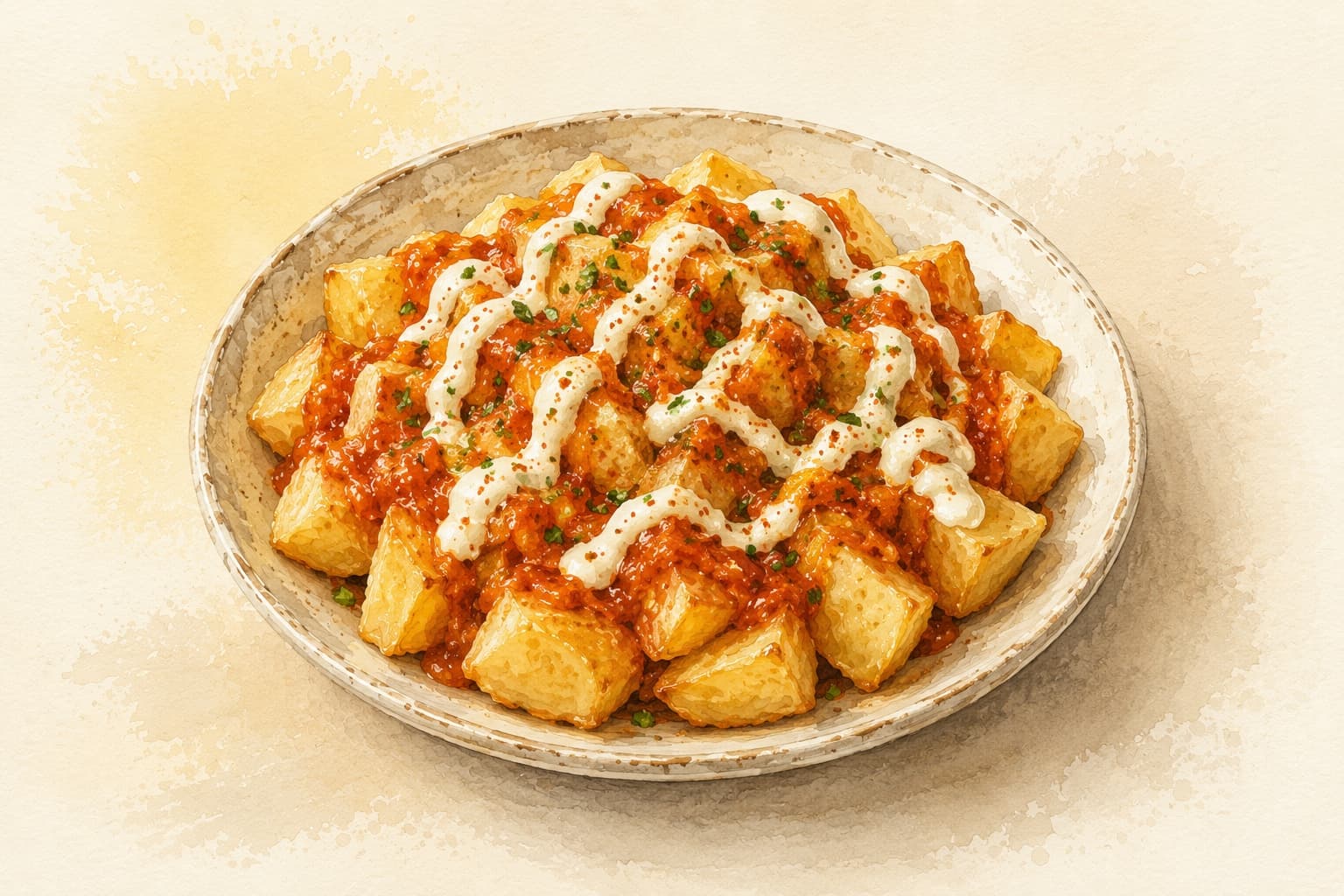
Crispy potatoes paired with a spicy tomato sauce deliver a classic Spanish tapas experience.
Contents (5 sections)▾
Ingredients
- 4 large potatoes, peeled and diced
- 1/4 cup olive oil
- 1 teaspoon salt
- 1 teaspoon paprika
- 1/2 teaspoon cayenne pepper
- 1 can (14 oz) diced tomatoes
- 2 cloves garlic, minced
- 1 tablespoon white vinegar
- 1 teaspoon sugar
- Fresh parsley for garnish
Steps
Preheat oven to 425°F (220°C).
Toss diced potatoes with olive oil, salt, paprika, and cayenne in a bowl.
Spread potatoes on a baking sheet and roast for 25 minutes until crispy.
In a saucepan, heat a little olive oil, sauté garlic until fragrant, then add tomatoes, vinegar, and sugar.
Simmer sauce for 10 minutes, blending until smooth.
Serve potatoes drizzled with sauce and garnish with parsley.
Tools you'll want
Why this works
The crispy texture of the potatoes arises from high roasting temperatures, which promote Maillard reactions. This reaction creates a golden crust, enhancing flavor. The spices, particularly paprika and cayenne, add depth and heat, balancing the dish. The sauce's acidity from tomatoes and vinegar cuts through the richness of the potatoes, providing contrast.
The simmering of the sauce allows flavors to meld, with the sugar balancing acidity. Blending the sauce achieves a smooth consistency, critical for even distribution over the potatoes. Using freshly minced garlic releases essential oils, adding aromatic qualities.
Common mistakes
Wrong potato variety.
Target: Starchy potatoes (Russet, Maris Piper, King Edward) — high starch, low moisture.
Why it matters: Waxy potatoes (red, fingerling, new potatoes) retain water and refuse to crisp — they stay creamy or pasty in texture. Starchy varieties release moisture as steam during cooking and develop a crisp shell.
What to do: Look at the cut surface — starchy potatoes look dry and fluffy; waxy potatoes look moist and dense.
Workarounds:
- Only waxy potatoes available → parboil 5 min, drain, dry thoroughly, then fry; helps but won't match starchy result.
Skipping the double-cook (par-fry + fry).
Target: First fry at 140°C until tender (5-8 min), drain, then second fry at 190°C until deeply crisp (2-3 min).
Why it matters: Single-temp frying either undercooks the inside or burns the outside. Double frying creates the classic patatas bravas texture: fluffy inside, crackly outside.
What to do: Thermometer, two separate frying sessions. Rest potatoes 5+ min between fries — gives steam time to escape.
Workarounds:
- Want oven version → roast at 220°C with hot oiled tray, flipping halfway; less crispy but functional.
Sauce too thin.
Target: Brava sauce reduced to thick, almost-spreadable consistency — coats the potato, not runs off.
Why it matters: Thin sauce slides off the crispy potato, defeating the purpose. The signature presentation shows sauce sitting on top, clinging in dollops.
What to do: Reduce sauce to coat-the-spoon thickness. Should fall slowly off a spoon, not run.
Workarounds:
- Sauce too reduced → thin with warm water, 1 tbsp at a time.
Wrong paprika.
Target: Spanish smoked paprika (pimentón de la Vera) — sweet or hot depending on preference. NOT generic paprika.
Why it matters: Pimentón provides the smoky depth that defines bravas sauce. Sweet Hungarian paprika gives color and gentle pepper but no smoke — completely different character.
What to do: Buy Spanish pimentón specifically; both dulce (sweet) and picante (hot) versions standard.
Workarounds:
- No pimentón → smoked paprika of any origin works; smoke is the key, not the country.
Saucing too far in advance.
Target: Sauce just before serving — potatoes drained, hot, then sauced.
Why it matters: Sauce on hot crisp potatoes for more than 5-10 minutes = sogginess. The crisp shell defends only briefly against moisture.
What to do: Have sauce warm and ready when potatoes finish frying. Dress at the moment of plating.
Workarounds:
- Make-ahead service → keep sauce warm, fry potatoes last; combine at the bar/table.
Serving without garlic alioli option.
Target: Many regional versions serve with both bravas sauce AND alioli (a Catalan garlic-and-olive-oil sauce, the cousin of French aioli) — diners choose or mix.
Why it matters: Madrid-style is bravas sauce only, but Catalan-style and many bars serve both. The contrast of spicy red + cool garlicky white is part of the classic tapas experience.
What to do: Make a small bowl of alioli alongside. Diners customize their bite.
Workarounds:
- No alioli → garlic mayonnaise is acceptable; not authentic but works.
What to look for
- Crisp exterior: Potatoes should be golden brown and crunchy.
- Smooth sauce: Look for a well-blended sauce that coats evenly.
- Aroma: The fragrance of roasted garlic and spices should be inviting.
- Color contrast: The vibrant red sauce should stand out against the potatoes.
- Garnish: Fresh parsley adds brightness and visual appeal.
Chef's view
Patatas bravas embody the essence of Spanish tapas culture (the tradition of small shared plates eaten with drinks at a bar). Originating from Madrid, this dish showcases regional variations, with each area adding unique twists. The adaptability of patatas bravas makes it a canvas for creativity, inviting experimentation with spices and sauces.
Historically, tapas are small plates meant for sharing, fostering social interaction. Patatas bravas, with their bold flavors and textures, encourage conviviality around the table. This dish reflects the Spanish philosophy of enjoying food as an experience rather than just sustenance.
<!-- beginner-glossed v1 -->Get the essays in your inbox — free
Weekly notes on flavor, fermentation, and food history — the writing behind the Atlas of Flavor. No spam; unsubscribe anytime.