
Panna Cotta
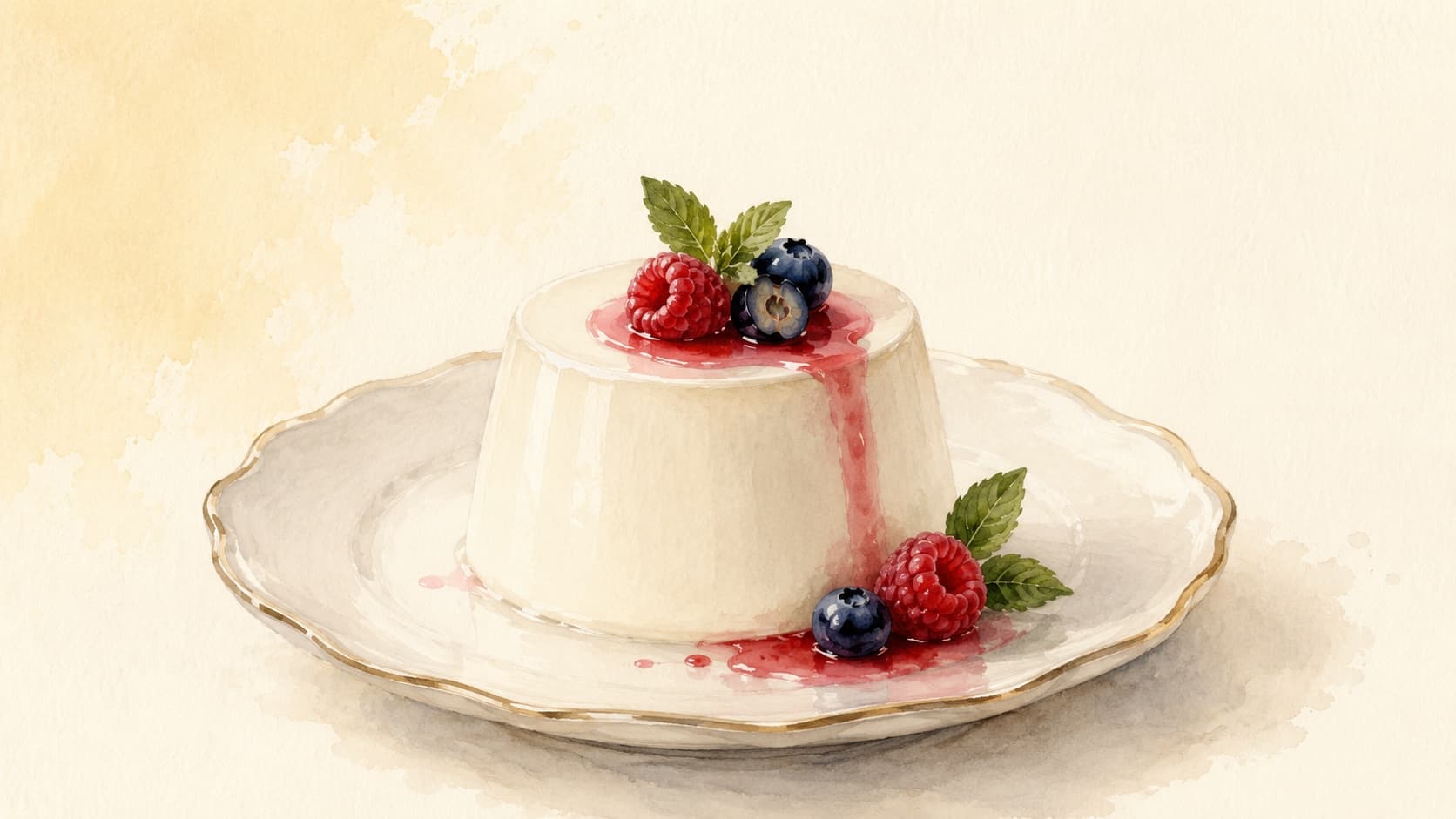
Panna Cotta is a structured dessert that combines cream, sugar, and gelatin to create a delicate, wobbly texture.
Contents (5 sections)▾
Ingredients
- 2 cups heavy cream
- 1/2 cup whole milk
- 1/2 cup sugar
- 1 packet (2 1/4 tsp) gelatin
- 1 tsp vanilla extract
- 1/4 cup cold water
- Pinch of salt
- Fresh berries for topping
Steps
In a saucepan, combine heavy cream, milk, sugar, and salt. Heat until sugar dissolves.
In a bowl, sprinkle gelatin over cold water. Let it bloom for 5 minutes.
Once the cream mixture is warm, remove from heat and stir in bloomed gelatin and vanilla.
Pour the mixture into molds and refrigerate for at least 4 hours until set.
To serve, gently unmold and top with fresh berries.
Tools you'll want
- · Digital kitchen scale (gram precision)
Why this works
Panna Cotta relies on the interaction between gelatin and heated cream. Gelatin needs to be dissolved in a warm liquid to activate its gelling properties. The ratio of cream to gelatin is crucial; too little gelatin will prevent proper setting, while too much will create a rubbery texture. The heavy cream provides richness, while the milk balances it out, creating a smooth mouthfeel.
Chilling is essential for the gelling process. Refrigerating the mixture for at least four hours allows the gelatin to fully set, resulting in a creamy dessert that holds its shape when unmolded. The addition of sugar sweetens and affects the texture, ensuring a soft and delicate final product.
Common mistakes
Wrong gelatin ratio.
Target: 1 tsp (about 3 g) powdered gelatin per 500 ml cream. Aim for "just set" — wobbles dramatically when nudged.
Why it matters: Too much gelatin produces rubbery, gummy panna cotta — texture like dessert eraser. Too little and it won't set at all (runny pool on the plate). The sweet spot is barely-holding-together.
What to do: Measure carefully. The signature of perfect panna cotta is the borderline collapse when unmolded.
Workarounds:
- Using sheet gelatin? 1 sheet (about 2 g) per 250 ml cream.
- For agar-agar (vegetarian), use 1/4 of the gelatin amount by weight — produces firmer, more brittle texture.
Not blooming the gelatin.
Target: Sprinkle powdered gelatin over 3 tbsp COLD water, let sit 5–10 minutes until spongy.
Why it matters: Gelatin dropped directly into hot cream forms lumps that won't dissolve. Blooming first lets each granule absorb water and pre-hydrate, so it melts cleanly into the warm cream.
What to do: Bloom first, ALWAYS. Sheet gelatin can be soaked in cold water for 5 minutes, then squeezed before use.
Workarounds:
- Skipped blooming and got lumps? Strain the mixture through a fine sieve.
Overheating the cream.
Target: Heat cream to 75–80 °C — just enough to dissolve sugar and gelatin. Never boil.
Why it matters: Boiling cream causes proteins to coagulate (creating grainy texture), evaporates volatile aromas, and degrades the gelatin's setting power.
What to do: Use a thermometer or watch carefully — small bubbles around the edges, no rolling boil. Pull from heat the moment sugar dissolves.
Workarounds:
- For vanilla infusion, heat cream + split vanilla bean to a bare simmer, off heat, steep 30 minutes, then re-warm gently to dissolve gelatin.
Pouring too hot.
Target: Cool the cream mixture to about 50 °C before pouring into molds.
Why it matters: Very hot cream poured into glass or ceramic molds can crack the molds. Hot cream also continues to "cook" any vanilla seeds, sometimes producing dark spots.
What to do: Let mixture cool 5–10 minutes after combining with gelatin. Stir occasionally to prevent gelatin from setting early.
Workarounds:
- For even cooling, place the pan in an ice bath for 2 minutes — speeds up the cool.
Skipping the strain.
Target: Pour mixture through a fine sieve before going into molds.
Why it matters: Even with proper blooming, occasional gelatin clumps form. Straining catches them — produces an absolutely silken final texture.
What to do: Use the finest sieve available. Pour directly through into molds.
Workarounds:
- For maximum smoothness, use a chinois (cone-shaped fine strainer) — restaurant-grade.
Unmolding too early or too hot.
Target: Chill 4+ hours minimum, 8 hours ideal. Unmold by dipping bottom of mold in WARM water for 5 seconds.
Why it matters: Under-chilled panna cotta collapses when unmolded. Over-warmed mold (hot water) melts the panna cotta's edges, distorting the shape.
What to do: Run a thin knife around the edge. Dip mold bottom in warm water briefly. Invert onto plate with confident motion.
Workarounds:
- For "no-unmold" panna cotta, serve in the glass — easier and equally elegant.
What to look for
- A smooth, glossy surface on the panna cotta.
- A slight wobble when gently shaken.
- A clean unmolding without cracks or tears.
- A creamy texture without lumps.
Chef's view
Panna Cotta, meaning "cooked cream," has roots in Northern Italy, particularly in the Piedmont region. Its simplicity showcases the quality of ingredients. The dessert serves as a canvas for various flavors, from vanilla to citrus. Mastering the basic recipe opens the door to endless variations and adaptations.
Culinary techniques such as precise heating and chilling play a crucial role in achieving the perfect panna cotta. This dessert exemplifies the balance between technique and ingredient quality, making it a familiar choice for both home cooks and professional chefs.
<!-- beginner-glossed v1 -->Get the essays in your inbox — free
Weekly notes on flavor, fermentation, and food history — the writing behind the Atlas of Flavor. No spam; unsubscribe anytime.