
Pan con Tomate
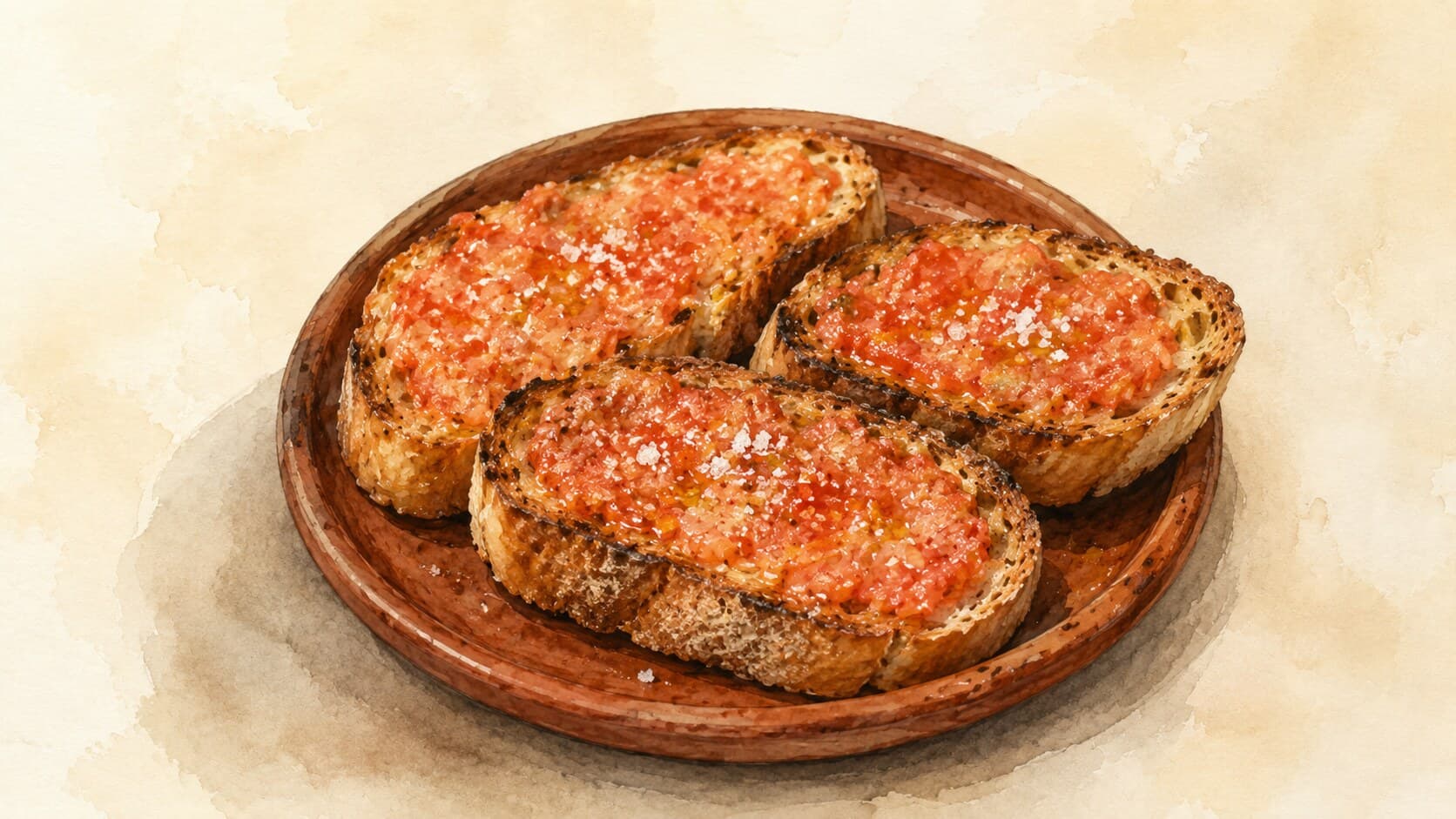
Pan con tomate is a simple yet flavorful Spanish appetizer showcasing ripe tomatoes on toasted bread.
Contents (5 sections)▾
Ingredients
- 4 slices country bread
- 1 large ripe tomato
- 1 clove raw garlic
- 60 ml extra-virgin olive oil
- flaky sea salt to taste
Steps
Preheat your oven or a toaster oven to 180°C (350°F).
Toast the country bread slices for 10 minutes, or until they reach a golden brown and crisp texture.
Once toasted, rub one side of each slice with the raw garlic clove to impart flavor.
Cut the ripe tomato in half and rub the cut side over the garlic-rubbed surface of the bread for 30 seconds, allowing the juices to soak in.
Drizzle the toasted bread with 1-2 tablespoons of extra-virgin olive oil and sprinkle with flaky sea salt to finish.
Why this works
The success of pan con tomate lies in its simplicity and the quality of its ingredients. Toasting the bread for precisely 10 minutes creates a crunchy canvas that enhances the texture and flavor of the toppings. Rubbing raw garlic gives a subtle kick without overwhelming the fresh tomato essence. The ripe tomato, when rubbed for at least 30 seconds, provides a juicy, sweet base that balances perfectly with the robust olive oil and flaky salt. If the tomato seems too dry, choose a riper one or add a touch more olive oil to ensure the bread is well-saturated and flavorful. This dish exemplifies the principle of minimalism in cooking, where less truly is more. The careful attention to time and temperature ensures that each element shines, creating a harmonious blend of flavors that is both rustic and refined.
Common mistakes
Soft, pale toast. Target: Bread that snaps when bent and has clear bronze edges; surface should sound hollow if you tap it. Why it matters: Pan con tomate is a structural dish — the toast is the floor for everything else. Soft bread soaks up the tomato juice and immediately turns soggy, the garlic has no rough surface to catch on, and the olive oil pools rather than absorbing. A properly toasted slice acts like a microplane against the garlic and tomato. What to do: Toast a touch longer than feels right; aim for deep bronze, not light tan. Press the edge with a fingertip — it should resist, not yield.
Rubbing tomato before garlic. Target: Raw garlic first, on warm, just-toasted bread; then tomato. Why it matters: The toast's rough crust acts like sandpaper, shaving raw garlic onto the surface; if tomato goes on first, the bread is wet and slick, the garlic slides instead of grating, and the flavor stays mostly on your fingers. There is also a small food-safety angle to raw garlic — start with a fresh clove with no green sprout and no soft spots. What to do: Halve the garlic clove, rub the cut face on the warm crust in short strokes until the surface looks faintly waxy, then move to the tomato.
Choosing an underripe, hard tomato. Target: A heavy, soft, fully red tomato that yields slightly to thumb pressure and smells distinctly of tomato at the stem. Why it matters: This dish is almost entirely tomato — there is no sauce to hide behind. A hard, pale tomato gives watery juice and tastes of cardboard. Ripe tomatoes carry sugars and glutamates (naturally occurring amino acids that taste meaty-savoury on the tongue) that read as savory-sweet (umami), which is the whole point of the bite. What to do: Buy by weight and smell, not colour alone. If only firm tomatoes are available, leave them stem-up at room temperature for a day or two until they smell of tomato.
Drizzling cheap, neutral oil at the end. Target: A clearly grassy, peppery extra-virgin olive oil, used generously over the finished toast. Why it matters: Finishing oil is half the flavor; a neutral oil contributes only fat with no perfume. Good extra-virgin oil also rounds the acid of raw tomato and binds it to the bread. Assemble fresh and eat soon — pan con tomate does not improve while waiting. What to do: Use a single-origin or DOP (a European protected-origin label that ties an oil to a specific region and quality standard) extra-virgin olive oil you already trust at the table; pour with the lid off, in a slow stream.
What to look for
- Toast with a hollow tap and bronzed edges, not gold. Light toast is a sponge; bronzed toast is a grater.
- A garlic-rubbed surface that looks slightly waxy and smells of sweet, fresh garlic — never burnt. If the garlic feels sticky, you have rubbed long enough.
- Tomato flesh that smears, not slides, leaving a thin, wet red film with a few visible seeds. Watery streaks mean the tomato was underripe; rebuild with a riper one.
- Olive oil that beads, then sinks slowly into the warm crust. That slow absorption is the visual cue that the bread temperature, oil grade, and toast level are all in balance.
A note on history
In Catalan, the dish is pa amb tomàquet (bread with tomato), and the form most people recognise today is the simple act of rubbing tomato into bread to revive it. Food historians often cite an 1884 written reference as one of the earliest documentary records, though oral traditions and earlier farmhouse practices clearly precede it. Catalan accounts describe it emerging from a practical problem: how to make stale bread edible again after a tomato harvest, with garlic, oil and salt doing the rest. The dish is still understood as a defining everyday gesture of Catalan cuisine (Chewing the Fat, The Spanish Eye).
Get the essays in your inbox — free
Weekly notes on flavor, fermentation, and food history — the writing behind the Atlas of Flavor. No spam; unsubscribe anytime.