
Paella Valenciana
A traditional Spanish dish structured around a base of rice, proteins, and vegetables, cooked in a single pan.
Contents (5 sections)▾
Ingredients
- 2 cups Bomba rice
- 4 cups chicken broth
- 1/2 cup olive oil
- 1 onion, diced
- 2 garlic cloves, minced
- 1 red bell pepper, sliced
- 1 cup green beans, trimmed
- 1/2 teaspoon saffron threads
- 1 pound chicken, cut into pieces
- 1/2 pound rabbit, cut into pieces
- 1 cup peas
- Salt to taste
Steps
Heat olive oil in a wide, heavy skillet over medium heat.
Add chicken and rabbit pieces, browning on all sides.
Stir in onion, garlic, and bell pepper; cook until softened.
Add rice, saffron, and broth; bring to a boil.
Reduce heat, add green beans and peas; simmer without stirring.
Cook until rice absorbs liquid and is tender, about 20 minutes.
Tools you'll want
- · Digital kitchen scale (gram precision)
Why this works
Paella Valenciana relies on a specific rice variety, Bomba, which absorbs liquid without becoming mushy. The layering of ingredients builds flavor complexity. Sautéing proteins first develops a fond, enhancing the overall taste. The saffron's infusion during cooking gives the rice its characteristic golden hue.
Temperature control is crucial. Starting at medium heat allows for browning, while reducing to low lets the rice simmer gently. This balance prevents burning while ensuring even cooking. Liquid ratios matter; too much broth leads to soupy rice, while too little causes dryness.
Common mistakes
Using the wrong rice.
Target: Bomba rice (or Calasparra DOP). These are short-grain Spanish varieties that absorb 3× their volume in liquid without releasing starch.
Why it matters: Bomba's defining feature is that it stays separate after cooking — each grain remains distinct. Long-grain rice (Basmati, Jasmine) and Italian rice (Arborio, Carnaroli) all release too much starch and produce a creamy, risotto-like texture — completely wrong for paella.
What to do: Source Bomba from a Spanish specialty store or online. It's worth it.
Workarounds:
- No Bomba? Use any other Spanish "arroz redondo" (round rice). Italian Vialone Nano is the next-closest.
- Absolute emergency: use sushi rice and accept a slightly stickier result. Better than long-grain.
Stirring the rice while cooking.
Target: ZERO stirring after the liquid is added. Just shake the pan occasionally to redistribute.
Why it matters: Stirring releases starch (turning paella into risotto) and disrupts the formation of socarrat — the prized crispy, caramelized rice crust at the bottom. The socarrat is the soul of paella; serious Spanish cooks fight for the corner pieces.
What to do: Pour the liquid, spread the rice evenly, set the timer, walk away (mostly). Listen for the crackling sound at the end — that's the socarrat forming.
Workarounds:
- If the rice on top is undercooked but the bottom is done, cover briefly with foil for 3 minutes to steam the top.
- For sure-fire socarrat, raise the heat for the final 90 seconds while listening for the crackle.
Overcrowding the pan.
Target: Rice in a layer no more than 1.5 cm deep across the entire pan.
Why it matters: The defining shape of a paella pan is wide and shallow for a reason — paella is technically a vegetable + protein dish "with rice," not the other way around. Deep rice doesn't cook evenly, fails to form socarrat, and produces a wet, gluey center.
What to do: Choose a pan that's wider than seems necessary for the rice quantity. A 38 cm pan for 4 people, 50 cm for 8.
Workarounds:
- No paella pan? A wide cast-iron skillet or a sheet pan (yes, oven paella works) is the next best.
- For small portions, make individual servings in 25 cm skillets.
Not letting it rest.
Target: 5–10 minutes rest covered with a clean kitchen towel after cooking.
Why it matters: Resting allows the rice to absorb the last of the residual moisture evenly and develops the textural distinction between the soft top and crispy bottom.
What to do: Once the rice is done, cover with a damp tea towel (not foil — too much steam), rest 5 minutes minimum, serve directly from the pan.
Workarounds:
- If resting time is too long, the bottom socarrat may turn from crisp to chewy as it absorbs moisture. Limit rest to 10 minutes max.
Skimping on the sofrito.
Target: Sofrito (tomato, onion, garlic, paprika) cooked down to a dark, almost-jammy paste — 15–20 minutes.
Why it matters: The sofrito is paella's flavor foundation. Underdeveloped sofrito means underdeveloped paella, no matter what protein you add later. Many home cooks rush this and end up with a pale, one-note result.
What to do: Cook the sofrito until it's nearly black-red and the oil separates around the edges. Smell test: should be deep, sweet, complex.
Workarounds:
- For time, make sofrito in batches and freeze in tablespoon portions. 1 tbsp per portion of rice.
- Quick-fix sofrito: 1 tbsp tomato paste + 1 tsp smoked paprika + 1 tsp brown sugar — cooked in oil for 3 minutes. Approximation, but workable.
Stirring saffron in dry.
Target: Bloom 1/4 tsp saffron threads in 2 tbsp warm stock for 10 minutes before adding.
Why it matters: Saffron's color and aroma are extracted into liquid — sprinkled dry, much of the flavor is lost to evaporation in the pan. Blooming captures everything.
What to do: Set up the bloom at the start of cooking; pour into the pan with the main stock.
Workarounds:
- For deeper color without more saffron, add 1/4 tsp smoked paprika to the bloom liquid.
- Avoid "saffron powder" — most is adulterated. Stick with whole threads.
What to look for
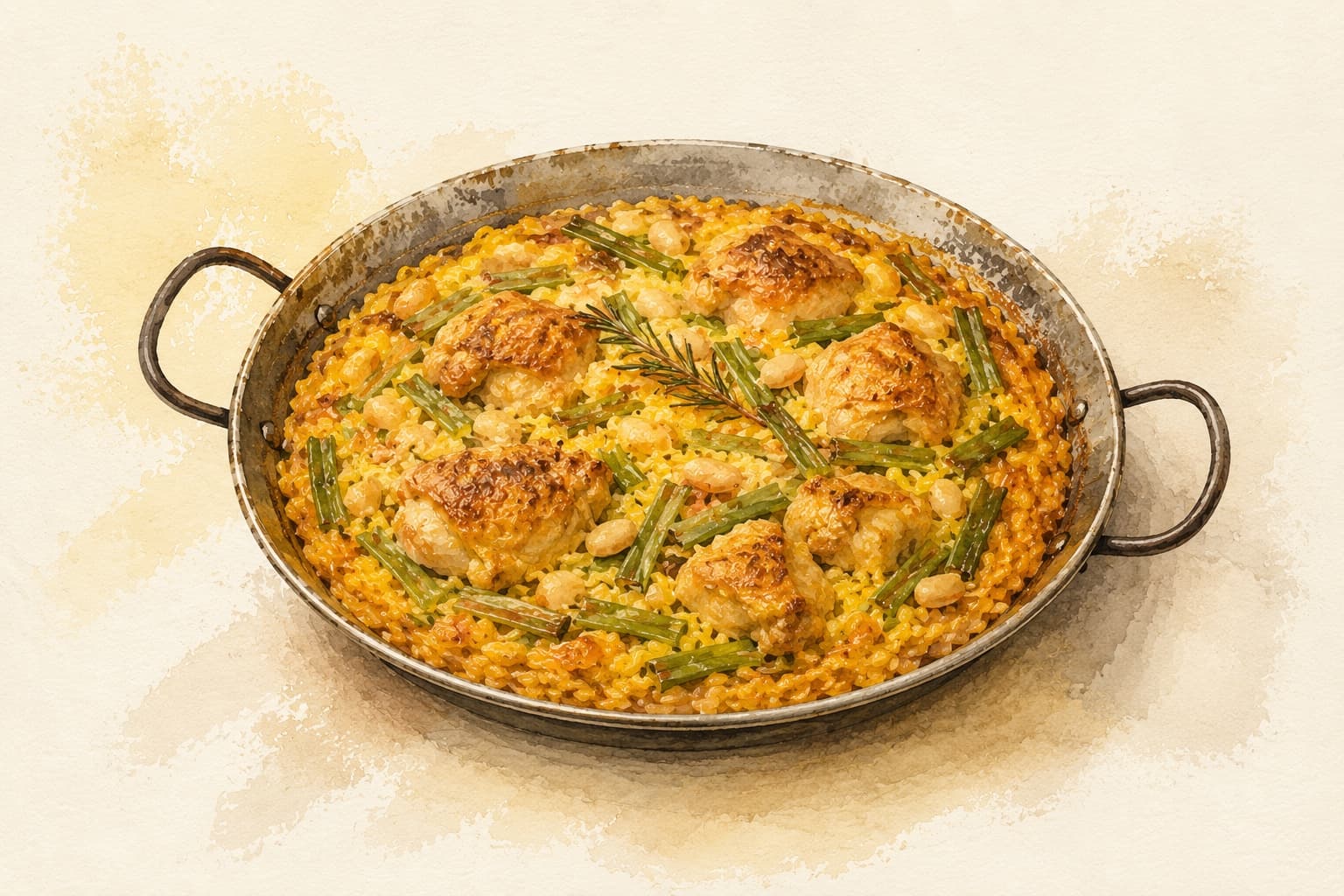
- A golden, crusty layer of rice at the bottom.
- Vibrant colors from the vegetables and saffron.
- Evenly cooked grains that are tender yet firm.
- A pleasant aroma of spices and cooked meats.
Chef's view
Paella Valenciana (the classic Valencian one-pan rice dish with rabbit, chicken, green beans, sometimes snails, cooked in a wide shallow pan over open flame) is steeped in cultural significance, originating from the region of Valencia. Traditionally cooked outdoors over an open flame, it embodies communal dining and celebration. The dish reflects local ingredients, showcasing seasonal produce and meats.
Mastering paella is about respect for technique and tradition. Each cook brings personal touches, yet the core principles remain. A well-executed paella takes patience and attention to detail, capturing the essence of Spanish culinary heritage.
<!-- beginner-glossed v1 -->Get the essays in your inbox — free
Weekly notes on flavor, fermentation, and food history — the writing behind the Atlas of Flavor. No spam; unsubscribe anytime.