
Pad Thai
A balance of flavors and textures defines this classic Thai stir-fry dish.
Contents (5 sections)▾
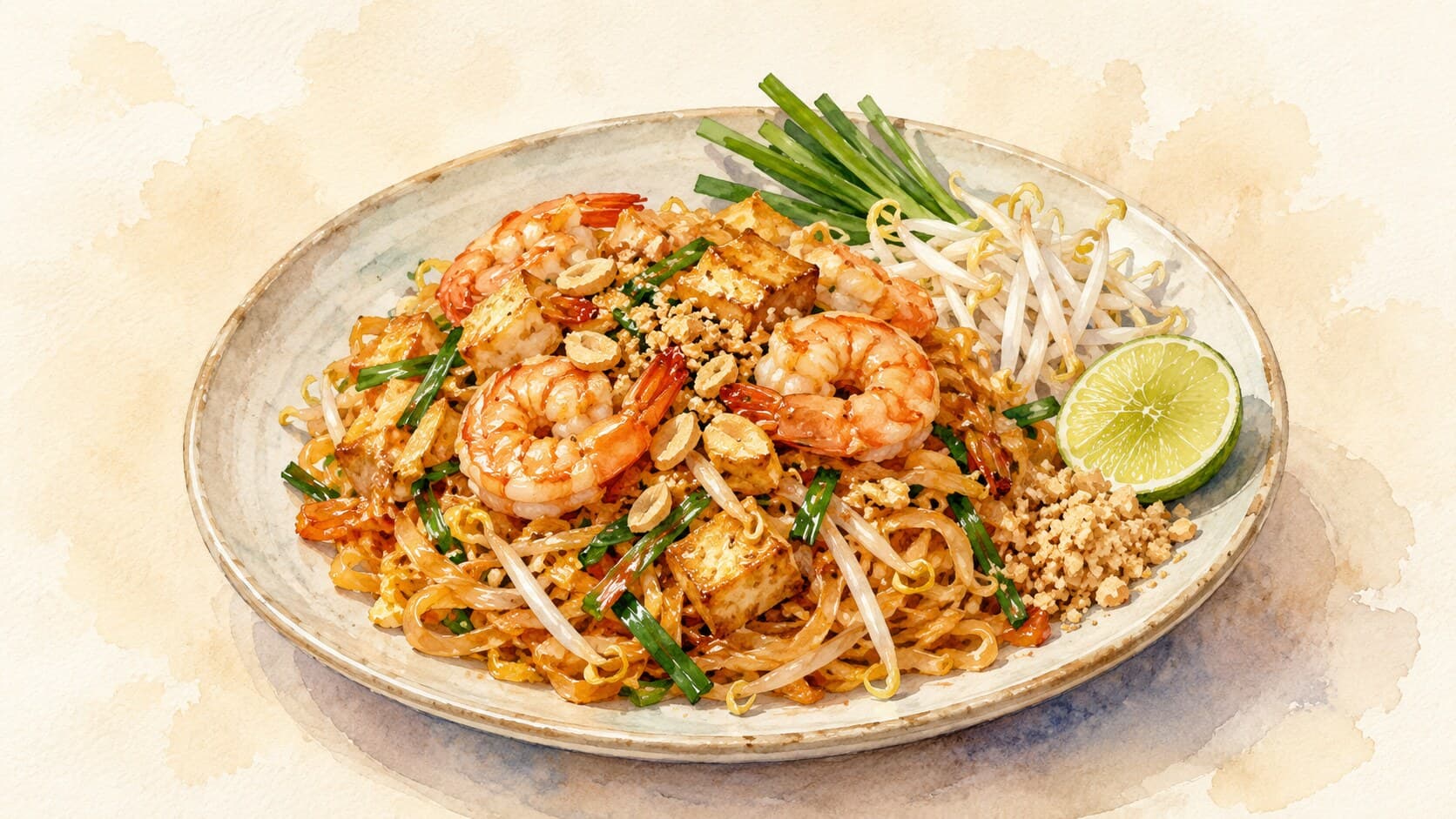
Ingredients
- 8 oz rice noodles
- 2 tbsp vegetable oil
- 1 cup tofu, diced
- 2 eggs, lightly beaten
- 1 cup bean sprouts
- 1/4 cup peanuts, crushed
- 3 green onions, chopped
- 1 lime, cut into wedges
- 1/4 cup fish sauce
- 2 tbsp sugar
- 1 tbsp tamarind paste
- 1 tsp chili powder
Steps
Soak rice noodles in warm water for 30 minutes until softened.
Heat oil in a wide skillet over medium-high heat; add tofu until golden.
Push tofu aside; pour in eggs and scramble until cooked through.
Add drained noodles, fish sauce, sugar, tamarind, and chili powder; stir-fry for 3-4 minutes.
Mix in bean sprouts and green onions; cook for another 1-2 minutes.
Serve garnished with crushed peanuts and lime wedges.
Tools you'll want
Why this works
Pad Thai thrives on a precise balance of ingredients. The rice noodles require soaking to achieve the right texture. They should be soft but not mushy. This allows them to stir-fry effectively, absorbing flavors without disintegrating. The high heat in a wide skillet promotes quick cooking, which helps maintain the crunch of bean sprouts and freshness of green onions.
The combination of fish sauce, sugar, and tamarind creates a complex flavor. Fish sauce adds umami, while sugar balances the acidity of tamarind. This interplay is crucial for achieving the signature taste. The cooking process should be quick to prevent sogginess in the noodles. Proper timing ensures that each component retains its integrity.
Common mistakes
Over-soaking the noodles.
Target: Soak in room-temperature water for 30–45 minutes until pliable but with a firm core. Do NOT use boiling water.
Why it matters: Rice noodles continue to hydrate during the stir-fry. If they're fully soft before they hit the wok, they turn to mush within 60 seconds of contact with the hot sauce.
What to do: Pull a strand and bend it around your finger — if it bends without breaking but is still slightly stiff, it's ready.
Workarounds:
- Forgot to soak ahead? Boiling-water shock for 2 minutes, drain, rinse cold to stop cooking.
- Over-soaked already? Reduce stir-fry time to under 90 seconds and skip the lid step.
Stir-frying in batches too large.
Target: Cook 1–2 portions max per round in a 30 cm wok.
Why it matters: Pad Thai depends on wok hei — the high-heat caramelization that happens when ingredients touch a 230 °C+ surface. Overloading the wok drops the temperature and turns stir-fry into steam.
What to do: Cook in batches if making for 4 people. Re-heat the wok between rounds.
Workarounds:
- No wok? Use the widest cast-iron skillet you own and pre-heat for 3 minutes longer than seems necessary.
- For very small home stoves, halve the portion and accept that batch-cooking is the price of texture.
Using a generic stir-fry sauce instead of building it.
Target: Tamarind paste + palm sugar + fish sauce in roughly equal volumes — adjust to ~1.5 tbsp each per portion.
Why it matters: Bottled "Pad Thai sauce" usually replaces tamarind with vinegar and palm sugar with refined sugar — the signature tart-funky-sweet trio collapses into one-note sweet.
What to do: Make the sauce fresh: dissolve palm sugar in fish sauce over low heat, stir in tamarind concentrate.
Workarounds:
- No tamarind? Use 1 tbsp lime juice + 1/2 tsp Worcestershire sauce per portion — close enough for an emergency.
- No palm sugar? Brown sugar with a pinch of molasses is the standard substitute.
Adding the eggs too late.
Target: Push the noodles to one side, pour the beaten egg into the cleared zone, let it set for 10 seconds, then break and toss.
Why it matters: Pouring egg over noodles already coated in sauce produces sticky, sauce-glazed egg ribbons that never set properly. The cleared zone gives the egg direct contact with the hot pan surface, producing fluffy curds that fold cleanly into the noodles.
What to do: Time the egg for the last 30 seconds of cooking.
Workarounds:
- For very hot pans, you can pour the egg directly over the noodle pile if you toss IMMEDIATELY — the residual heat scrambles it on contact.
Skipping the garnishes.
Target: Crushed roasted peanuts, lime wedge, fresh bean sprouts, garlic chives or scallion, dried chili flakes — all served on the side or scattered at the last second.
Why it matters: Pad Thai is engineered to be finished by the eater. The hot noodle base and cold/crunchy/acidic garnishes hit the mouth simultaneously — that contrast is the dish. Pre-mixed Pad Thai loses 40 % of its identity.
What to do: Serve everything in small bowls alongside the plate. Let each person dress their own.
Workarounds:
- No bean sprouts? Thinly sliced raw cabbage gives the crunch.
- No fresh lime? White vinegar (1/2 tsp per portion) covers the acid role at the cost of aroma.
What to look for
- Noodles should be soft but slightly chewy.
- Tofu should be golden brown on the edges.
- Bean sprouts should remain crisp and bright.
- The dish should have a balance of colors from various ingredients.
- Garnishes like peanuts and lime should be freshly added.
Chef's view
Pad Thai (a stir-fried rice-noodle dish balanced by tamarind, palm sugar, and fish sauce — Thailand's best-known street food worldwide) is a cornerstone of Thai street food culture. Traditionally, vendors serve it hot, offering a quick, satisfying meal. Its roots trace back to the influence of Chinese cuisine, adapting to local tastes and available ingredients. The dish showcases the balance of sweet, salty, and sour—hallmarks of Thai cooking.
The technique involves quick stir-frying, allowing for a mix of flavors and textures. Each ingredient contributes to the overall harmony. Mastering Pad Thai is about understanding these interactions, making it a familiar dish both in Thailand and globally.
<!-- beginner-glossed v1 -->Get the essays in your inbox — free
Weekly notes on flavor, fermentation, and food history — the writing behind the Atlas of Flavor. No spam; unsubscribe anytime.