
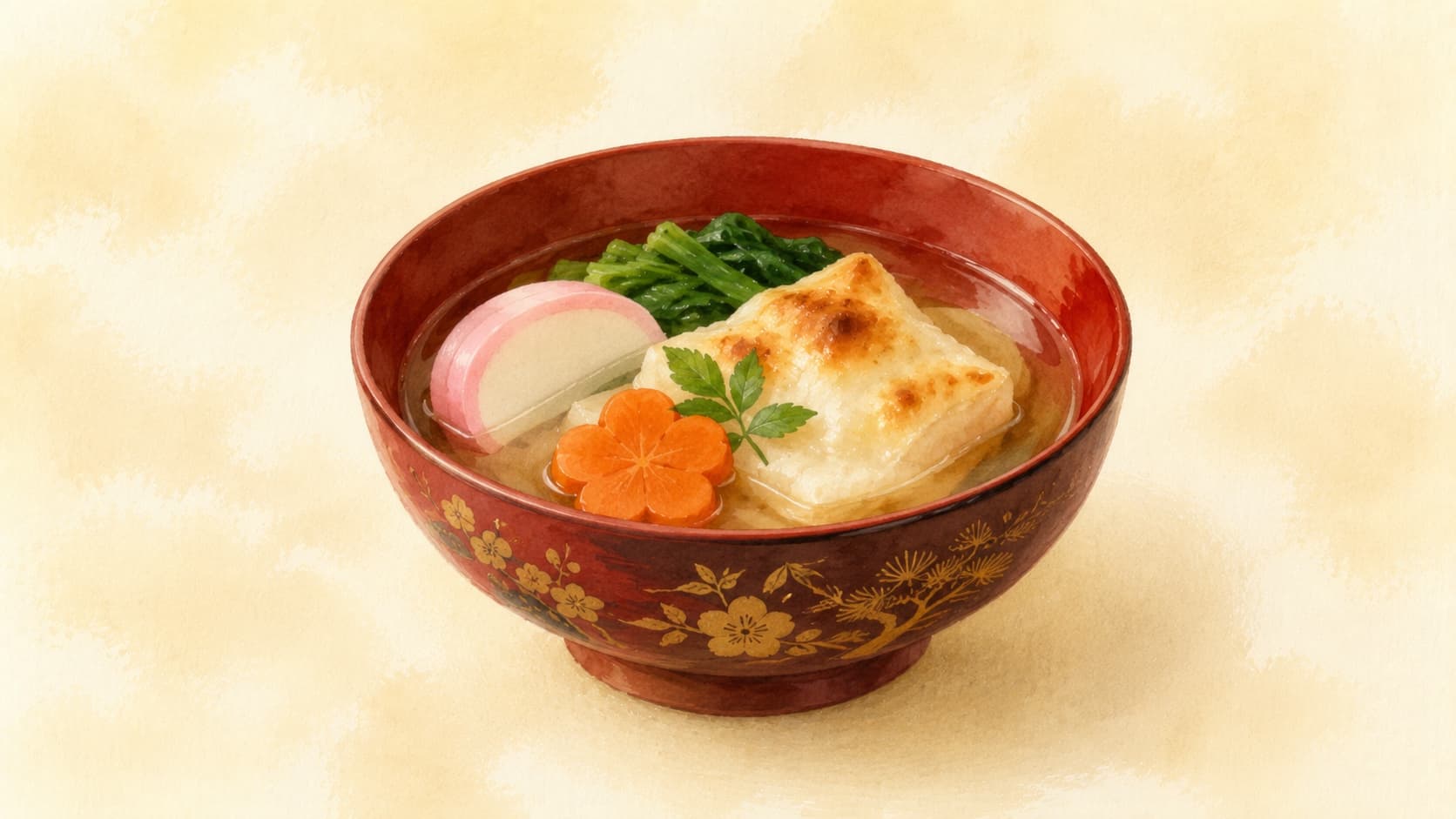
Ozoni
A traditional Japanese soup that varies regionally, emphasizing the use of mochi and seasonal ingredients.
Contents (5 sections)▾
Ingredients
- 4 pieces of mochi
- 1 liter dashi broth
- 200g daikon radish, sliced
- 100g carrot, sliced
- 100g shiitake mushrooms, sliced
- 100g spinach, blanched
- 1 tablespoon soy sauce
- 1 tablespoon mirin
Steps
Prepare dashi broth in a pot.
Add daikon, carrot, and shiitake mushrooms; simmer until tender.
Stir in soy sauce and mirin for flavor.
Toast mochi until golden and soft.
Place mochi in bowls and ladle broth with vegetables over it.
Garnish with blanched spinach before serving.
Tools you'll want
- · Digital kitchen scale (gram precision)
Why this works
Ozoni's base is dashi, a umami-rich broth. Using kombu and bonito flakes creates depth. The ratios of ingredients impact the flavor balance. The mochi provides texture, absorbing the broth's essence. Simmering vegetables at the right temperature ensures tenderness without losing their natural sweetness.
Proper heating is crucial. The broth should be simmering, not boiling, to prevent bitterness from the dashi. The mochi must be toasted to achieve a slight crispness, enhancing the overall mouthfeel.
Timing is essential. Adding ingredients in stages allows each to cook properly. Vegetables like daikon and carrot need longer to soften, while spinach only requires blanching for brightness.
Common mistakes
Boiling the dashi.
Target: Gentle simmer for the broth — never a rolling boil. Surface dimpling, not bubbling violently.
Why it matters: Hard-boiled dashi turns bitter — kombu's glutamate works at 60-80°C; above that, alginates leach and the broth gets a sticky, sour edge. Katsuobushi released at high boil also reads "fishy" rather than "umami-clean."
What to do: Bring dashi to a steady simmer. Add aromatics → simmer → never boil.
Workarounds:
- Already too hot? Drop heat and add a splash of cold water to lower temperature fast.
Mochi added straight to simmering broth.
Target: Toast or grill the mochi separately until golden and puffed. Add at the very end.
Why it matters: Mochi cooked directly in broth releases starch — broth gets cloudy and slimy. Toasted mochi has a Maillard crust that holds shape AND gives the savory-toasty contrast the dish depends on.
What to do: Toaster oven, grill, or dry pan until surface puffs and shows golden patches (about 5 minutes at 200°C). Place in bowl, ladle broth over.
Workarounds:
- Soft-style preferred (Kyoto round mochi tradition) → simmer in a separate pot of water, then add to bowl. Still avoid contaminating the main broth.
Adding all vegetables together.
Target: Stage by cook time. Daikon + carrot first (5-7 min). Shiitake next (3 min). Spinach blanched separately and added at the end.
Why it matters: Different vegetables have radically different cook times. Together, daikon stays raw or spinach turns olive-gray. Staged additions = each vegetable at its peak texture and color.
What to do: Plan the timing: hard root vegetables first, mushrooms middle, leaves at the end after blanching.
Workarounds:
- Save time → Pre-cook root vegetables in a separate batch ahead; combine in the final assembly.
Soy sauce too aggressive.
Target: 1 tbsp soy + 1 tbsp mirin per liter for Kanto-style. Tasting should reveal dashi first, soy/mirin as background.
Why it matters: Ozoni is a dashi-forward dish — soy sauce is supporting, not dominant. Overshot soy reads as "soup with mochi" rather than "ozoni" — the clarity and umami depth disappear under saltiness.
What to do: Use usukuchi (light) soy sauce for Kanto style — less color, more salt-per-volume. Adjust to taste only after the dashi is fully developed.
Workarounds:
- Stronger flavor preferred (Kansai miso-style ozoni) → 50 g white miso whisked into dashi at the end, no soy needed.
Mochi served too late.
Target: Plate immediately after toasting and assembly. Serve while broth is hot enough to slightly soften the mochi crust but mochi is still hot.
Why it matters: Cooled mochi rehardens quickly (retrograded starch). The window between "puffed-soft inside, crisp outside" and "rubbery brick" is about 5 minutes. Speed matters.
What to do: Toast mochi last, assemble immediately. Pre-warm bowls if possible.
Workarounds:
- Make-ahead service → keep mochi toasted but separate, broth simmering; assemble each bowl at the moment of serving.
What to look for
- A clear broth with a rich golden hue.
- Tender vegetables that maintain their shape.
- Mochi that is slightly crisp on the outside and soft inside.
- A balanced flavor that is umami-forward without being salty.
- Bright green spinach for a fresh finish.
Chef's view
Ozoni (a New Year's soup of mochi rice cakes in clear or miso-based broth) is deeply rooted in Japanese culture, often served during New Year celebrations. Its ingredients symbolize prosperity and longevity. Each region in Japan has its unique twist, reflecting local ingredients and traditions.
The process of preparing ozoni is a meditative experience. It encourages mindfulness in cooking, focusing on the quality of each ingredient. This soup embodies the essence of seasonal eating, making it a dish that connects people to their heritage.
<!-- beginner-glossed v1 -->Get the essays in your inbox — free
Weekly notes on flavor, fermentation, and food history — the writing behind the Atlas of Flavor. No spam; unsubscribe anytime.