
Monaka
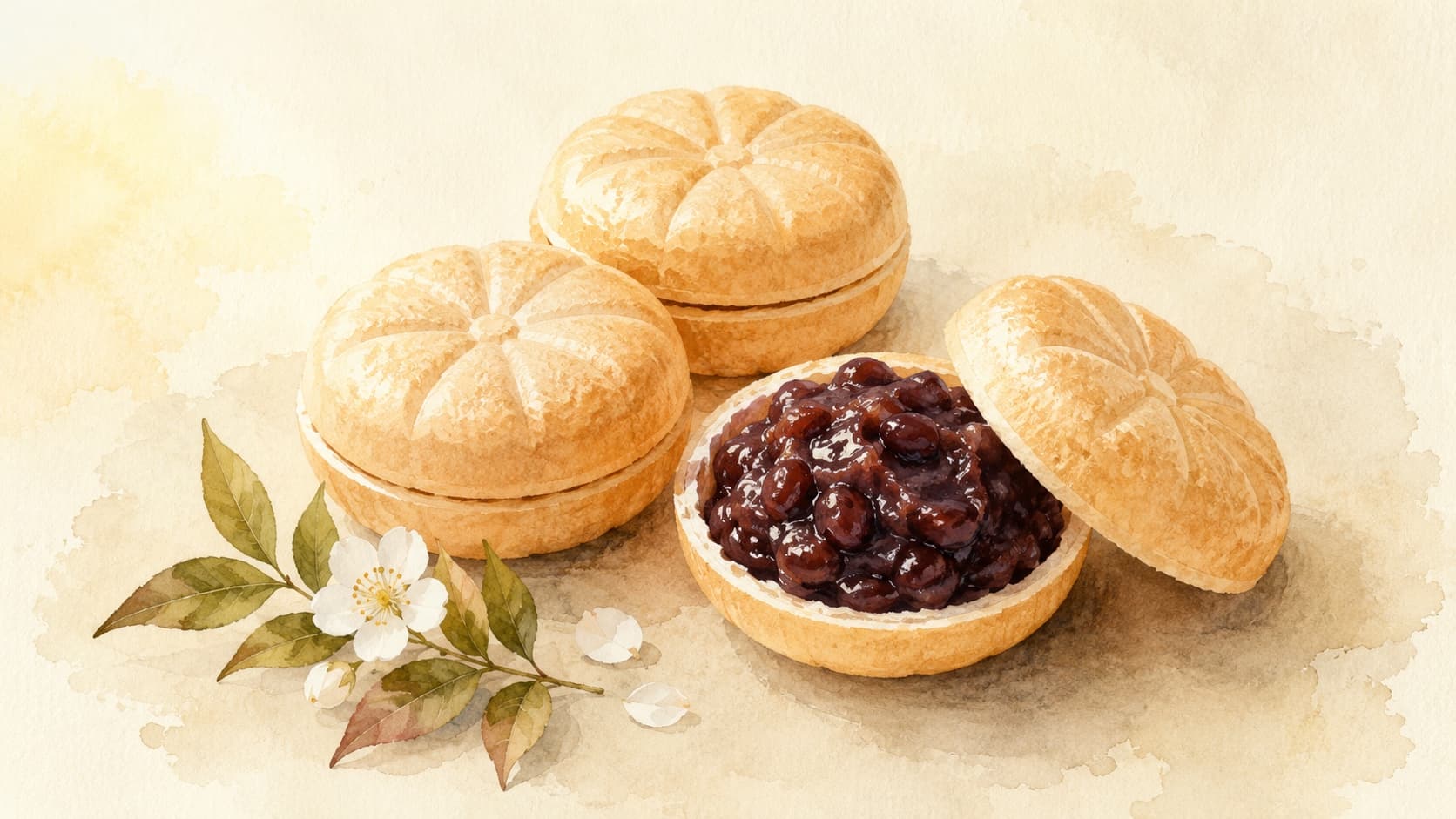
A delicate Japanese confection, Monaka features crisp wafers filled with sweet red bean paste.
Contents (5 sections)▾
Ingredients
- 100g sweet rice flour
- 50g sugar
- 180ml water
- 200g red bean paste (anko)
- 1 tsp matcha powder (optional)
- 1/2 tsp salt
- Cornstarch for dusting
- Vanilla extract (optional)
Steps
In a bowl, mix sweet rice flour, sugar, and salt.
Gradually add water, stirring until smooth.
Pour mixture into a non-stick pan and cook over low heat, stirring constantly until thick.
Remove from heat and let cool slightly; then mix in matcha or vanilla if using.
Dust a surface with cornstarch and roll the dough into thin sheets.
Cut into circles, sandwich red bean paste between two wafers, and let cool.
Tools you'll want
- · Digital kitchen scale (gram precision)
Why this works
Monaka relies on the right balance of sweet rice flour and water to create a pliable dough. The mixture thickens over low heat, ensuring a smooth texture. Cooking at low temperatures prevents burning and maintains moisture. Dusting with cornstarch helps in rolling out the dough without sticking.
The filling, typically red bean paste (anko — a sweetened paste made from cooked azuki beans, the cornerstone filling of Japanese sweets), offers a sweet contrast to the crisp wafers. The simplicity of ingredients allows for variations, such as adding matcha or vanilla. Proper cooling is crucial; it allows the wafers to firm up without becoming too hard.
Common mistakes
Trying to make wafers from scratch at home.
Target: Pre-made monaka wafers (種, tane) from a Japanese confectionery supplier — they're made on specialized waffle-iron molds that home kitchens don't have.
Why it matters: Authentic monaka wafers require professional iron molds to produce the characteristic crisp paper-thin texture. Home substitutes are usually disappointing. The dish is named after the wafers; bad wafers = bad monaka.
What to do: Buy gawa (皮) — pre-made empty wafers from Japanese groceries or online. The dish becomes an assembly project, not a baking project.
Workarounds:
- No access → adapt to dorayaki (pancake sandwich) format; different dish but similar flavor experience.
Filling wafers too early.
Target: Assemble immediately before serving — fill, sandwich, eat within minutes.
Why it matters: Anko's moisture migrates into the wafer over time — what was crisp becomes soft within 30 minutes. The signature texture contrast (crisp wafer + soft filling) requires fresh assembly.
What to do: Keep wafers and anko separately stored until serving. Fill at the table or just before plating.
Workarounds:
- Need to make ahead → wrap each filled monaka individually airtight; lasts a few hours but won't match fresh.
Using grocery-store sweet bean paste.
Target: Quality anko — either traditional koshian (smooth) or tsubuan (whole bean) from a Japanese confectionery, or homemade.
Why it matters: Cheap canned anko is overly sweet, lacks bean character, often has artificial flavors. The anko is half the dish; quality matters.
What to do: Buy from a Japanese supermarket's wagashi section, or make from scratch with adzuki beans + sugar.
Workarounds:
- Want texture variation → mix koshian + tsubuan 50/50; gives smooth base with bean piece highlights.
Anko too soft or too stiff.
Target: Anko firm enough to hold its shape, not running. Should mound when scooped, not flow.
Why it matters: Runny anko leaks out the edges, makes wafers soggy. Too-stiff anko doesn't bond to the wafer, falls apart.
What to do: Reduce store-bought anko in a small pan over low heat to thicken if too soft. Add 1 tsp warm water to loosen if too stiff.
Workarounds:
- Variation → fold in a small amount of cream cheese for richer, slightly looser modern version.
Skipping the seasonal variation.
Target: Vary the filling seasonally — chestnut paste in autumn, matcha-flavored anko in spring, white bean paste with yuzu in winter.
Why it matters: Monaka is a wagashi — the seasonal connection is part of the tradition. Same-anko monaka year-round misses the cultural framework.
What to do: Plan filling by season. Use chef's view in this entry as a starting point.
Workarounds:
- Year-round version → koshian + a small piece of fresh fruit (strawberry, peach) for seasonal accent.
What to look for
- Wafers should be crisp yet pliable.
- The color of the dough should be uniform and not burnt.
- Red bean paste should be visible, not oozing out.
- A light dusting of cornstarch should be apparent on the surface.
Chef's view
Monaka is a quintessential wagashi (traditional Japanese confectionery, usually made from plant-based ingredients and served with tea), a traditional Japanese sweet often enjoyed with tea. Its origins trace back to the Heian period, evolving through centuries. The craftsmanship in making Monaka reflects Japan's philosophy of simplicity and beauty. Each bite offers a balance of textures and flavors, exemplifying the art of Japanese sweet-making.
<!-- beginner-glossed v1 -->Get the essays in your inbox — free
Weekly notes on flavor, fermentation, and food history — the writing behind the Atlas of Flavor. No spam; unsubscribe anytime.