
Mole Poblano
Mole Poblano combines diverse ingredients to create a complex, layered flavor profile.
Contents (5 sections)▾
Ingredients
- 3 dried ancho chiles
- 2 dried guajillo chiles
- 1 medium onion, chopped
- 2 cloves garlic, minced
- 1/2 cup almonds, toasted
- 1/4 cup sesame seeds, toasted
- 1 cup chicken broth
- 1/4 teaspoon cinnamon
- 1/4 teaspoon cumin
- 2 tablespoons vegetable oil
- 1 tablespoon tomato paste
- Salt to taste
Steps
Toast dried chiles in a skillet until fragrant.
Soak toasted chiles in warm water for 10 minutes.
Blend chiles with onion, garlic, almonds, sesame seeds, chicken broth, and spices until smooth.
Heat oil in a skillet and sauté the sauce for about 10 minutes.
Add tomato paste and simmer for an additional 5 minutes.
Season with salt before serving.
Tools you'll want
Why this works
Mole Poblano achieves its depth through the careful balance of toasted chiles, nuts, and spices. Toasting the chiles enhances their flavor, while soaking rehydrates them for a smoother blend. The nuts and seeds add richness and a unique texture.
The temperature during sautéing (cooking quickly in a little hot fat to develop color and aroma) is crucial; a medium heat allows the sauce to develop without burning. The addition of tomato paste introduces acidity, balancing the richness from the nuts. The simmering process (gentle cooking at just below a boil so flavors blend without becoming harsh) melds the flavors, creating a cohesive sauce.
Common mistakes
Burning the chiles when toasting.
Target: Toast dried chiles in a DRY pan for 10–15 seconds per side — until fragrant, NOT smoking or blackening.
Why it matters: Burnt chiles taste acidic and bitter — once over-toasted, they ruin the entire mole (which depends on dozens of subtle flavor layers). Toasting is precise — releasing aromatics, NOT charring.
What to do: Watch carefully. The chiles should puff slightly and smell sweet-warm. Pull immediately.
Workarounds:
- Burnt a chile? Discard that one and start over with a fresh one. One burnt chile flavors the whole batch.
Skipping any ingredient.
Target: Mole poblano contains 20+ ingredients — chiles (multiple), nuts, seeds, raisins, plantain, chocolate, spices, garlic, onion, tomatillo, etc. Each plays a role.
Why it matters: Mole's depth comes from many layered flavors. Skipping ingredients (because you don't have them) produces a shallow mole. The complete recipe is the dish.
What to do: Source all ingredients before starting. Mole is a project — not a quick cook.
Workarounds:
- For absolute beginners, store-bought mole paste (Mexican brands: Doña María, Mayordomo) is acceptable as a starting point — thin with broth and add chocolate.
Wrong chocolate.
Target: Mexican chocolate (Ibarra, Abuelita, or similar) — coarsely ground, includes cinnamon.
Why it matters: Mexican chocolate is rough-textured and pre-spiced — it dissolves into mole differently than European chocolate. European dark chocolate is smoother and lacks the warming spice notes.
What to do: Source from a Latin grocery. Add at the end of cooking.
Workarounds:
- No Mexican chocolate? Bittersweet chocolate + 1 tsp cinnamon + a pinch of ground almonds approximates.
Not blending finely enough.
Target: Pass the blended mole through a fine sieve. Result should be SILKY-SMOOTH, no visible particles.
Why it matters: Authentic mole is smooth as cream. Chunky mole is undeveloped. The blending + straining step is the texture signature.
What to do: Blend in batches with broth for liquidity. Then strain through a fine sieve, pushing solids through with a wooden spoon.
Workarounds:
- High-speed blender (Vitamix) produces silky result without straining.
Insufficient simmer time.
Target: After blending, simmer the mole gently for at least 1 hour. Flavor improves with longer simmer.
Why it matters: Mole's complex flavors meld and round during the simmer. Served immediately after blending, it tastes raw and disjointed.
What to do: Plan a 2-hour simmer. Stir occasionally, adding more broth if it thickens too much.
Workarounds:
- Make the day before — mole improves OVERNIGHT. Reheat to serve.
Serving without rice.
Target: Serve over white rice with chicken or turkey, plus fresh tortillas alongside.
Why it matters: Mole is rich and concentrated — needs neutral starch (rice, tortillas) to dilute and balance. Mole alone is too much.
What to do: Plain Mexican rice (cooked with tomato broth) is traditional. Fresh corn tortillas for scooping.
What to look for
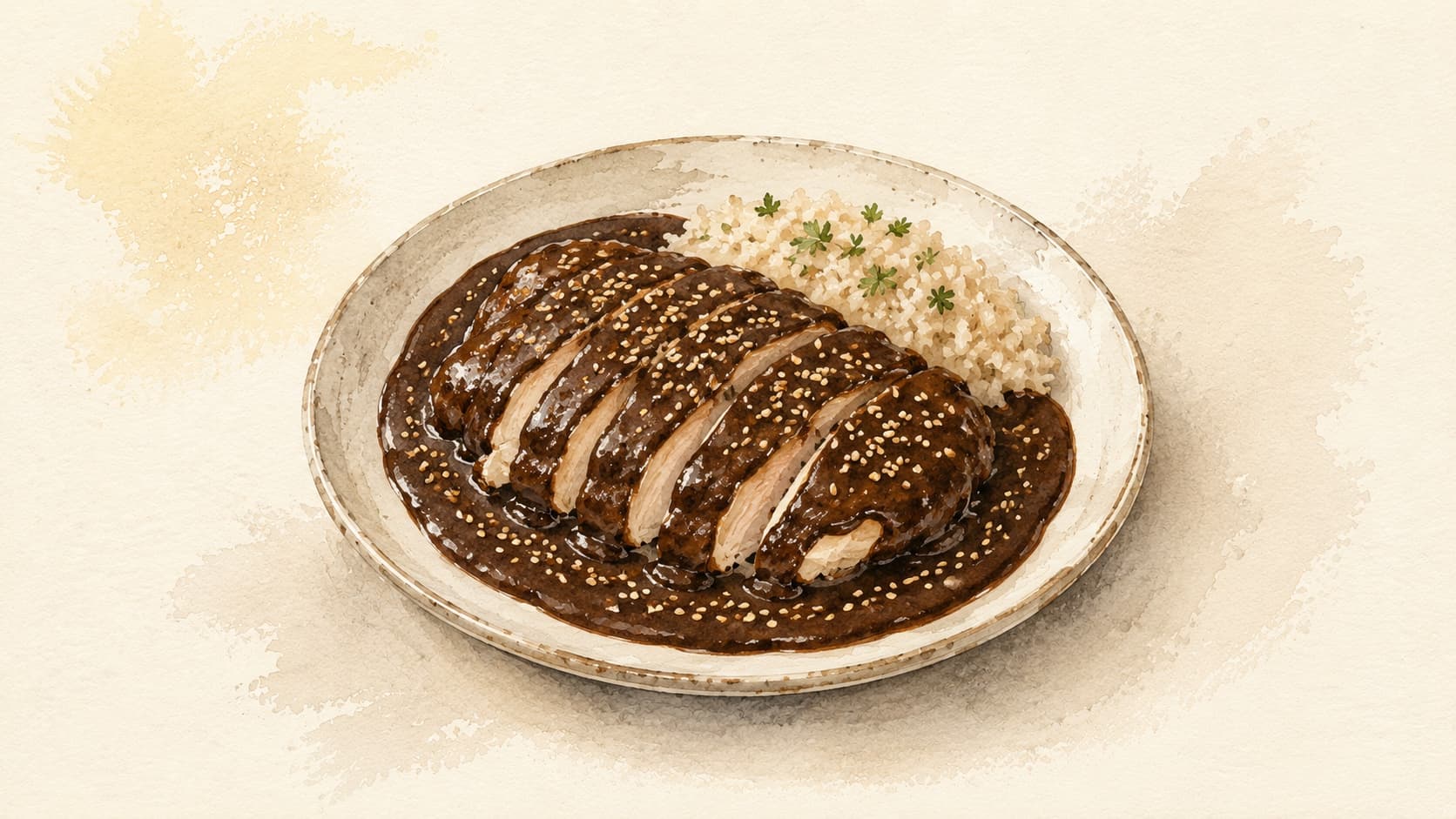
- A deep, dark color indicates proper toasting and blending.
- A smooth, glossy texture suggests a well-blended sauce.
- The aroma should be rich and complex, with hints of spice.
Chef's view
Mole Poblano is a staple of Mexican culinary tradition, representing the fusion of indigenous ingredients and Spanish influences. Its complex flavor reflects the effort put into its preparation. Each ingredient contributes to a story, reflecting the rich history of Mexican cuisine.
Creating mole is often a communal activity, symbolizing family and togetherness. The process is as important as the final product, allowing for personal touches and regional variations, making each batch unique.
<!-- beginner-glossed v1 -->Get the essays in your inbox — free
Weekly notes on flavor, fermentation, and food history — the writing behind the Atlas of Flavor. No spam; unsubscribe anytime.