
Miso Ramen
This dish combines rich miso broth with noodles and toppings for a balanced, umami-rich meal.
Contents (5 sections)▾
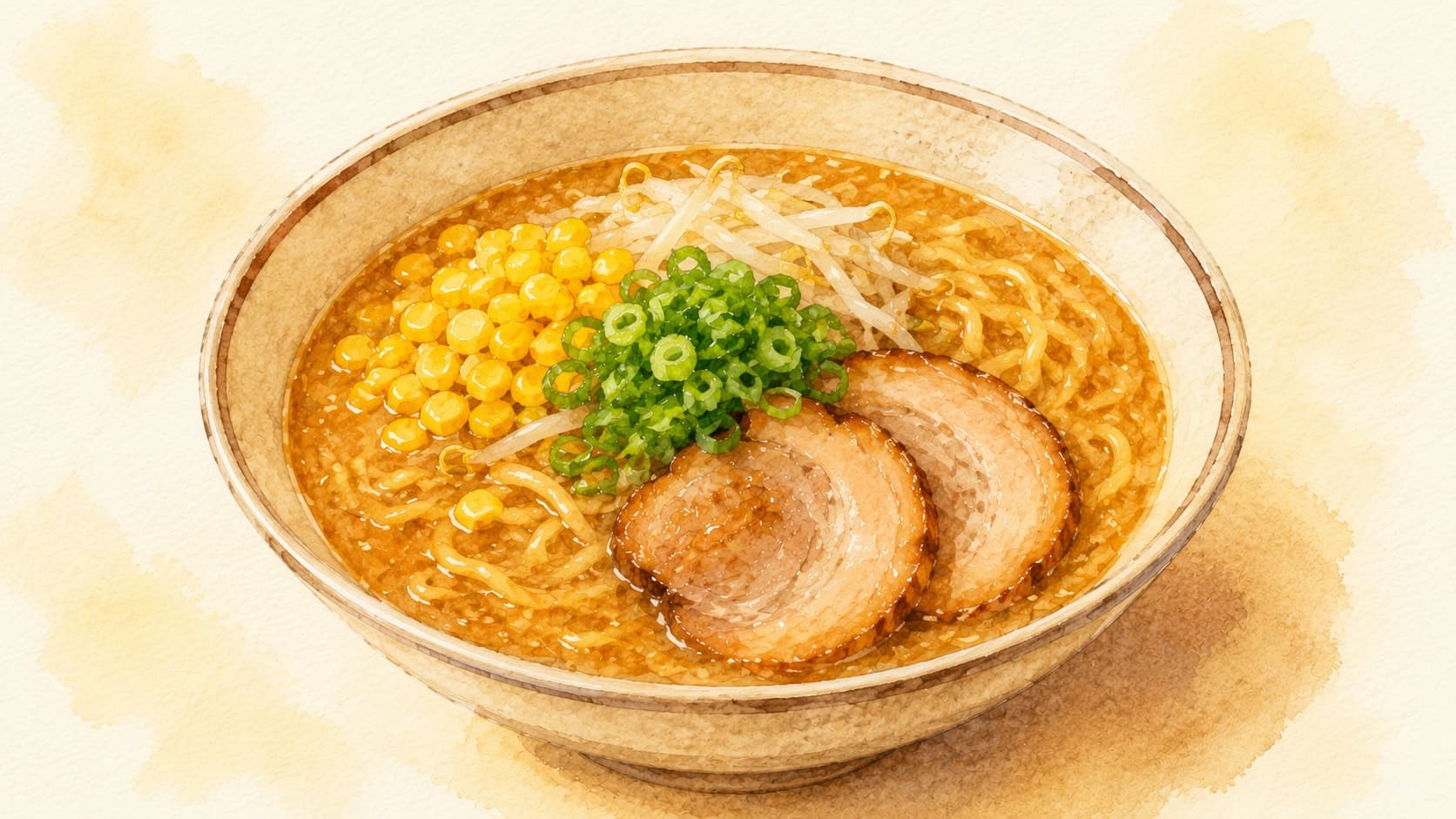
Ingredients
- 4 cups chicken broth
- 2 tbsp miso paste
- 1 tbsp soy sauce
- 1 tbsp sesame oil
- 300g ramen noodles
- 2 green onions, chopped
- 2 soft-boiled eggs
- 100g bean sprouts
Steps
In a pot, heat chicken broth over medium heat.
Stir in miso paste and soy sauce until dissolved.
Add sesame oil and bring to a simmer.
Cook ramen noodles according to package instructions.
Assemble bowls with noodles, broth, and toppings.
Garnish with green onions and serve.
Tools you'll want
- · Digital kitchen scale (gram precision)
Why this works
The key to a great miso ramen lies in the balance of flavors. Miso paste provides depth with its fermented umami (the savory "fifth taste" — meaty, brothy depth), while chicken broth adds richness. The simmering process allows flavors to meld, enhancing the broth's complexity. The ratio of miso to broth is crucial; too much miso can overpower. A gentle simmer prevents bitterness while maintaining the broth's clarity.
Cooking the ramen noodles separately ensures they retain their texture. Overcooked noodles turn mushy, disrupting the dish's integrity. The soft-boiled egg, with its creamy yolk, adds richness and a beautiful visual contrast. Proper assembly of the bowl enhances presentation and eating experience.
Egg-safety note: The soft-boiled egg has a set white and a soft, not-fully-set yolk — that texture is the point, but soft timing, the clock, and ladling hot broth over it are not a validated Salmonella kill. To keep the yolk soft, use a shell egg pasteurized in the shell, through to the contents; an ordinary egg that is only fresh, clean, washed, or graded is not pasteurized through the contents. For high-risk diners (pregnancy, immunocompromised, very young or old), use pasteurized eggs or boil the egg through to a fully-set yolk.
Common mistakes
Boiling the miso.
Target: Mix miso into the broth at the very end, off-heat or at the lowest simmer (under 80 °C).
Why it matters: Miso is a living fermented food — the koji enzymes and beneficial bacteria are heat-sensitive. Boiling kills both, robbing the soup of complexity. Even more critical: boiling miso causes the aromatic compounds to volatilize within minutes, leaving "salty soup" behind instead of "miso ramen."
What to do: Whisk miso into a separate ladle of warm broth first (avoids clumping), then add to each bowl just before serving.
Workarounds:
- For convenience, make a miso tare (3 tbsp miso + 1 tbsp mirin + 1 tsp soy + 1 tsp sake) and add a tablespoon per bowl as needed.
- If the broth must be heated with miso (e.g., for restaurant pre-prep), use low heat and never let it boil.
Using only white miso.
Target: Blend of red miso (aka) for depth + white miso (shiro) for sweetness — about 60/40 split.
Why it matters: White miso alone produces a sweet, mild broth without backbone — not "miso ramen," more like "white miso soup with noodles." The red miso provides the deep umami foundation that defines Sapporo-style miso ramen.
What to do: Buy both varieties (small containers each), keep refrigerated. They last months.
Workarounds:
- Only one miso available? Use whatever you have, but adjust: white miso alone → add 1 tsp soy sauce for depth; red miso alone → add 1 tsp mirin for sweetness balance.
- For a smoky variant, try Hatcho miso (deeply aged, almost meaty) for 20 % of the miso component.
Skipping the lard / aroma oil.
Target: 1 tsp lard or chashu fat + 1 tsp toasted sesame oil drizzled in each bowl.
Why it matters: Miso ramen's distinctive richness comes from the fat layer floating on top. The fat catches the aromatic compounds and delivers them to your nose with every sip. Without it, the soup tastes "watery" even when properly seasoned.
What to do: Heat the lard/oil briefly in a small pan; add to each bowl right before pouring the broth.
Workarounds:
- For deeper flavor, fry garlic + ginger in the lard for 2 minutes before adding — "miso-tare-aburi" style.
- Plant-based version: 1 tsp toasted sesame oil + 1 tsp coconut oil + a pinch of MSG for compensatory umami.
Wrong noodle.
Target: Yellow alkaline ramen noodles, slightly thick and wavy ("Sapporo cut").
Why it matters: Miso ramen evolved with thick, wavy alkaline noodles that hold up to the rich, fatty broth. Thin noodles get overwhelmed; egg noodles taste wrong; udon is a different category entirely.
What to do: Buy fresh alkaline ramen noodles from an Asian market. Thicker than tonkotsu noodles.
Workarounds:
- No fresh ramen noodles? Thick instant ramen noodles (just the noodles, discard the seasoning packet) work well.
- DIY alkaline noodles: boil any pasta with 1 tsp baking soda per liter to approximate the alkaline texture.
Forgetting the corn and butter.
Target: Sweet corn kernels + 1 tsp butter on top — the iconic Sapporo finishing touch.
Why it matters: Corn and butter aren't garnish; they're part of the architecture. The corn provides sweet bursts that contrast the savory miso; the butter melts into the broth and emulsifies the fat layer.
What to do: Use canned or fresh corn (kernels only). Place butter cube directly on the hot broth.
Workarounds:
- No corn? Edamame works as a less authentic substitute.
- For a heartier version, add stir-fried bean sprouts and ground pork on top (Sapporo-style chashu-don ramen).
Skipping the wok-fried vegetables.
Target: Bean sprouts + cabbage + green onion + ground pork stir-fried hard in lard, placed on top of the noodles.
Why it matters: Traditional Sapporo miso ramen has wok-hei flavored vegetables piled on top — they add textural variation and a smoky note that distinguishes the dish from other ramen styles.
What to do: Stir-fry the vegetables in a HOT pan with lard, 60–90 seconds total, light salt only. Pile on the noodles.
Workarounds:
- For simplicity, skip the pork and just stir-fry bean sprouts + cabbage.
- Mall food court version: skip the wok-fry entirely. Less authentic but a valid simplification.
What to look for
- A rich, glossy broth with a deep color.
- Noodles that are firm yet tender.
- Vibrant green from fresh toppings.
- A soft-boiled egg with a slightly runny yolk.
Chef's view
Miso ramen reflects a rich cultural heritage, combining simplicity with complex flavors. The technique of simmering (gentle cooking at just below a boil so flavors blend without becoming harsh) allows each ingredient to shine. Traditionally, ramen varies by region, influenced by local tastes and ingredients. This dish embodies the spirit of Japanese comfort food, inviting warmth and satisfaction in every bowl. The meticulous preparation honors the craft, making each serving a celebration of cultural identity.
<!-- beginner-glossed v1 -->Get the essays in your inbox — free
Weekly notes on flavor, fermentation, and food history — the writing behind the Atlas of Flavor. No spam; unsubscribe anytime.