
Minestrone
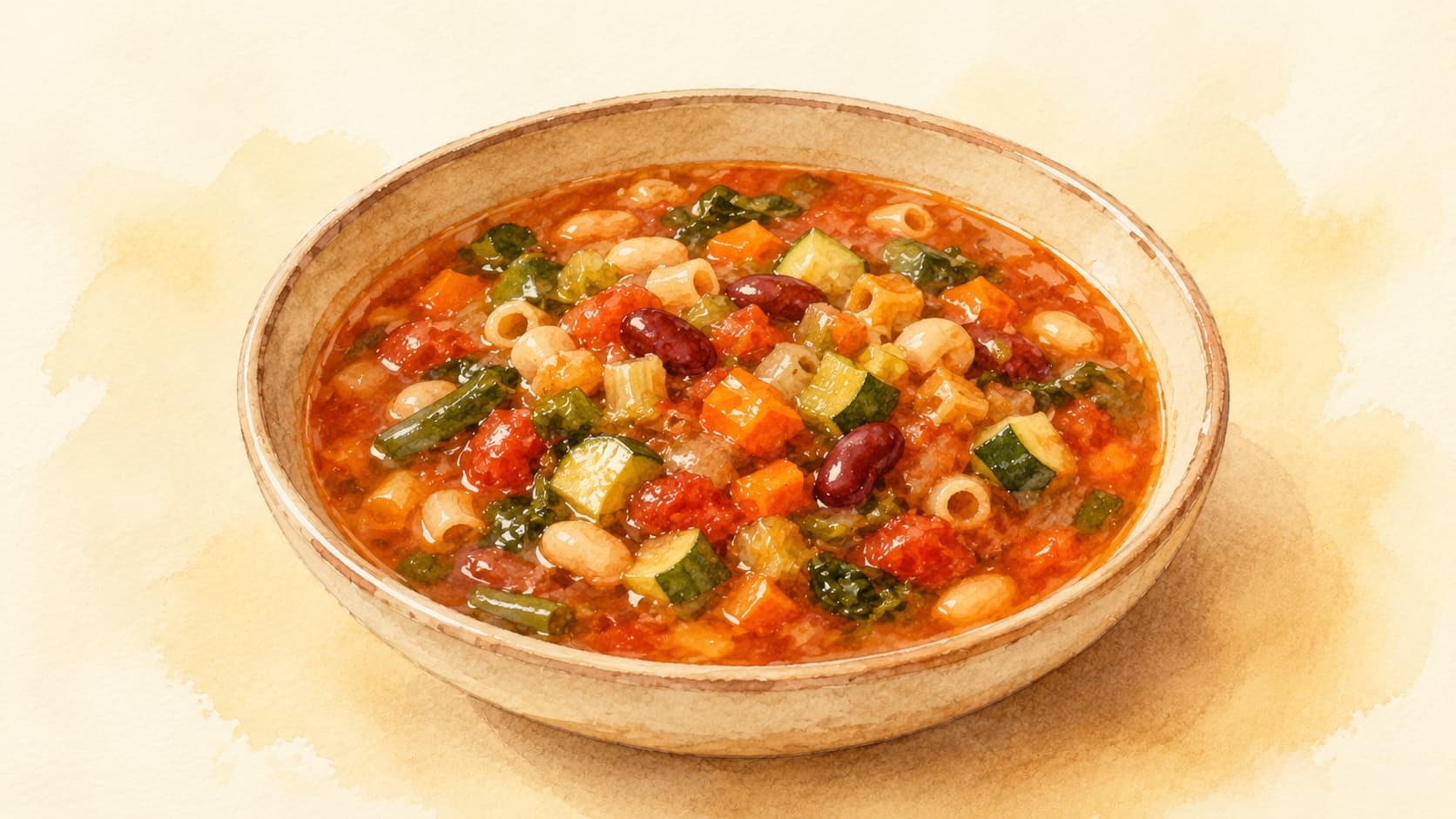
This hearty soup combines seasonal vegetables, beans, and pasta for a nourishing meal.
Contents (5 sections)▾
Ingredients
- 2 tablespoons olive oil
- 1 onion, diced
- 2 carrots, diced
- 2 celery stalks, diced
- 2 cloves garlic, minced
- 1 zucchini, diced
- 1 can (14 oz) diced tomatoes
- 4 cups vegetable broth
- 1 can (15 oz) cannellini beans, drained
- 1 cup small pasta (e.g., ditalini)
- 1 teaspoon dried oregano
- Salt and pepper to taste
Steps
Heat olive oil in a large pot over medium heat.
Add the onion, carrots, and celery; sauté until softened.
Stir in garlic and zucchini; cook for 2 more minutes.
Add tomatoes, broth, beans, and pasta; bring to a boil.
Reduce heat and simmer for 10-15 minutes until pasta is cooked.
Season with oregano, salt, and pepper; serve hot.
Tools you'll want
Why this works
Minestrone relies on layering flavors through sautéing (cooking gently in a small amount of fat over moderate heat). The initial vegetables release moisture and sweetness. This forms a flavorful base. Adding garlic and zucchini enhances the aroma and depth. Tomatoes contribute acidity, balancing the dish.
Simmering (cooking in liquid just below a full boil, with small surface bubbles) integrates the ingredients. The beans provide protein and creaminess. Pasta absorbs the broth, enriching the overall texture. A proper simmer allows flavors to meld without overcooking.
Seasoning is crucial. Salt enhances natural flavors. Fresh herbs add brightness at the end, creating a fresh finish.
Common mistakes
Not building a proper soffritto.
Target: 8-10 minutes sautéing the diced onion, carrot, celery in olive oil until soft and lightly golden — before any liquid.
Why it matters: Soffritto is the flavor foundation of Italian soups. Rushing it = thin one-dimensional broth. Properly cooked soffritto releases sugars and develops the savory depth that defines minestrone.
What to do: Medium heat, stir occasionally. Vegetables should soften and just start to color before tomato and broth go in.
Workarounds:
- Time-short → finely process the mirepoix in a food processor; smaller pieces sauté faster.
Adding pasta too early.
Target: Pasta in the last 10-12 minutes only. Drain timing matches package time minus 2 min (continues cooking in residual heat).
Why it matters: Pasta added at the start absorbs too much broth, becomes mushy, and thickens the soup unevenly. The al dente bite is the textural counterpoint to soft vegetables.
What to do: Time backwards from the meal — add pasta 12 min before serving.
Workarounds:
- Make-ahead → cook pasta separately, add at the bowl/serving level so it doesn't overcook in reheated soup.
Salt only at the end.
Target: Salt at three stages — soffritto, after adding tomatoes/broth, and final taste.
Why it matters: Each layer needs its own seasoning. Salt at the end only sits on top; staged salting integrates into vegetables, beans, and broth at the right moments.
What to do: Small pinch with soffritto, more with broth, final adjustment at the end.
Workarounds:
- Salt-restricted → use Parmesan rind in the broth for umami depth without added sodium.
Adding tender vegetables too early.
Target: Hardy vegetables first (carrots, celery, beans). Tender vegetables last (zucchini, spinach, fresh herbs).
Why it matters: Zucchini cooked for 30 min becomes mush; spinach cooked for 10 min turns olive-gray. Staged additions preserve color and texture variety.
What to do: Plan by cook time. Zucchini 10 min before end; leafy greens at the final 2 minutes.
Workarounds:
- Frozen vegetables → add at the timing for their fresh equivalent; they thaw fast.
Skipping the Parmesan rind.
Target: Parmesan rind (5-10 cm piece) simmered in the broth — fish out before serving.
Why it matters: The rind adds umami depth that no amount of regular seasoning can replicate. This is the Italian grandmother's secret — the broth becomes savory and rich without being heavy.
What to do: Save rinds in the freezer for soup use. Drop in with broth.
Workarounds:
- No rind → 1 tsp white miso or 1 anchovy mashed into the soffritto provides similar umami.
Boiling instead of simmering.
Target: Gentle simmer after liquids are added — small surface bubbles.
Why it matters: Hard boiling makes broth cloudy, breaks down vegetables unevenly, and concentrates salt faster than expected. Slow simmer lets flavors integrate.
What to do: Bring to a boil briefly to stabilize temperature, then drop heat to maintain steady gentle bubbling.
Workarounds:
- Need more body → simmer uncovered last 10 min to reduce; controlled by time, not high heat.
What to look for
- Bright colors from the vegetables.
- A fragrant aroma during cooking.
- Tender pasta without being mushy.
- A balanced flavor, not overly salty or bland.
- Fresh herbs on top before serving.
Chef's view
Minestrone is a traditional Italian dish that varies by region and season. It reflects local produce, emphasizing the importance of fresh, seasonal ingredients. This adaptability has made it a staple in Italian kitchens.
Historically, minestrone was a peasant dish, utilizing leftovers and whatever vegetables were available. It symbolizes resourcefulness and the Italian philosophy of "waste not, want not." Each bowl tells a story of local culture and home cooking, making it more than just a meal.
<!-- beginner-glossed v1 -->Get the essays in your inbox — free
Weekly notes on flavor, fermentation, and food history — the writing behind the Atlas of Flavor. No spam; unsubscribe anytime.