
Matcha Pudding
A delicate balance of matcha flavor and creamy texture creates a unique Japanese dessert.
Contents (5 sections)▾
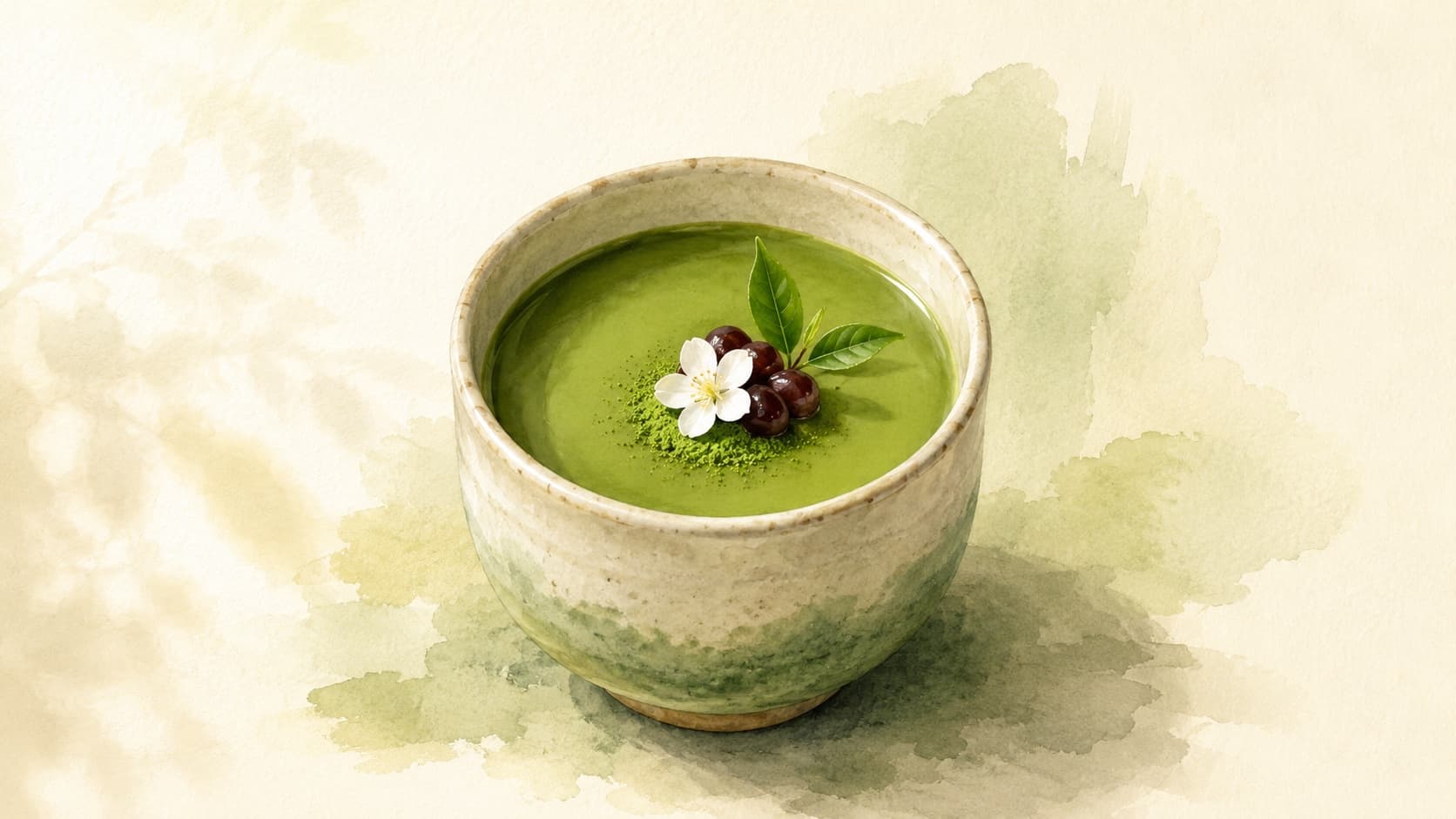
Ingredients
- 2 cups milk
- 2 tablespoons matcha powder
- 1/2 cup sugar
- 1/4 cup cornstarch
- 1 teaspoon vanilla extract
- 1/4 teaspoon salt
- 3 egg yolks
- 1 tablespoon unsalted butter
Steps
In a saucepan, whisk together milk, matcha powder, and sugar over medium heat.
In a separate bowl, mix cornstarch, salt, and egg yolks until smooth.
Once the milk mixture is warm, gradually add it to the egg mixture, whisking constantly.
Return the combined mixture to the saucepan and cook on low heat, stirring until thickened.
Remove from heat and stir in butter and vanilla extract until fully incorporated.
Pour the pudding into cups and refrigerate for at least 2 hours before serving.
Tools you'll want
- · Digital kitchen scale (gram precision)
Why this works
The key to a successful matcha pudding (a custard set with stone-ground green tea powder) lies in the careful temperature control during cooking. Heating the milk gently allows the matcha to dissolve completely, releasing its vibrant color and flavor. The cornstarch acts as a thickening agent, forming a smooth texture when heated and combined with the milk.
Maintaining the right balance of sugar enhances the sweetness without overpowering the matcha. The addition of egg yolks contributes richness and stability, while the butter adds creaminess and a glossy finish to the pudding. Chilling the pudding allows it to set properly, resulting in a firm yet delicate consistency.
Common mistakes
Adding matcha directly to milk.
Target: Sift matcha into a small bowl, whisk with 2 tbsp warm water first to form a smooth paste — then add to milk.
Why it matters: Matcha powder clumps in hot liquid; particles refuse to disperse evenly. Pre-pasting eliminates lumps. The classic Japanese tea ceremony technique applies here.
What to do: Strainer + small bowl, whisk vigorously with warm water until paste is smooth. Then incorporate into the warm milk.
Workarounds:
- Want fastest result → use a small electric milk frother to make the paste — faster than whisking.
Boiling the milk too hot.
Target: Heat milk to 80-85°C, never boil. Matcha is heat-sensitive.
Why it matters: Boiling milk destroys matcha's delicate aromatic compounds — the vivid grassy character becomes flat and bitter. The vibrant green color also dulls past 85°C.
What to do: Thermometer. Pull from heat at 80°C, off-heat heat continues to climb to 85°C.
Workarounds:
- No thermometer → watch for steam + tiny bubbles around the edges; pull before center boils.
Not straining the mixture.
Target: Strain through fine-mesh sieve before pouring into molds.
Why it matters: Even with whisking, small lumps of matcha or coagulated egg can form. Straining = silky smooth pudding. The difference between "okay" and "restaurant-quality."
What to do: Pour through fine mesh into a pouring jug, then into molds.
Workarounds:
- No fine mesh → cheesecloth or coffee filter; slower but works.
Adding eggs without tempering.
Target: Temper eggs: gradually whisk small amounts of hot milk into the egg yolks before combining everything in the pan.
Why it matters: Pouring egg yolks directly into hot milk scrambles them — you get yellow flecks in the pudding. Tempering brings the eggs up to temperature gradually.
What to do: Ladle by ladle, whisk hot milk into bowl of yolks. 3-4 ladles before pouring the whole thing back into the pan.
Workarounds:
- Want extra insurance → strain again after tempering, before final cook.
Insufficient chilling.
Target: Minimum 4 hours, ideally overnight in fridge.
Why it matters: Pudding sets through gelatin or starch cooling slowly — quick chill at room temp = loose center. Overnight rest also lets flavors develop.
What to do: Plan ahead. Pour into molds while warm, cover with plastic film to prevent skin, refrigerate.
Workarounds:
- Time-short → freezer for 1 hour can speed it up, but only partially.
Using low-quality matcha (cooking grade for hot drinks).
Target: Culinary-grade matcha specifically for baking and desserts — not premium ceremonial grade (too expensive, flavor wasted in pudding).
Why it matters: Top-tier ceremonial matcha is designed to shine in plain water — its subtleties get lost in milk and sugar. Culinary grade is bolder, designed for mixing, and more cost-effective.
What to do: Look for "culinary grade" or "baking grade" labels. Slightly less expensive than ceremonial.
Workarounds:
- Only have ceremonial grade → use 25% less; it's intensely flavored.
What to look for
- A smooth, glossy surface on the pudding.
- A vibrant green color that indicates proper matcha incorporation.
- A firm yet jiggly texture when gently shaken.
- No lumps or graininess in the pudding.
- A subtle aroma of matcha and vanilla.
Chef's view
Matcha pudding reflects the Japanese philosophy of simplicity and balance. This dessert celebrates the unique flavor of matcha, a finely ground green tea powder used in Japanese tea ceremonies. The technique used to create this pudding emphasizes precision in temperature and timing, key elements in both cooking and the art of tea.
The pudding's creamy texture and delicate sweetness make it a versatile dessert, suitable for various occasions. It serves as a reminder of the beauty in Japanese cuisine, where the focus is on enhancing natural flavors and creating harmony between ingredients.
<!-- beginner-glossed v1 -->Get the essays in your inbox — free
Weekly notes on flavor, fermentation, and food history — the writing behind the Atlas of Flavor. No spam; unsubscribe anytime.