
Massaman Curry
This dish combines rich flavors and textures through a balance of spices and slow-cooked ingredients.
Contents (5 sections)▾
Ingredients
- 1 lb beef, cubed
- 1 can coconut milk (13.5 oz)
- 2 tbsp Massaman curry paste
- 2 medium potatoes, cubed
- 1 onion, chopped
- 1/4 cup peanuts, roasted
- 1 tbsp fish sauce
- 1 tbsp brown sugar
Steps
In a wide heavy skillet, heat coconut milk over medium heat.
Add Massaman curry paste; stir until fragrant.
Incorporate beef; cook until browned.
Add potatoes and onion; stir well.
Pour in fish sauce and brown sugar; simmer until potatoes are tender.
Top with roasted peanuts before serving.
Tools you'll want
Why this works
Massaman Curry (a mild Thai curry with Persian-Indian spice influence, usually with beef and potato) relies on the Maillard reaction for flavor development when browning the beef. Heating coconut milk creates a base that melds with the spices, enhancing their aromatic qualities. Simmering allows the potatoes to absorb the curry flavors while maintaining their structure.
The balance of spices in Massaman curry paste, including cardamom and cinnamon, creates a unique flavor. Coconut milk contributes creaminess, which balances the heat from the curry paste. The addition of peanuts provides a crunchy texture, enriching the overall dish.
Careful attention to simmering time ensures the beef remains tender without falling apart. The sugar and fish sauce add complexity, enhancing sweet and savory notes, crucial for a well-rounded curry.
Common mistakes
Not cracking the coconut cream first.
Target: Bring coconut cream (thick top layer) to a simmer ALONE until oil separates and turns rich golden — about 5 minutes.
Why it matters: "Cracking" the coconut cream (until oil breaks out) is what allows you to properly fry the curry paste — without it, the paste poaches in milk and never blooms its aromatics. The fragrance development depends on this step.
What to do: Open can without shaking — scoop thick top layer into pan first. Simmer until you see clear oil separating from white solids.
Workarounds:
- Can already shaken? Reduce full coconut milk for 8-10 minutes — same effect, takes longer.
Frying the curry paste insufficiently.
Target: 2-3 minutes fry in the cracked coconut oil until deeply fragrant and oil turns red/orange.
Why it matters: Curry paste is dried/fermented herbs and spices — they need oil-frying to release aromatics. Under-fried paste tastes "raw" with sharp flavors instead of the deep, mellow complexity Massaman is known for.
What to do: Add paste to hot coconut oil, stir constantly to prevent burning, wait for the kitchen to fill with curry aroma.
Workarounds:
- Burned spots forming → add a splash of remaining coconut milk; lowers temperature.
Using lean beef.
Target: Beef chuck or brisket, cubed 4 cm. Marbled with fat, with some connective tissue.
Why it matters: Massaman is a 1.5-2 hour braise — lean cuts (sirloin, tenderloin) dry out and toughen. Tough cuts with collagen become melting-tender over time.
What to do: Brown the cubes in the oil-spices mixture before adding liquid. Simmer 90 min minimum.
Workarounds:
- Want shorter cooking → use boneless lamb shoulder instead (cooks faster, similarly braise-friendly).
Skipping or shortcutting the spices.
Target: Whole spices added with the paste: cardamom pods, cinnamon stick, star anise, cloves, bay leaves.
Why it matters: Massaman's character comes from Persian/Indian whole spices — cardamom, cinnamon, clove — that distinguish it from green/red curries. Without them, the curry tastes "Thai but generic."
What to do: Add whole spices when frying the paste. Leave them in during the long braise; fish out before serving.
Workarounds:
- Short on whole spices → use garam masala as backup; not authentic but provides similar warm-spice depth.
Adding potatoes too early.
Target: Potatoes added in the last 25-30 minutes of braising — chunks 3-4 cm.
Why it matters: Over-cooked potatoes disintegrate into the sauce, thickening it unevenly and losing the chunk-on-fork texture. The dish should have distinct potato pieces.
What to do: After beef has braised 60-75 minutes, add potatoes. Continue until both potato and beef are tender.
Workarounds:
- Want very integrated sauce → mash 2-3 potato chunks into the sauce at the end for natural thickening.
Imbalanced sweet/salty/sour.
Target: Final balance: palm sugar + fish sauce + tamarind paste, all detectable. NOT just sweet, not just salty.
Why it matters: Massaman is the sweetest Thai curry — palm sugar is essential for its character — but it MUST be balanced by tamarind sourness and fish sauce salt. Without the sour-salt counterweight, it tastes like dessert curry.
What to do: Add tamarind paste at the end, adjust to taste. Should be perceptibly sour at the back of the palate.
Workarounds:
- No tamarind → 1 tbsp lime juice + 1 tsp brown sugar as a substitute; not identical but closer than nothing.
What to look for
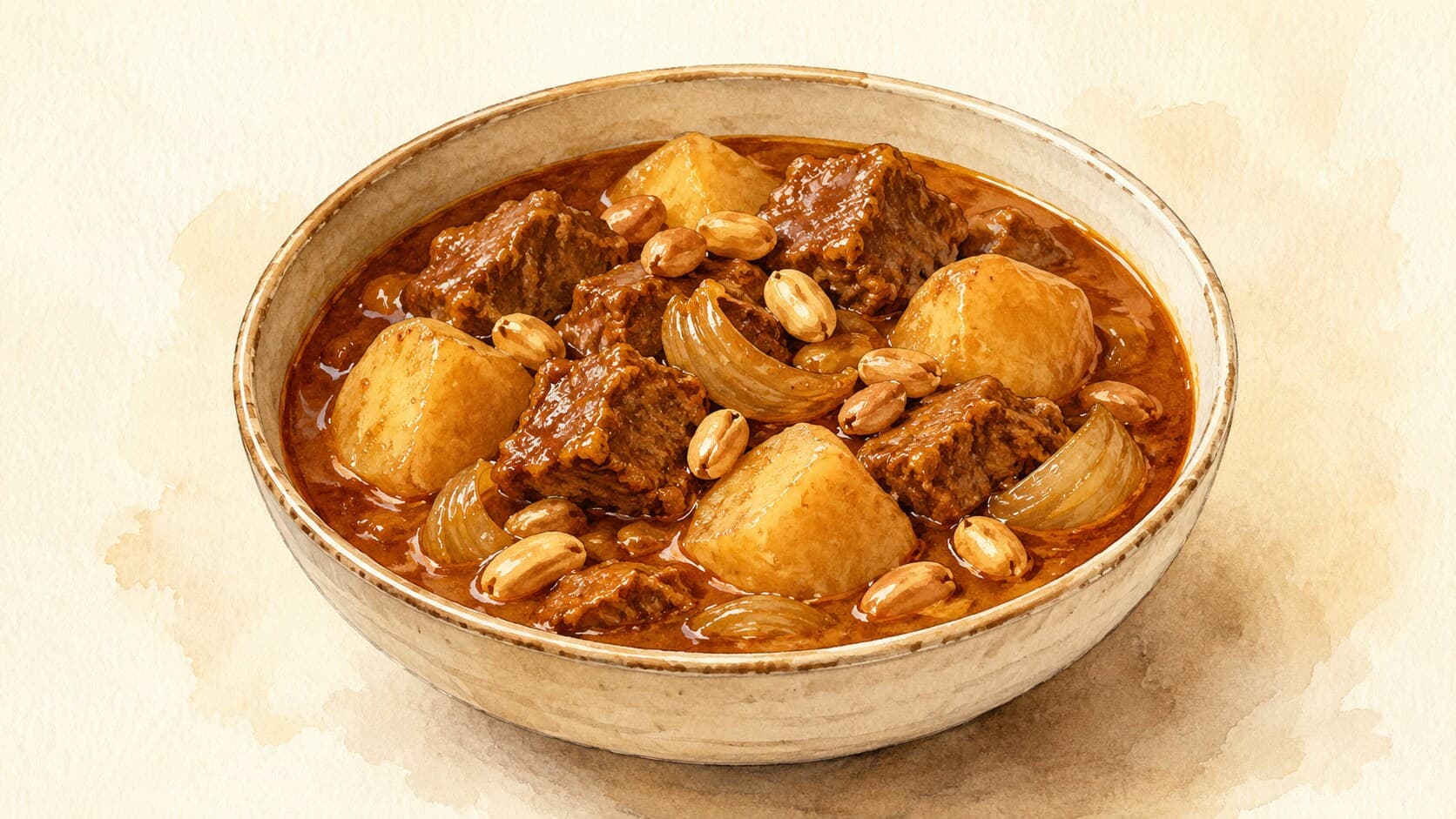
- A rich, golden-brown color of the curry.
- Tender but intact chunks of beef and potatoes.
- A thick, creamy consistency of the sauce.
- Visible oil separation on the surface indicating proper cooking.
Chef's view
Massaman Curry reflects the cultural blend of Thai and Persian influences. The use of spices like cardamom and cinnamon showcases this fusion, rooted in historical trade routes. Cooking this dish is a celebration of flavors, combining sweet, savory, and spicy elements.
The technique emphasizes balance, requiring a careful approach to simmering. Each ingredient plays a role, with the coconut milk serving as a unifying element. This dish is not just a meal; it embodies a culinary tradition that honors heritage while embracing modern adaptations.
<!-- beginner-glossed v1 -->Get the essays in your inbox — free
Weekly notes on flavor, fermentation, and food history — the writing behind the Atlas of Flavor. No spam; unsubscribe anytime.