
Mapo Tofu
This dish balances textures and flavors through precise ingredient combinations.
Contents (5 sections)▾
Ingredients
- 400g soft tofu
- 200g ground pork
- 2 tablespoons doubanjiang (spicy bean paste)
- 1 tablespoon douchi (fermented black beans)
- 1 tablespoon soy sauce
- 1 tablespoon sesame oil
- 2 cloves garlic, minced
- 1 inch ginger, minced
- 2 green onions, chopped
- 1 teaspoon Sichuan peppercorns
- 500ml chicken broth
- Cornstarch for thickening
Steps
Dice the tofu into cubes and blanch in boiling water for 2 minutes.
In a skillet, heat sesame oil and sauté garlic, ginger, and Sichuan peppercorns.
Add ground pork and cook, breaking it up, until browned with no pink — it should reach 71 °C / 160 °F on an instant-read thermometer — then stir in doubanjiang and douchi.
Pour in chicken broth and bring to a simmer; add tofu gently.
Thicken the sauce with cornstarch mixed with water, then garnish with green onions.
Serve hot with steamed rice.
Tools you'll want
- · Digital kitchen scale (gram precision)
Why this works
Mapo Tofu achieves its signature flavor through the interplay of spicy bean paste and fermented black beans. The heat from the doubanjiang (Sichuan fermented chili-bean paste) is balanced by the umami richness of the pork and the soft texture of the tofu. Sautéing the aromatics at a medium heat allows essential oils to escape, enhancing the dish's fragrance. The gentle simmering melds flavors, making the tofu absorb the sauce.
The use of cornstarch thickens the sauce, creating a velvety mouthfeel that clings to the tofu. Maintaining the tofu's integrity during cooking is crucial; blanching it first ensures it remains tender yet firm. The overall balance of ingredients contributes to a harmonious dish that captivates the palate.
Common mistakes
Skipping the doubanjiang fry-out.
Target: Sauté the doubanjiang (Pixian chili bean paste) in oil for 60–90 seconds until the oil turns brilliant red.
Why it matters: Doubanjiang is the soul of mapo tofu. Adding it directly to liquid produces a muddy, harsh result — the flavor compounds need oil-frying to release. The bright red oil you see in restaurant mapo is not added coloring; it's the doubanjiang's fat-soluble pigments and aroma extracting into the oil.
What to do: Heat the oil, add the doubanjiang first (before garlic/ginger), and fry until the oil is unmistakably red.
Workarounds:
- No doubanjiang? Use 2 tbsp red miso + 1 tsp Korean gochujang + 1/2 tsp red chili flakes. Approximation, but the closest pantry hack.
- For non-spicy mapo tofu (white mapo), substitute fermented yellow bean paste — same fry-out technique applies.
Skipping the Sichuan peppercorn.
Target: Toast whole peppercorns, then grind fresh. Use about 1 tsp per 400 g tofu.
Why it matters: The "má" in mapo means "numbing." Sichuan peppercorn (huājiāo) creates that characteristic tingle through sanshool compounds. Without it, you have spicy tofu, not mapo tofu. Pre-ground peppercorns have already lost 70 % of their aroma.
What to do: Toast whole peppercorns in a dry pan for 30 seconds, grind in a mortar, add at the end.
Workarounds:
- No Sichuan peppercorn? Pink peppercorn has a similar (much milder) tingle; or just accept the dish will lack its defining quality.
- For maximum effect, divide the peppercorn: half in the cook, half scattered at the table.
Using firm tofu.
Target: Silken (kinugoshi) or soft (momen) tofu. Firm and extra-firm tofu kill the dish.
Why it matters: Mapo tofu's texture is built on the contrast between the soft, almost-melting tofu and the textured meat sauce. Firm tofu turns the dish into "tofu cubes in chili sauce" — fine, but not mapo.
What to do: Use silken tofu for the most luxurious texture, or soft tofu for slightly more structure (easier to handle).
Workarounds:
- If only firm tofu is available, soak it in 60 °C salted water (1 tsp salt per liter) for 15 minutes to soften and pre-season.
- For dinner-party serving, soft tofu holds up better; silken can fall apart during plating.
Skipping the blanch.
Target: Drop tofu cubes into salted simmering water (NOT boiling — 80–85 °C) for 1 minute before adding to the sauce.
Why it matters: The blanch pre-warms the tofu (so it doesn't drop the sauce temperature), seasons it lightly, and tightens the surface proteins so the cubes hold shape during the final cook.
What to do: 1 tsp salt per liter of water at a bare simmer. Slip cubes in with a slotted spoon, count 60 seconds, lift out.
Workarounds:
- For more flavor, blanch in light chicken or vegetable broth instead of water.
- In a pinch, microwave the cubes for 60 seconds — less elegant but covers the warming function.
Adding the cornstarch slurry too late or too thick.
Target: 1 tbsp cornstarch + 2 tbsp cold water; add in two stages near the end.
Why it matters: Mapo tofu needs a glossy, lightly thickened sauce — not gravy. Too much cornstarch produces gluey texture; adding it cold to a hot pan causes clumping if not pre-slurried.
What to do: Mix cornstarch + water until completely dissolved. Add half, stir, wait 30 seconds, assess. Add more only if needed.
Workarounds:
- For a slightly different texture, use potato starch (kuzu-style) instead of cornstarch — glossier, less gummy.
- For gluten-free thickening that's also more elegant, reduce the sauce by 30 % before adding tofu rather than relying on starch.
What to look for
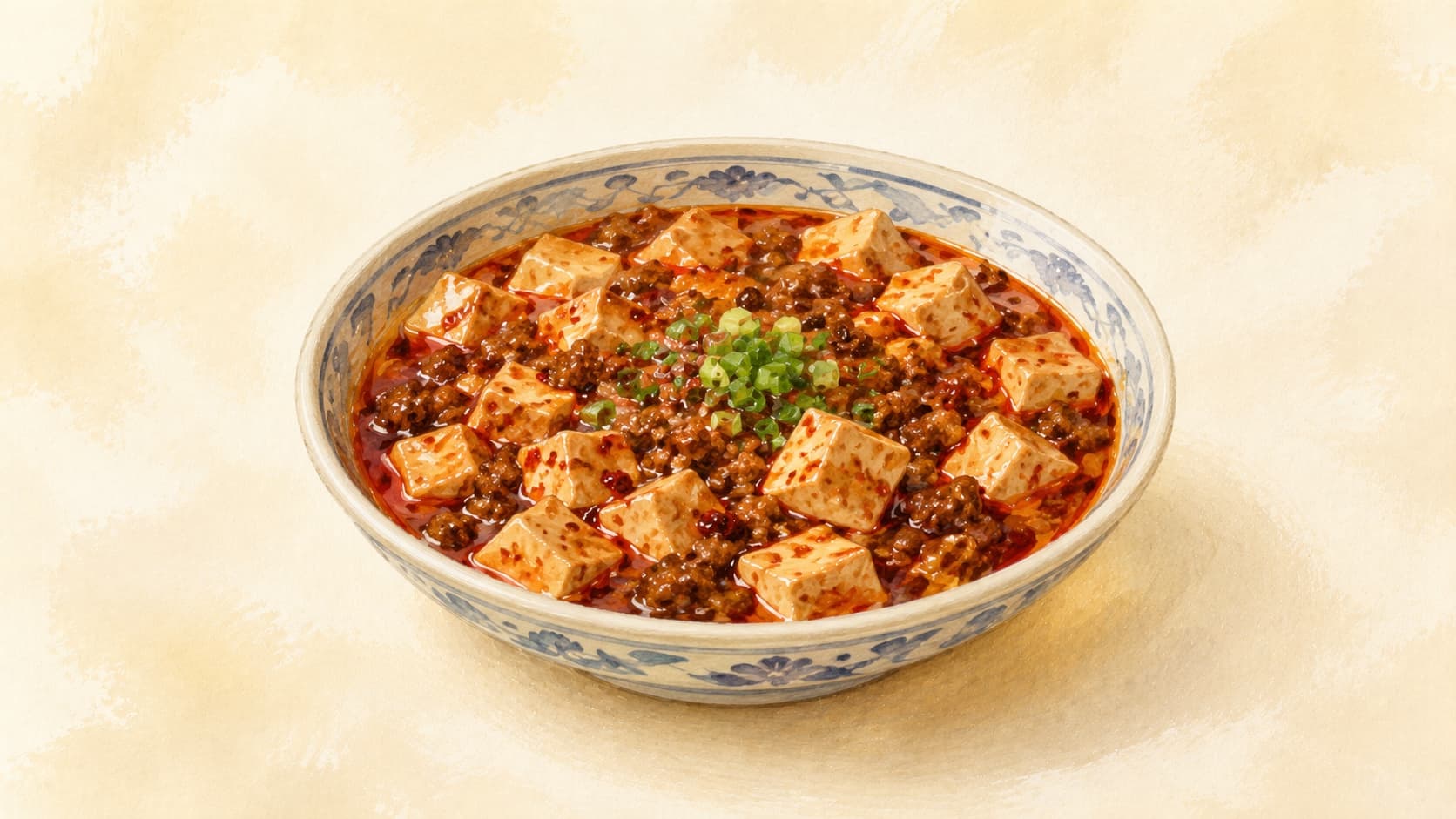
- A bright red sauce that glistens.
- Tofu cubes that hold their shape yet are tender to the bite.
- A fragrant aroma of spices and sautéed ingredients.
- Bright green onions adding a fresh contrast.
Chef's view
Mapo Tofu originates from Sichuan province, renowned for its bold flavors and numbing spices. The dish reflects the region's culinary philosophy, emphasizing the balance of heat, savory, and aromatic elements. Its popularity has transcended borders, becoming a staple in Chinese cuisine worldwide.
The technique of layering flavors is crucial. Each ingredient plays a role, creating a complex yet approachable dish. Mastering Mapo Tofu is a gateway into understanding the nuances of Sichuan cooking, where every bite tells a story of tradition and innovation.
<!-- beginner-glossed v1 -->Get the essays in your inbox — free
Weekly notes on flavor, fermentation, and food history — the writing behind the Atlas of Flavor. No spam; unsubscribe anytime.