
Mango Sticky Rice
This dessert balances sweet, creamy, and slightly salty elements to create a harmonious flavor profile.
Contents (5 sections)▾
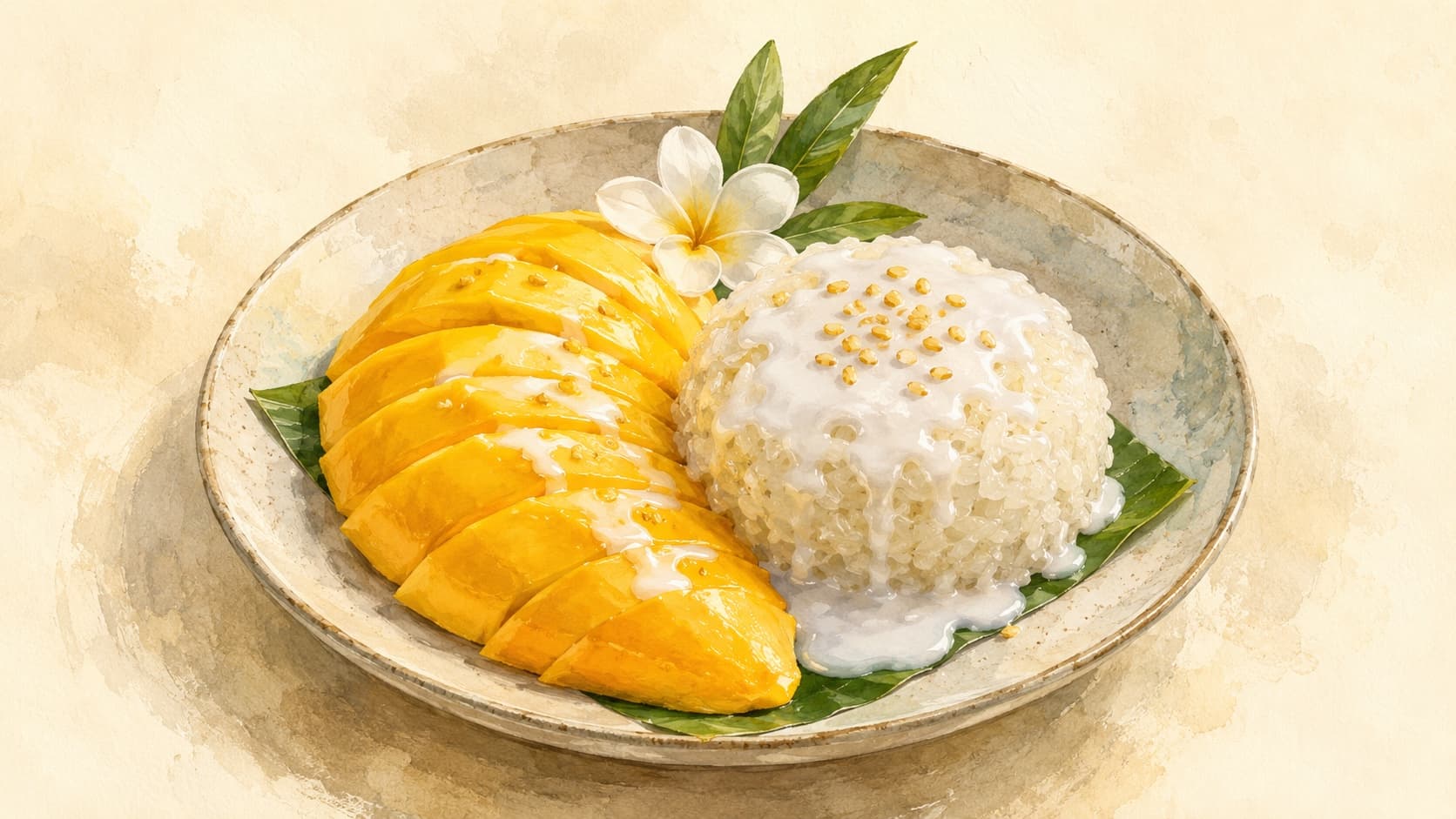
Ingredients
- 1 cup glutinous rice
- 1 1/2 cups coconut milk
- 1/2 cup sugar
- 1/4 teaspoon salt
- 2 ripe mangoes
- 2 tablespoons sesame seeds
- 1/4 cup water
- 1 tablespoon mung beans (optional)
Steps
Rinse glutinous rice under cold water until water runs clear.
Soak rice in water for at least 4 hours or overnight.
Steam soaked rice for 20 minutes until tender.
Combine coconut milk, sugar, and salt in a saucepan; heat until sugar dissolves.
Mix 1 cup of the coconut mixture with the steamed rice; let sit for 30 minutes.
Serve rice with sliced mango and drizzle remaining coconut sauce on top.
Tools you'll want
- · Bamboo steamer (2-tier, 18–25cm / 10in)
Why this works
Mango sticky rice relies on glutinous rice (sticky long-grain rice used across Southeast Asia), which has a high starch content, creating a chewy texture. Soaking the rice allows water to penetrate, ensuring even cooking during steaming. The coconut milk mixture adds richness and sweetness. The salt balances the flavors, enhancing the overall taste.
The steaming method preserves the rice's moisture. It prevents the outer layer from drying out, maintaining a sticky consistency. The ideal ratio of coconut milk to rice enhances flavor without overwhelming the dish.
Cooling the rice post-steaming allows it to absorb the coconut milk mixture. This process melds flavors and ensures each grain is evenly coated, creating that signature taste.
Common mistakes
Using regular rice instead of glutinous rice.
Target: Thai glutinous (sticky) rice — long-grain variety labeled "sweet rice" or "sticky rice." NOT short-grain Japanese-style rice or jasmine.
Why it matters: Only true glutinous rice has the high amylopectin / low amylose ratio that produces the chewy-sticky texture this dessert is built on. Regular rice can't replicate it — you get porridge or pilaf.
What to do: Buy from an Asian grocery — look for "Thai sticky rice" or "sweet rice."
Workarounds:
- Japanese mochigome (short-grain glutinous) is acceptable but gives a softer, less chewy result.
Insufficient soaking time.
Target: 4 hours minimum, overnight ideal — rice grains should look swollen and slightly opaque.
Why it matters: Glutinous rice doesn't fully hydrate in steam alone. Dry-soaked grains stay hard at the center; properly soaked grains cook evenly to chewy.
What to do: Soak the night before. Drain just before steaming.
Workarounds:
- Time-short → soak in warm water (40°C) for 2 hours; not ideal but workable.
Boiling instead of steaming.
Target: Steam over simmering water in a bamboo steamer lined with cheesecloth, 20-25 minutes.
Why it matters: Boiled glutinous rice becomes mushy and breaks down. Steaming preserves grain integrity and the signature chewy texture. The bamboo steamer also breathes correctly.
What to do: Bamboo steamer lined with cheesecloth or banana leaf. Drained rice in a single layer.
Workarounds:
- No bamboo steamer → metal steamer with parchment lining; slightly different texture but works.
Skipping the salt in the coconut sauce.
Target: ¼ tsp salt per cup of coconut milk — small but essential.
Why it matters: Salt is the key contrast that makes the sweetness pop. Without it, the dessert tastes flatly sweet — one-dimensional. Thai cuisine consistently pairs sweet with salt for depth.
What to do: Salt + sugar + coconut milk in saucepan, warm until dissolved. Taste before adding to rice.
Workarounds:
- Salt-restricted → minimum pinch; flavor will be flatter but acceptable.
Adding coconut sauce to hot rice while still steaming.
Target: Mix sauce into rice immediately after steaming, then rest 20-30 min covered for absorption.
Why it matters: Hot rice absorbs the sauce best, but it needs resting time for the flavor to penetrate evenly. Serving immediately = sauce sits on top, rice is bland inside.
What to do: Stir sauce into hot rice → cover with damp cloth → rest 20-30 min → serve.
Workarounds:
- Make-ahead → fully cool, rewarm gently with steam; texture holds for hours.
Using under-ripe mango.
Target: Ripe mango that yields slightly to pressure, deeply fragrant, vibrant yellow-orange flesh.
Why it matters: Under-ripe mango is sour and fibrous — wrong against sweet rice. The dish depends on the mango bringing concentrated tropical sweetness and aroma.
What to do: Check ripeness 2-3 days ahead. Smell the stem end — should be fragrant. Press gently — slight give.
Workarounds:
- Only firm mango available → leave at room temperature 2-3 days until ripens.
Not reserving sauce for drizzling.
Target: Reserve ⅓ of coconut sauce to drizzle over the plated dish — not just mix into rice.
Why it matters: The drizzle creates visual appeal AND adds fresh coconut flavor on top. Mixing all the sauce in = rice is flavored but the plate is dry.
What to do: Mix ⅔ into rice, reserve ⅓ for the final drizzle.
Workarounds:
- Want richer presentation → reduce reserved sauce slightly with extra coconut milk for thicker consistency.
What to look for
- The rice should be glossy and slightly transparent.
- Cooked rice should be sticky yet firm, not mushy.
- Mango should be ripe, yielding slightly when pressed.
- Coconut sauce should be smooth and creamy.
- The dish should have a balanced sweet and salty aroma.
Chef's view
Mango sticky rice is a Thai dessert, often enjoyed during the mango season. Its origins may trace back to various regions in Southeast Asia, reflecting cultural exchanges. Each component contributes to the overall experience; the chewy rice, rich coconut, and fresh mango create a delightful harmony.
In Thailand, this dish represents more than just a dessert. It embodies community and celebration. Traditional preparation techniques highlight the importance of each ingredient. Mastery of the steaming process is key to achieving the perfect texture.
<!-- beginner-glossed v1 -->Get the essays in your inbox — free
Weekly notes on flavor, fermentation, and food history — the writing behind the Atlas of Flavor. No spam; unsubscribe anytime.