Mac and Cheese
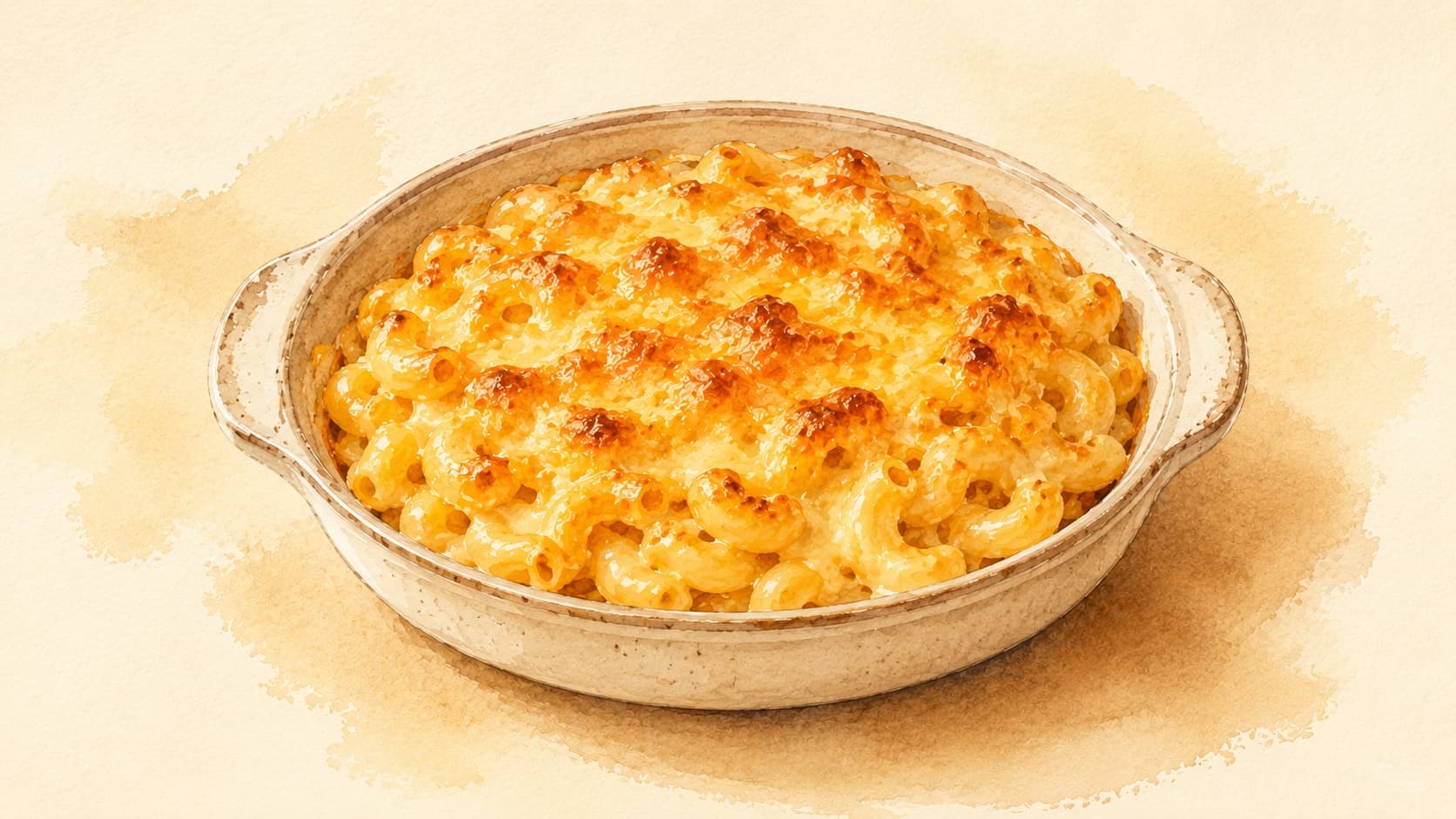
Mac and Cheese consists of cooked pasta combined with a cheese sauce, utilizing emulsification and starch-gelatinization for a creamy texture.
Contents (5 sections)▾
Ingredients
- 8 oz elbow macaroni
- 2 cups sharp cheddar cheese, shredded
- 1/2 cup mozzarella cheese, shredded
- 2 cups milk
- 1/4 cup unsalted butter
- 1/4 cup all-purpose flour
- 1/2 tsp mustard powder
- 1/4 tsp paprika
- Salt to taste
- Pepper to taste
- 1/2 cup breadcrumbs
Steps
Cook macaroni according to package instructions until al dente.
In a saucepan, melt butter over medium heat.
Whisk in flour, cooking for about 2 minutes.
Gradually add milk, whisking until smooth and thickened.
Stir in cheeses, mustard powder, and paprika; season with salt and pepper.
Combine cheese sauce with macaroni, transfer to a baking dish, top with breadcrumbs, and bake at 350°F for 15 minutes.
Tools you'll want
Why this works
The key to perfect mac and cheese lies in the cheese sauce. A roux made from butter and flour thickens the sauce, creating a stable emulsion. Milk is added slowly, allowing for a smooth texture. Cheese should be added off the heat to prevent curdling. The combination of sharp cheddar and mozzarella provides depth and stretch.
Cooking the pasta al dente is crucial. It absorbs some sauce during baking, preventing a mushy final dish. Baking at 350°F allows for even browning of the breadcrumbs, enhancing flavor and texture. The mustard powder and paprika add to the overall taste.
Common mistakes
Overcooking the pasta.
Target: 2 minutes less than al dente package time — pasta should still be very firm with chalky center.
Why it matters: Pasta continues cooking in the cheese sauce and again in the oven (if baking). Cooked al dente upfront → mushy final dish. The under-cooked pasta finishes in the sauce.
What to do: Boil pasta, drain at the time that would be 'too firm to eat.' Combine immediately with cheese sauce.
Workarounds:
- For stovetop-only mac and cheese (no baking) → cook to just below al dente.
Adding cheese too early or over heat.
Target: Cheese added off heat to the warm béchamel (the milk-and-roux white sauce you just made), in handfuls, stirring between additions.
Why it matters: High heat causes cheese proteins to coagulate while fat separates — grainy, broken sauce that won't recover. The béchamel must be warm but not hot when cheese meets it.
What to do: Pull pan off burner before adding cheese. Add a handful at a time, fully melt before next handful.
Workarounds:
- Sauce broke (grainy) → whisk in 1 tbsp cold cream off-heat; sometimes rescues.
Using pre-shredded cheese.
Target: Grate cheese from a block yourself, right before using.
Why it matters: Pre-shredded cheese is coated with cellulose powder (anti-caking agent) that inhibits clean melting. Result: gritty texture, sauce won't go smooth. Fresh-grated cheese melts cleanly.
What to do: Box grater or food processor. Grate large amounts efficiently when needed.
Workarounds:
- Time-short → still grate yourself. The 5 minutes saved isn't worth a grainy sauce.
Skipping or under-cooking the roux.
Target: Cook butter + flour 2-3 minutes until smelling nutty, NOT pasty/raw.
Why it matters: Under-cooked roux tastes raw and floury throughout the sauce. Properly cooked roux (blond stage) provides thickening without flavor. The cooking step is essential.
What to do: Whisk butter+flour over medium heat. Watch for color shift (pale → faint golden) AND smell shift (floury → nutty).
Workarounds:
- Want gluten-free → use rice flour or cornstarch slurry at the end; different texture but works.
Cheese too one-dimensional.
Target: Two-cheese blend minimum: sharp cheddar (flavor) + Gruyère or Monterey Jack (melt).
Why it matters: Sharp cheddar provides character but melts unevenly alone. A mild melter (Jack, mozzarella, Gruyère) gives smooth texture. Together = balance of flavor and silkiness.
What to do: 70% sharp + 30% melter. Adjust toward more sharp for character, more melter for smoothness.
Workarounds:
- Only one cheese? Sharp cheddar + 1 tbsp cream cheese added off-heat for melt assistance.
Skipping the mustard powder.
Target: ½ tsp mustard powder in the sauce — it enhances cheese flavor invisibly.
Why it matters: Mustard contains compounds that perceptually intensify cheese flavor without tasting "mustardy." This is the secret ingredient of restaurant mac and cheese.
What to do: Whisk dry mustard into the roux before adding milk. Adds depth, no detectable mustard taste.
Workarounds:
- No dry mustard → ¼ tsp Dijon stirred in at the end works similarly.
What to look for
- A smooth, thick cheese sauce that coats the back of a spoon.
- Golden-brown breadcrumbs on top, indicating a crispy texture.
- Pasta that is tender but still firm to bite.
- A bubbling sauce around the edges of the baking dish.
- A rich, cheesy aroma filling the kitchen.
Chef's view
Mac and cheese embodies comfort food in American cuisine. Its origins date back to the 18th century, influenced by Italian pasta dishes. The dish has evolved, with various regional adaptations. Each culture adds its own twist, but the fundamental concept remains the same: comforting, cheesy goodness.
The technique of combining pasta with a rich cheese sauce highlights the beauty of simple ingredients. This dish invites creativity; feel free to experiment with different cheeses or add-ins. Whether served as a main dish or a side, mac and cheese brings warmth and satisfaction to the table.
<!-- beginner-glossed v1 -->Get the essays in your inbox — free
Weekly notes on flavor, fermentation, and food history — the writing behind the Atlas of Flavor. No spam; unsubscribe anytime.