
Mala Tang
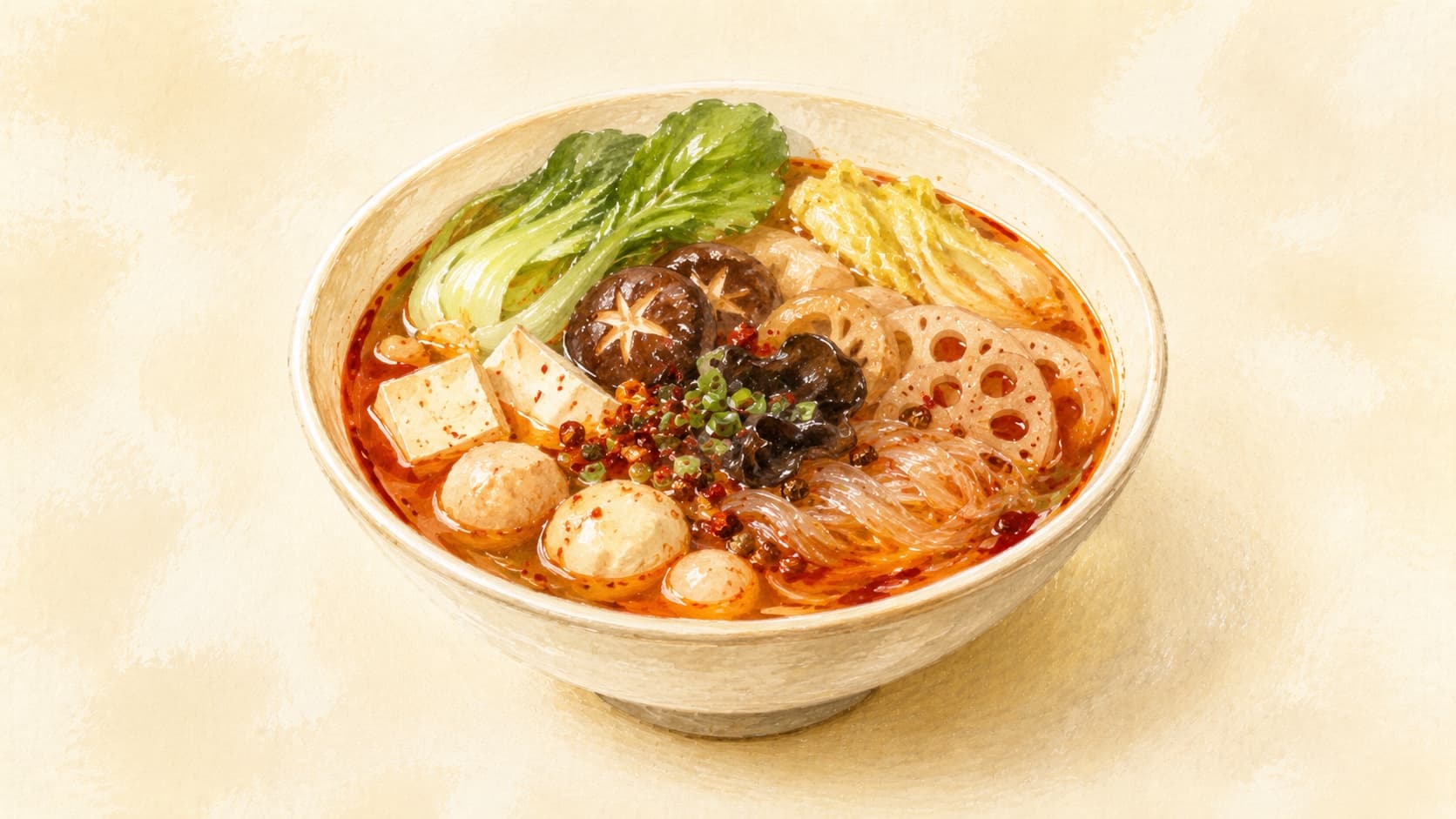
Mala Tang combines a variety of ingredients simmered in a spiced broth, yielding a complex flavor profile.
Contents (5 sections)▾
Ingredients
- 200g thinly sliced beef
- 100g tofu, cubed
- 100g mushrooms, sliced
- 100g bok choy, chopped
- 150g bean sprouts
- 200g rice noodles
- 4 cups chicken or vegetable broth
- 2 tablespoons chili oil
- 1 tablespoon Sichuan peppercorns
- 2 cloves garlic, minced
- 1 tablespoon soy sauce
- Salt to taste
Steps
Prepare all ingredients and set aside.
In a pot, heat broth and bring to a simmer.
Add chili oil, Sichuan peppercorns, and garlic; simmer for 5 minutes.
Add beef and tofu; cook for 3-4 minutes until beef is tender.
Stir in vegetables and noodles; cook until heated through.
Season with soy sauce and salt; serve hot.
Tools you'll want
Why this works
Mala Tang (a Sichuan spicy-numbing soup of broth, chili oil, and chosen-at-the-counter ingredients) achieves its depth through a carefully balanced broth. The chili oil infuses heat, while Sichuan peppercorns offer a numbing effect. The combination enhances the sensory experience. Ingredients like beef and tofu absorb the spices, enriching their flavor. Cooking them briefly ensures they remain tender.
Simmering the broth intensifies the aromas. The garlic adds a savory base, essential for complexity. The timing of adding vegetables and noodles is crucial. Too early and they become mushy; too late, and they lack flavor absorption. Proper ratios of broth to solids maintain a harmonious texture.
Common mistakes
Skipping the chili paste fry-out.
Target: Fry doubanjiang (Pixian chili bean paste) in oil for 60–90 seconds until oil turns brilliant red.
Why it matters: Mala tang's defining "spicy + numbing" profile comes from properly bloomed chili-bean paste in oil. Adding paste directly to broth produces dull, muddy result.
What to do: Heat oil → add doubanjiang first → fry until oil reds → then add aromatics and broth.
Workarounds:
- No doubanjiang? Use 2 tbsp gochujang + 1 tsp red chili flakes — closest substitute.
Skipping Sichuan peppercorn.
Target: Toasted whole Sichuan peppercorns (huājiāo), ground fresh — about 1 tbsp per pot.
Why it matters: The "má" in mala means "numbing." Sichuan peppercorn's sanshool compounds create that characteristic tingle. Without it, you have spicy soup, NOT mala tang.
What to do: Toast peppercorns 30 seconds in a dry pan, grind, add to the simmering broth.
Workarounds:
- For maximum effect, divide: half in broth, half as garnish at the table.
Adding ingredients all at once.
Target: Cook ingredients in ORDER of cooking time — long first (potato, root vegetables), short last (leafy greens, noodles).
Why it matters: Mala tang has many ingredients of widely varying cook times. Adding all together means leafy greens turn to mush while potatoes stay raw.
What to do: Mentally categorize ingredients by cook time. Add in waves separated by 2–3 minutes.
Workarounds:
- For convenience, par-cook hard vegetables in plain water first, then add to the spicy broth at the end.
Insufficient broth base.
Target: Rich beef + bone broth seasoned with star anise, cinnamon, ginger, garlic. Simmered 30+ minutes before adding the chili components.
Why it matters: Mala tang's depth comes from the foundational broth, not just the chili. Plain water + chili paste produces "spicy water" — not mala tang.
What to do: Make broth base ahead. Bone broth is ideal. Then add the chili components separately.
Workarounds:
- Shortcut: store-bought beef broth + 1 tsp dashida + the aromatic spices, simmered 15 minutes.
Serving without numerous toppings.
Target: Set up garnishes: chopped peanuts, sesame oil, cilantro, chili oil, fresh garlic, fermented bean curd.
Why it matters: Mala tang is meant to be customized at the table. Skipping the garnish bar makes the dish one-dimensional.
What to do: Set up at least 4–5 garnish bowls. Let diners build their own.
What to look for
- A vibrant red broth with visible spices.
- Tender, not mushy, vegetables.
- Noodles that are fully cooked but not soggy.
- A fragrant aroma that invites tasting.
- A balanced heat level that complements the dish.
Chef's view
Mala Tang, a popular street food in China, reflects the vibrant culture of communal dining. Traditionally, it allows customization, where diners choose ingredients. This interaction enhances the meal experience, making it social.
This dish embodies the philosophy of balancing textures and flavors. The heat from the spices should not overshadow the freshness of the ingredients. Mastering this balance is key to a successful Mala Tang, making it a comfort food.
<!-- beginner-glossed v1 -->Get the essays in your inbox — free
Weekly notes on flavor, fermentation, and food history — the writing behind the Atlas of Flavor. No spam; unsubscribe anytime.