
Lion's Head Meatballs
This dish showcases a balance of flavors and textures through the careful combination of meat and greens.
Contents (5 sections)▾
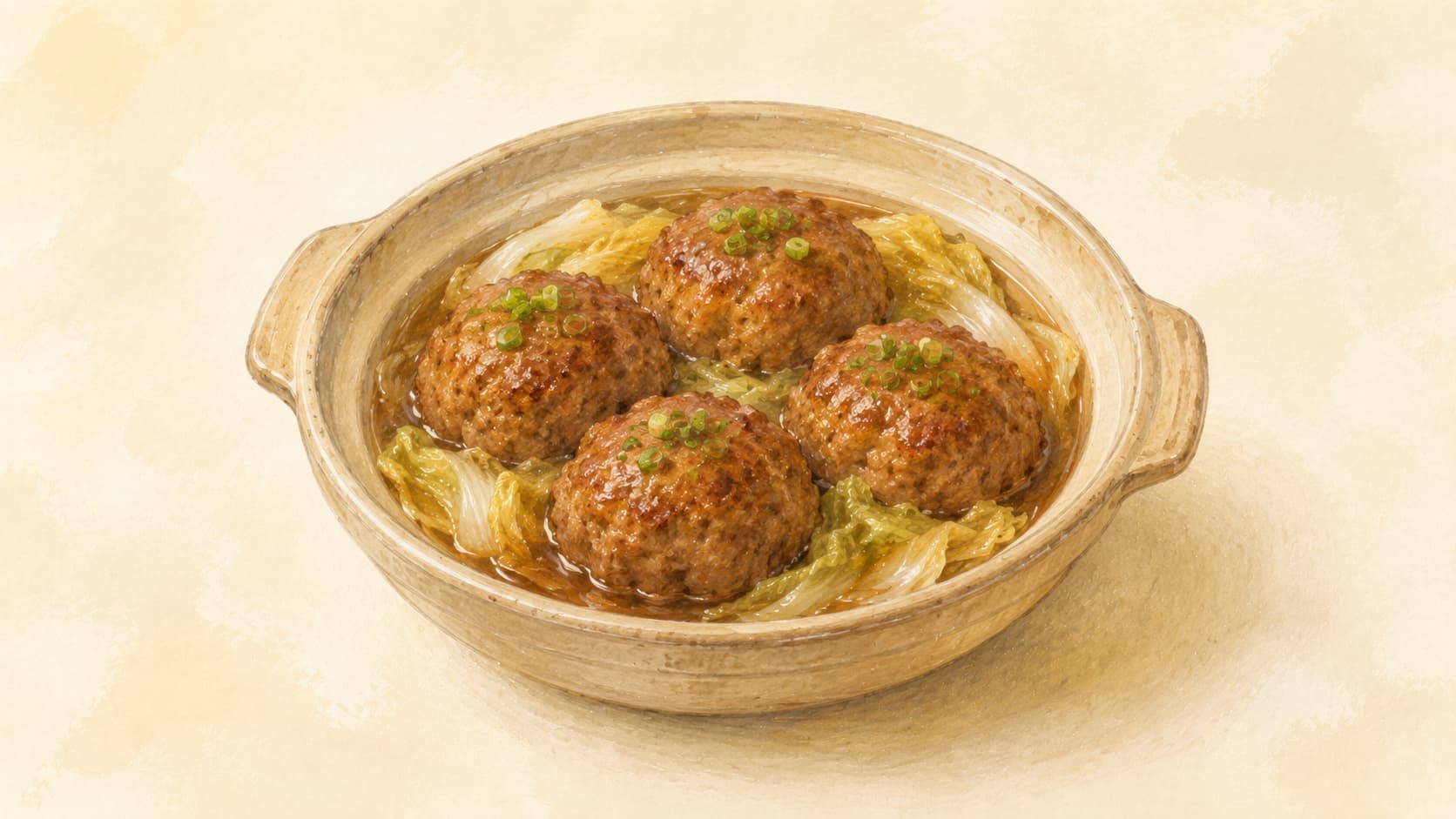
Ingredients
- 500g ground pork
- 1/4 cup water chestnuts, finely chopped
- 2 green onions, chopped
- 1 tablespoon soy sauce
- 1 tablespoon rice wine
- 1 teaspoon sesame oil
- 1/2 teaspoon white pepper
- 1 egg, beaten
- 200g Napa cabbage, chopped
- 2 cups chicken broth
- 2 tablespoons cornstarch
- 1 tablespoon vegetable oil
Steps
In a bowl, mix ground pork, water chestnuts, green onions, soy sauce, rice wine, sesame oil, white pepper, and beaten egg.
Form the mixture into large meatballs, about the size of a tennis ball.
Heat vegetable oil in a wide skillet over medium-high heat, then sear the meatballs until browned on all sides.
Add chopped Napa cabbage to the skillet and pour in chicken broth.
Cover and simmer for 20 minutes until meatballs are cooked through. Cook the ground meat until it reaches 71 °C / 160 °F on an instant-read thermometer (no longer pink throughout) — colour, float and time are guides, not the safety test.
Mix cornstarch with a little water to create a slurry, then stir in to thicken the sauce.
Tools you'll want
- · Digital kitchen scale (gram precision)
Why this works
The combination of ground pork and water chestnuts creates a juicy, tender meatball with a satisfying crunch. The egg acts as a binder, helping maintain the meatball's shape during cooking. Browning the meatballs enhances flavor through the Maillard reaction, adding depth to the dish.
Simmering in chicken broth infuses the meatballs with moisture and flavor. The Napa cabbage wilts but retains structure, providing a textural contrast. The cornstarch slurry thickens the broth, creating a rich sauce that clings to the meatballs.
Common mistakes
Using lean pork.
Target: 30-40% fat content — fatty pork shoulder is ideal. NOT lean ground pork.
Why it matters: Lion's head meatballs (a Shanghainese braise of large pork meatballs with greens) are defined by their melting, tender texture — only achievable with high fat content. Lean pork produces dry, tough meatballs no matter how long they simmer.
What to do: Buy pork belly + pork shoulder (50/50) and grind yourself, or ask the butcher for "fatty ground pork."
Workarounds:
- Only lean pork available → add 30 g cold rendered pork lard per 400 g lean meat to compensate.
Over-mixing the meat.
Target: Mix in one direction (clockwise or counter-clockwise consistently) for 2-3 minutes until tacky.
Why it matters: Over-mixing creates rubbery texture by overdeveloping the myosin proteins. The Chinese technique of unidirectional stirring builds enough cohesion without going past tender. The goal is "tacky and binding," not "tight and bouncy."
What to do: Single direction. Stop when the mass holds together when picked up.
Workarounds:
- Want softer texture → add 2 tbsp cold stock during the mixing for extra moisture.
Skipping the searing step.
Target: Brown all sides in hot oil before braising — 1-2 minutes per side until golden.
Why it matters: Maillard browning adds depth and creates a thin crust that helps hold the soft meatball shape during the long braise. Un-seared meatballs taste flat and tend to fall apart.
What to do: Medium-high heat, neutral oil, brown carefully — meatballs are delicate, turn with two spoons.
Workarounds:
- Worried about falling apart → chill meatballs 30 min before searing to firm them up.
Boiling instead of simmering.
Target: Bare simmer (surface dimpling only) for 45-60 minutes.
Why it matters: Hard boiling makes the meatballs contract and toughen — the texture goal is the opposite. Slow simmer allows fat to render gently and collagen to break down without tightening the protein network.
What to do: Drop to lowest steady simmer after bringing to boil. Cover, check occasionally.
Workarounds:
- Want even gentler cooking → braise in 150°C oven in covered Dutch oven for 1.5 hours.
Skipping the napa cabbage layer.
Target: Napa cabbage as bed and topper — large leaves under and over the meatballs.
Why it matters: The cabbage isn't just garnish — it cushions the meatballs, releases water that augments the braising liquid, and absorbs flavor in return. The dish is a balance of meatballs AND wilted napa, not meatballs alone.
What to do: Bed of cabbage in pot, meatballs on top, more cabbage on top. Braise together.
Workarounds:
- No napa cabbage → bok choy or Savoy cabbage are acceptable substitutes.
Too small meatballs.
Target: Tennis-ball size (about 150 g each) — the dish's name comes from this scale.
Why it matters: Small meatballs cook too fast, dry out, and lose the distinctive structure. "Lion's head" refers to the size — small meatballs are simply "meatballs in sauce," a different dish entirely.
What to do: Form 4-6 large balls from 500 g of meat. Wet hands to prevent sticking.
Workarounds:
- Too large to handle? Go down to golf-ball size minimum, but never smaller. Still serve 1-2 per person.
What to look for
- Meatballs should be golden brown on the outside.
- Cabbage should be wilted but still vibrant.
- Broth should be thickened and glossy.
- Internal temperature of the meatballs should reach the USDA safe minimum for ground pork, 71 °C (160 °F) — the long braise normally takes them well past this.
Chef's view
Lion's Head Meatballs are a cherished dish in Chinese cuisine, often served during family gatherings and celebrations. The dish embodies the philosophy of balance, both in flavor and presentation. The name reflects the meatballs' resemblance to a lion's head, while the greens symbolize the mane, making it a dish steeped in cultural symbolism and culinary tradition.
<!-- beginner-glossed v1 -->Get the essays in your inbox — free
Weekly notes on flavor, fermentation, and food history — the writing behind the Atlas of Flavor. No spam; unsubscribe anytime.