
Lasagna Bolognese
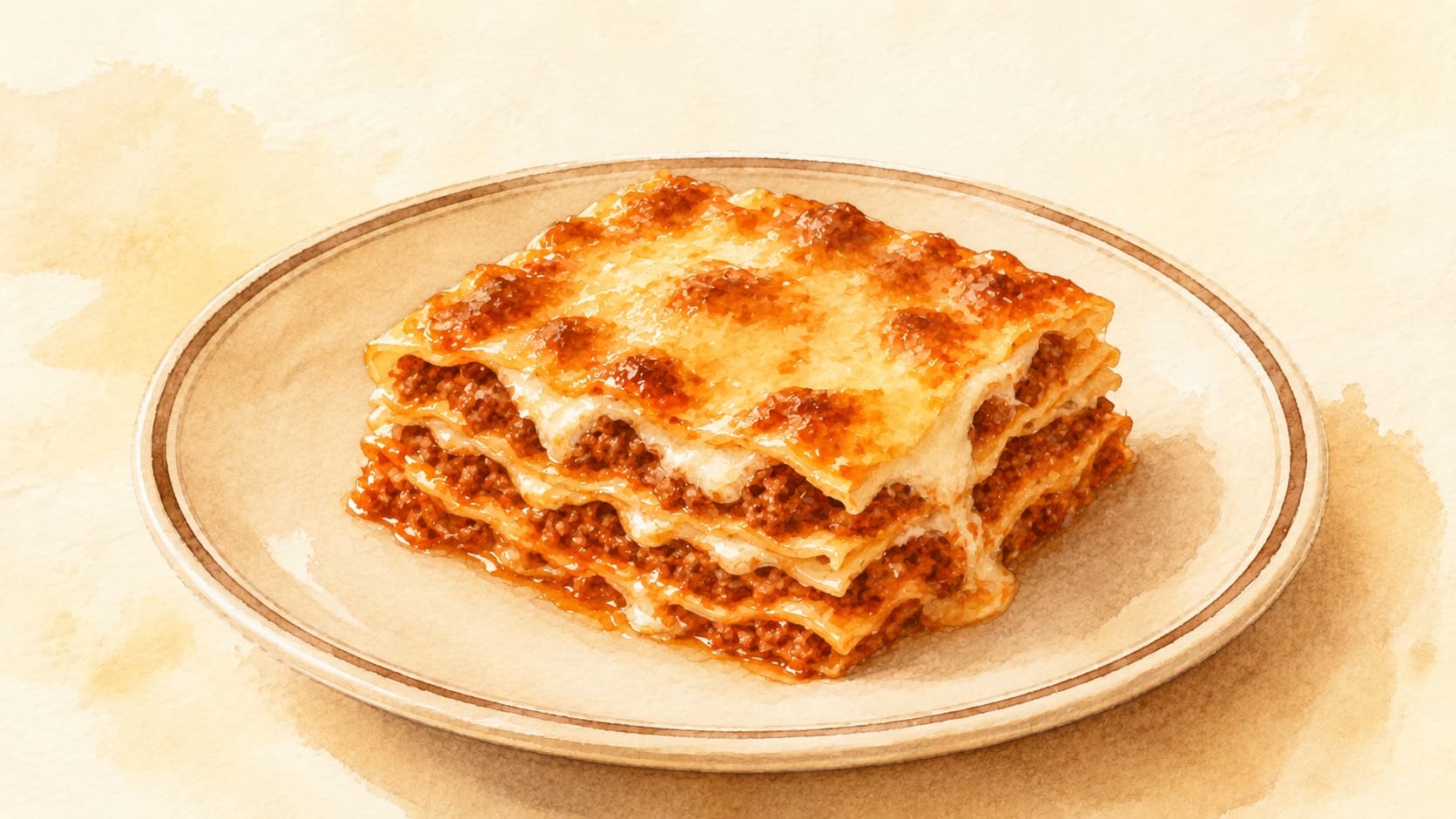
Layered pasta with a rich meat sauce and béchamel creates a balanced texture and flavor.
Contents (5 sections)▾
Ingredients
- 12 lasagna sheets
- 500g ground beef
- 250g ground pork
- 1 onion, diced
- 2 garlic cloves, minced
- 400g crushed tomatoes
- 300ml béchamel sauce
- 100g grated Parmesan cheese
- 2 tbsp olive oil
- Salt to taste
- Pepper to taste
- Fresh basil for garnish
Steps
Preheat oven to 180°C (350°F).
In a skillet, heat olive oil and sauté onion and garlic until translucent.
Add ground beef and pork, cook until browned; stir in crushed tomatoes and simmer for 10 minutes.
Layer lasagna sheets, meat sauce, béchamel, and Parmesan in a baking dish.
Repeat layers, finishing with béchamel and cheese on top.
Bake for 25 minutes until golden; let rest before serving.
Tools you'll want
Why this works
The structure of lasagna relies on correct layering and moisture balance. The béchamel sauce adds creaminess, while the meat sauce provides depth. Pasta sheets must be cooked until al dente to absorb sauce while retaining structure. Temperature control during baking ensures even cooking and melting of cheese.
Proper simmering of the meat sauce concentrates flavors. The right ratio of meat to sauce prevents sogginess. Each layer contributes to the overall texture, creating a harmonious dish. Allowing the lasagna to rest post-baking helps set the layers for easier serving.
Common mistakes
Under-cooking the ragù.
Target: Bolognese ragù simmered for 2–3 hours minimum, milk added in the first 30 minutes.
Why it matters: A proper ragù alla Bolognese (the slow-cooked meat sauce from Bologna, mostly meat with a little tomato — not the bright red "spaghetti bolognese" of restaurants outside Italy) is not a "tomato meat sauce" — it's a slow extraction where the meat releases collagen and fat, the milk tenderizes the proteins, and the tomato is a minority ingredient (often just 100 ml of paste in 1 kg of meat). 30-minute "quick bolognese" is a different dish — a pasta meat sauce.
What to do: Brown the soffritto (carrot, celery, onion), brown the meat, add milk and reduce, add wine and reduce, add tomato, simmer 2+ hours.
Workarounds:
- No time? A pressure cooker for 40 minutes at high pressure approximates a 2-hour simmer.
- Make the ragù 1–2 days ahead — the flavor actually improves overnight in the fridge.
Skipping the besciamella (béchamel).
Target: Classic béchamel: 50 g butter + 50 g flour cooked into a roux, whisked into 500 ml warm milk, simmered 5 minutes, seasoned with salt and nutmeg.
Why it matters: Authentic Bolognese-style lasagna uses ragù + béchamel + pasta + Parmigiano. The béchamel is what binds everything into a cohesive whole and produces the creamy, custardy texture between pasta layers. Layers of straight ragù alone produce a dish that's tasty but reads more like "stacked pasta with meat sauce" — Naples-style.
What to do: Make béchamel while the ragù simmers. Use whole milk, not skim.
Workarounds:
- Lactose-intolerant? Use plant-based milk (oat or soy work best) with the same technique.
- For richer texture, replace 100 ml of milk with cream.
Boiling fresh pasta sheets.
Target: Fresh pasta sheets go directly into the lasagna raw, NOT pre-boiled.
Why it matters: Fresh pasta absorbs liquid from the surrounding sauce as the lasagna bakes — it self-cooks. Pre-boiling adds water, over-softens the sheets, and produces mushy layers. For dried pasta sheets, brief 2-minute par-boil only.
What to do: Use fresh pasta sheets if at all possible. They make a significant difference.
Workarounds:
- Dried sheets: 2-minute par-boil in heavily salted water, drain, lay flat on towels.
- "No-boil" dried sheets: add 1/2 cup extra liquid to the lasagna to compensate for what they'll absorb.
Wrong cheese.
Target: Parmigiano-Reggiano DOP, freshly grated. NO mozzarella in classic Bolognese lasagna.
Why it matters: Bolognese lasagna is not Italian-American lasagna. The classic version uses only Parmigiano — between layers and on top. Mozzarella belongs in southern Italian "lasagna napoletana." The two are different dishes.
What to do: Freshly grate Parmigiano from a block. Skip the mozzarella entirely.
Workarounds:
- For a milder profile, use 50 % Parmigiano + 50 % Grana Padano (less sharp, less expensive).
- If you want stringy melted cheese (a Naples-style preference), add 100 g shredded mozzarella to the top layer only.
Not letting it rest.
Target: Rest 15–20 minutes after baking, NOT 5 minutes.
Why it matters: Hot from the oven, the béchamel is liquid and the layers haven't set. Cutting immediately means liquid spills and layers collapse. The resting period is when the structure forms.
What to do: Cover loosely with foil, leave on the counter. Resting time is part of the recipe, not a delay.
Workarounds:
- For dinner parties, plan to bake 30 minutes BEFORE serving time. Lasagna holds well at room temperature for 30 minutes.
Too few layers.
Target: Minimum 5 layers of pasta, ideally 6–7, in a deep dish.
Why it matters: Lasagna's appeal is the ratio of pasta : ragù : béchamel in each bite. Thick layers of one element overwhelm the others. The traditional Bolognese form is many thin layers.
What to do: Use a deep baking dish (at least 6 cm tall). Layer thin — about 3 mm of ragù per layer, 3 mm of béchamel.
Workarounds:
- Shallow pan only? Increase the layer count to 4 and reduce the meat-sauce thickness proportionally.
- For a "tall" lasagna show piece, use a springform pan as the mold — produces dramatic vertical layering when unmolded.
What to look for
- Golden, bubbling cheese on top.
- Slightly crispy edges.
- Firm layers that hold shape when sliced.
- Rich aroma of baked meat and cheese.
- Even distribution of sauce and cheese in each portion.
Chef's view
Lasagna Bolognese is a staple of Italian comfort food, originating from Bologna. It showcases the beauty of simple, quality ingredients. The dish reflects regional cooking traditions and emphasizes technique over complexity.
Building layers with precision is key. Each component must shine, contributing to the overall experience. This dish not only nourishes but tells a story of tradition and family gatherings, making it a classic.
<!-- beginner-glossed v1 -->Get the essays in your inbox — free
Weekly notes on flavor, fermentation, and food history — the writing behind the Atlas of Flavor. No spam; unsubscribe anytime.