
Lamb Kebab
This recipe combines marinated lamb with high-heat cooking for optimal flavor and texture.
Contents (5 sections)▾
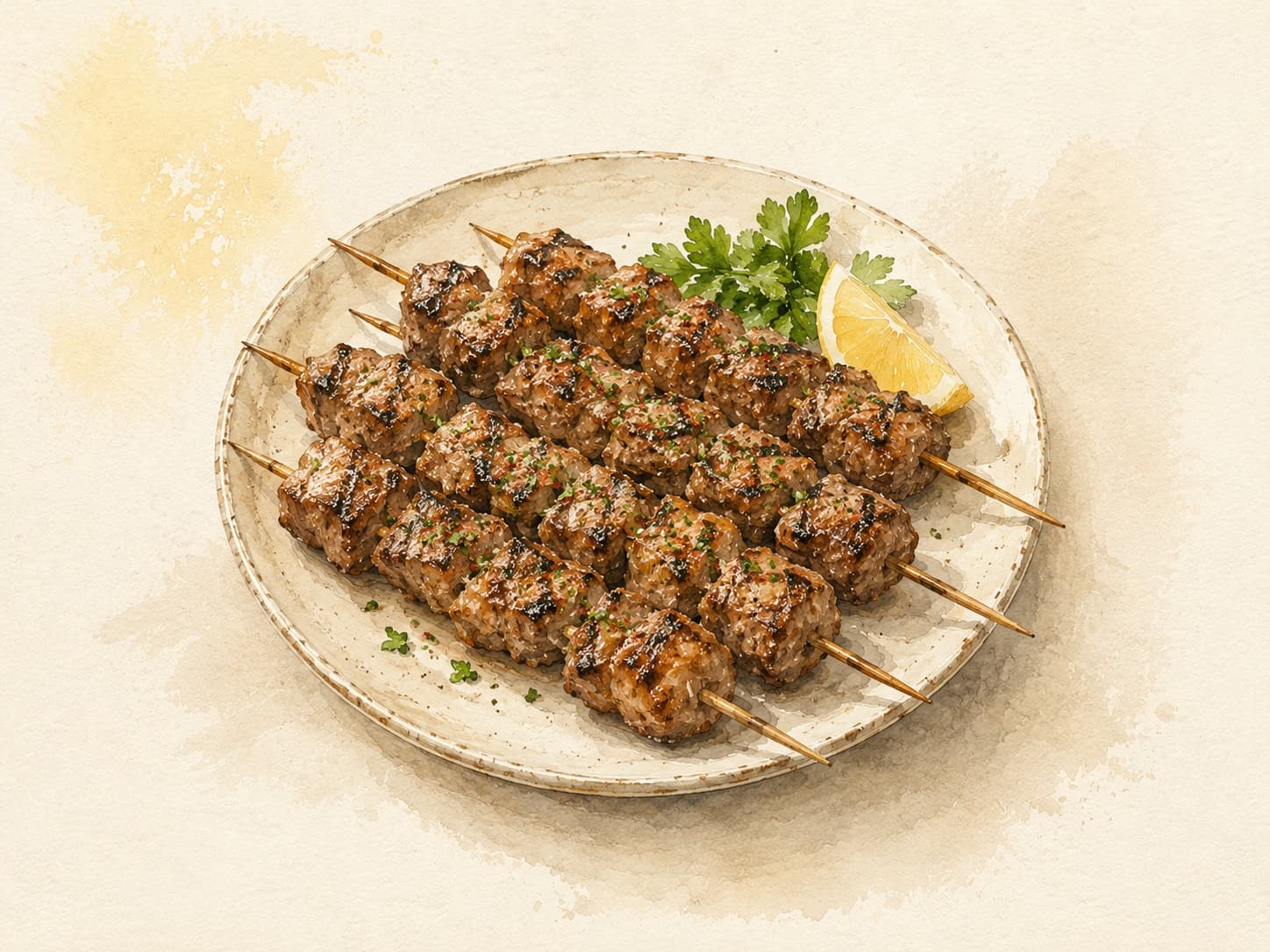
Ingredients
- 1.5 lbs lamb shoulder, cubed
- 3 tbsp olive oil
- 2 tsp ground cumin
- 1 tsp ground coriander
- 1 tsp smoked paprika
- 2 cloves garlic, minced
- 1 lemon, juiced
- Salt and pepper, to taste
Steps
In a bowl, combine olive oil, cumin, coriander, paprika, garlic, lemon juice, salt, and pepper.
Add lamb cubes to the marinade, ensuring even coating; marinate for at least 1 hour.
Preheat grill or skillet to high heat.
Skewer marinated lamb onto skewers, leaving space between pieces.
Grill skewers for about 10-12 minutes, turning occasionally, until browned and cooked through.
Serve hot, garnished with fresh herbs.
Tools you'll want
Why this works
Marinating the lamb enhances flavor and tenderness. The acid from lemon juice breaks down proteins, creating a more succulent texture. High heat during grilling caramelizes the meat's exterior, adding depth through Maillard reaction (the browning that happens when proteins and sugars hit high heat — it's what makes seared meat smell so good). This contrast between charred crust and juicy interior is key.
The balance of spices contributes significantly to the overall taste. Cumin and coriander provide warmth, while smoked paprika introduces a subtle smokiness. Each ingredient works synergistically, making each bite flavorful.
Using fresh herbs as garnish brightens presentation and adds a fresh note that cuts through the richness of the meat.
Common mistakes
Using the wrong cut.
Target: Lamb shoulder for ground kebabs (kofta-style, meaning seasoned minced meat shaped around the skewer); leg or loin for chunk kebabs (shish-style, meaning cubes threaded on the skewer). Both with 15–20 % fat.
Why it matters: Lamb leg or loin is lean — fine for chunk kebabs (which cook fast), but disastrous for ground kebabs where the fat melts and binds the meat together. Lean ground lamb falls off the skewer. Shoulder has the right fat-to-meat ratio for both.
What to do: Ask your butcher to grind shoulder. For chunk kebabs, choose a piece with visible marbling.
Workarounds:
- Only lean ground lamb available? Add 30 g of finely diced lamb fat or beef suet per 500 g lean lamb — restores the fat ratio.
- For a leaner option, use ground chicken thigh — close in texture to lamb but milder flavor.
Over-marinating with acidic ingredients.
Target: 2–4 hours in yogurt-based marinade; or 1–2 hours in lemon-based. NEVER overnight in acid.
Why it matters: Acid (lemon, vinegar, wine) denatures meat proteins. Short exposure tenderizes; long exposure mushifies — turning the surface into a chalky, broken-down layer that won't sear properly.
What to do: Use yogurt (mild acid + lactic enzymes) for 4-hour marinades. Save lemon juice for shorter marinades or as a finish.
Workarounds:
- Overnight prep needed? Marinate in olive oil + spices + onion juice (no acid) — keeps tenderizing without breakdown.
- For maximum tenderness without marination time, use a meat tenderizer (mallet) and a short 30-min salt rest.
Mincing the meat too smoothly.
Target: Coarse grind for kofta kebabs — visible texture, not paste.
Why it matters: Smooth ground meat (made in a food processor or fine grinder) becomes pasty and dense when cooked. Coarse grind retains air pockets and individual fibers, producing a juicier, more textured kebab.
What to do: Use the largest grinder plate (8–10 mm) or hand-chop with a heavy knife.
Workarounds:
- Pre-ground supermarket lamb is too fine — pulse with a few diced chunks in a food processor for 3 seconds to add texture variation.
Not kneading the ground meat.
Target: Knead the ground meat with onion, salt, and spices for 5+ minutes until it becomes sticky and cohesive.
Why it matters: Kebabs need to stick to the skewer. The kneading develops myosin (a sticky meat protein that gets activated when you work the meat — it's the same thing that makes sausage hold together), which acts as natural binder. Skip this and the kebabs slide off during cooking.
What to do: Use your hands. Press, fold, slap the meat against the bowl repeatedly. Cover and rest 30 minutes in the fridge before shaping.
Workarounds:
- Faster: pulse the mixture in a food processor for 10 seconds — over-develops the proteins (too dense) but works for sticking.
- For absolute stick reliability, add 1 tbsp grated onion per 500 g meat (the natural sugars also caramelize on grilling).
Cooking on too-low heat.
Target: Charcoal grill or screaming-hot cast-iron pan. Surface temperature 230 °C+.
Why it matters: Kebabs need a hard sear in 4–5 minutes — they're small and cook fast. Low heat stews the meat in its own juices instead of crusting it, producing pale, sad kebabs.
What to do: Pre-heat the grill or pan 10 minutes longer than seems necessary. Don't open the lid early.
Workarounds:
- Indoor without proper grill? Broiler on high is the next best — 5 cm from the element.
- For smoke aroma without a grill, briefly burn a small piece of cinnamon stick or dried rosemary in the pan during the last 30 seconds.
Not resting after cooking.
Target: Rest 3–5 minutes after pulling from heat.
Why it matters: Cut immediately and the juices flood the plate. A short rest lets it cool off its peak heat, so less floods the plate when you cut.
What to do: Tent loosely with foil. Use the rest time to plate and prep garnishes.
Workarounds:
- Serving on flatbread? Wrap the rested kebabs into the bread immediately — juices are absorbed by the bread instead of escaping.
What to look for
- A deep brown crust on the exterior of the kebabs.
- The safety check is a thermometer, not colour: chunk (shish) kebabs of whole-muscle lamb reach a measured 63 °C / 145 °F and then rest at least 3 minutes (a little pink can remain once they reach temperature), while ground (kofta) kebabs must reach 71 °C / 160 °F (no rest needed), because grinding spreads surface bacteria throughout. Clear juices and browning are cues, not the safety test.
- An aromatic smell of spices and grilled meat.
- Tender texture when biting into the kebab.
- A fresh herb garnish adding vibrant color.
Chef's view
Lamb kebabs hold a special place in Middle Eastern cuisine, representing hospitality and celebration. Traditionally cooked over open flames, they embody the communal spirit of sharing food. The method reflects a rich history of nomadic shepherds, who relied on simple ingredients and cooking techniques.
The kebab's versatility allows for countless variations across regions. From spices to cooking methods, each locale adds its unique twist. Embracing this dish connects one to its cultural roots while offering an opportunity for personal expression in the kitchen.
<!-- beginner-glossed v1 -->Get the essays in your inbox — free
Weekly notes on flavor, fermentation, and food history — the writing behind the Atlas of Flavor. No spam; unsubscribe anytime.