
Kung Pao Chicken
This dish achieves balance through the interplay of heat, sweetness, and crunch.
Contents (5 sections)▾
Ingredients
- 1 lb boneless chicken thighs, diced
- 1/2 cup roasted peanuts
- 1/2 cup bell peppers, diced
- 1/2 cup zucchini, diced
- 1/4 cup green onions, chopped
- 1/4 cup soy sauce
- 2 tbsp rice vinegar
- 2 tbsp hoisin sauce
- 2 tbsp sesame oil
- 1 tbsp chili paste
- 2 cloves garlic, minced
- 1 tsp ginger, minced
Steps
Marinate chicken in soy sauce, rice vinegar, and hoisin sauce for 15 minutes.
Heat sesame oil in a wide skillet over medium-high heat.
Add marinated chicken and stir-fry until browned, about 5-7 minutes. Cook until the thickest part reaches 74 °C / 165 °F on an instant-read thermometer — colour, juices and time are guides, not the safety test.
Add garlic, ginger, bell peppers, and zucchini; stir-fry for 3-5 minutes.
Stir in peanuts and chili paste; cook for an additional 2 minutes.
Garnish with green onions; serve hot.
Tools you'll want
Why this works
The marination of chicken in soy sauce and vinegar tenderizes the meat while imparting flavor. High heat during stir-frying caramelizes sugars, creating a slightly crispy exterior. The quick cooking preserves the vegetables’ crunch and color. Peanuts add texture and richness, balancing the heat from the chili paste.
Common mistakes
Using chicken breast instead of thighs.
Target: Boneless chicken thigh, 1.5 cm dice. Marbled, with skin removed for cleaner stir-fry.
Why it matters: Breast meat dries out in the high-heat stir-fry window — overcooked in seconds. Thigh meat stays juicy across the same window because of intramuscular fat. The dish was traditionally made with dark meat for this reason.
What to do: Buy boneless skinless thighs. Cut across the grain into uniform 1.5 cm cubes.
Workarounds:
- Stuck with breast → cut smaller (1 cm), velvet with cornstarch slurry + egg white before frying to retain moisture.
Overcrowding the wok.
Target: Chicken in single layer with space between pieces. Work in batches if needed.
Why it matters: Crowded wok = trapped steam = chicken poaches in its own juices rather than searing. No Maillard color, watery sauce, soggy texture.
What to do: Wok hot before chicken. Maximum 300 g per batch in a 30 cm wok. Combine batches at the end.
Workarounds:
- Small pan? Two batches at 150 g each. Quick reheat in the wok at the end.
Adding sauce too early.
Target: Sauce in last 60 seconds after chicken, peanuts, and vegetables are mostly cooked.
Why it matters: Early sauce = liquid pools, components stew rather than stir-fry. The defining texture (dry, glazed, with crisp peanuts) collapses into watery braise.
What to do: Pre-mix sauce in a bowl. Add at the end, toss vigorously for 30-60 seconds to coat and glaze.
Workarounds:
- Sauce splits or breaks → add 1 tsp cornstarch slurry to bind and thicken at the end.
Skipping the mise en place.
Target: Everything chopped, measured, and laid out before heat goes on. Total cook time is under 5 minutes.
Why it matters: Stir-fry is a 4-5 minute process. There's no time to chop garlic mid-cook — anything not ready gets skipped or burned. Real Chinese cooks set up the entire dish in bowls before lighting the burner.
What to do: Small bowls on the counter: protein, aromatics, vegetables, sauce, peanuts, garnish. Heat wok only when everything is staged.
Workarounds:
- Improvised cooking → keep dish simple (fewer components) if mise en place isn't possible.
Using regular dried chilies — or fresh.
Target: Sichuan dried red chilies (干辣椒), whole, lightly toasted in oil before adding aromatics.
Why it matters: The dish's character comes from toasted dried chili — smoky, deep heat, NOT fresh chili sharpness. Fresh chilies change the dish into a different stir-fry; chili paste adds wet salty flavor that flattens it.
What to do: Whole dried Sichuan chilies, scissors-snip the ends. Toast in oil 10-15 seconds until fragrant — don't burn.
Workarounds:
- No Sichuan chilies → dried chiles de árbol are the closest substitute; still toast first.
Missing the Sichuan peppercorn.
Target: Whole Sichuan peppercorns (花椒), 1 tsp, toasted with the chilies.
Why it matters: The numbing tingle (麻 má) from Sichuan peppercorn is what defines gōngbǎo as Sichuanese — not just spicy but má là (numbing-spicy). Without it, the dish is just "chicken with peanuts in hot sauce."
What to do: Toast peppercorns dry 30 seconds before grinding coarsely, OR add whole to oil with dried chilies.
Workarounds:
- No Sichuan peppercorn → the dish loses its identity; serve as "Sichuan-style chicken" rather than authentic kung pao.
What to look for
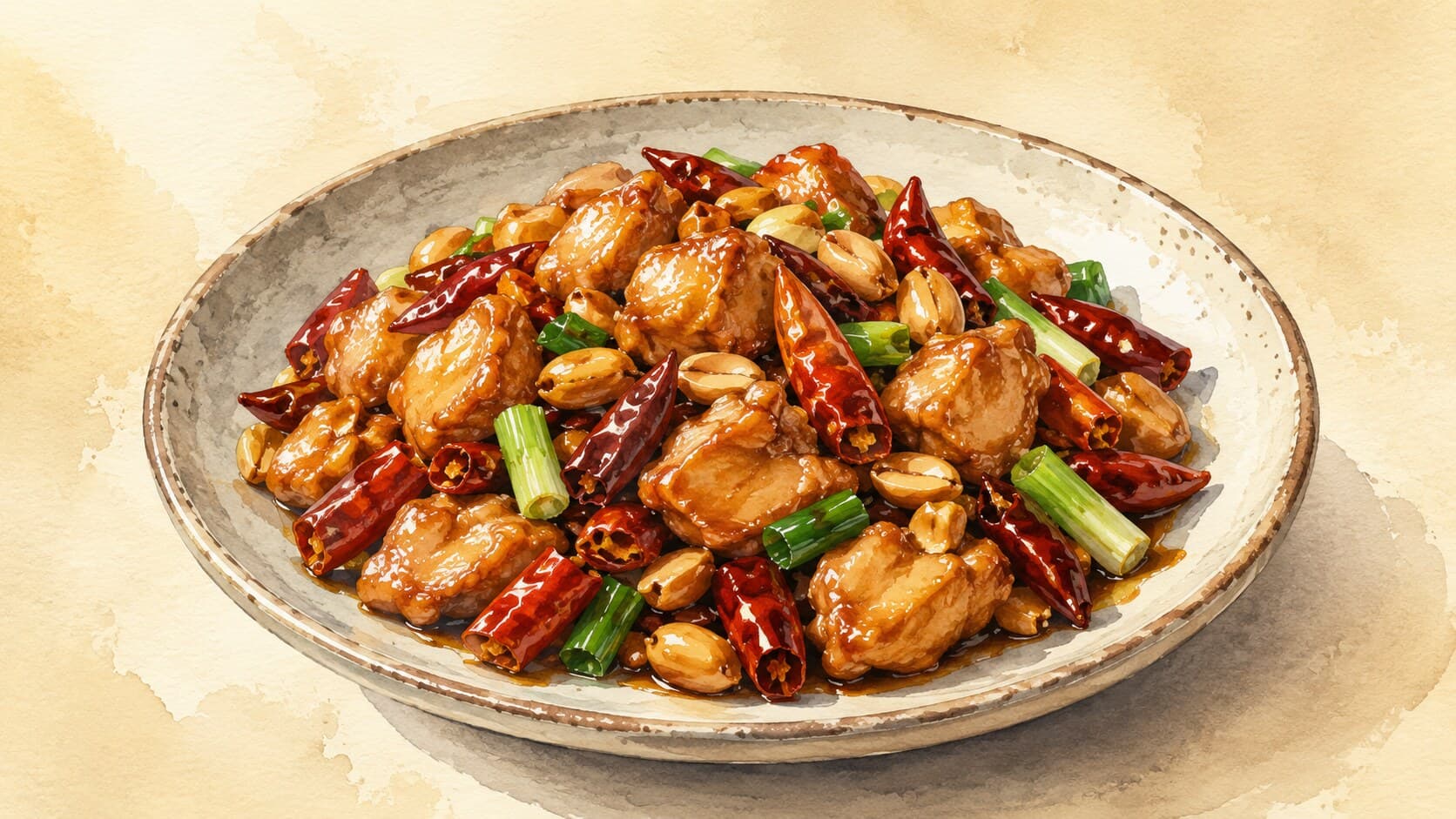
- Chicken should be golden brown and cooked through.
- Vegetables should retain their vibrant colors and slight crunch.
- Peanuts should be toasted and fragrant.
- A light glaze of sauce should coat the ingredients without pooling.
Chef's view
Kung Pao Chicken is a staple of Sichuan cuisine, embodying the balance of flavors hallmark to the region. It exemplifies the technique of stir-frying, which originated as a means to prepare meals quickly while preserving nutrients. The dish’s origins trace back to the Qing Dynasty, where it was favored by the governor of Sichuan, Ding Baozhen. Today, it showcases how regional ingredients can create a universally loved dish.
<!-- beginner-glossed v1 -->Get the essays in your inbox — free
Weekly notes on flavor, fermentation, and food history — the writing behind the Atlas of Flavor. No spam; unsubscribe anytime.