
Kimchi Jjigae
A traditional Korean stew that balances fermented flavors with protein and vegetables.
Contents (5 sections)▾
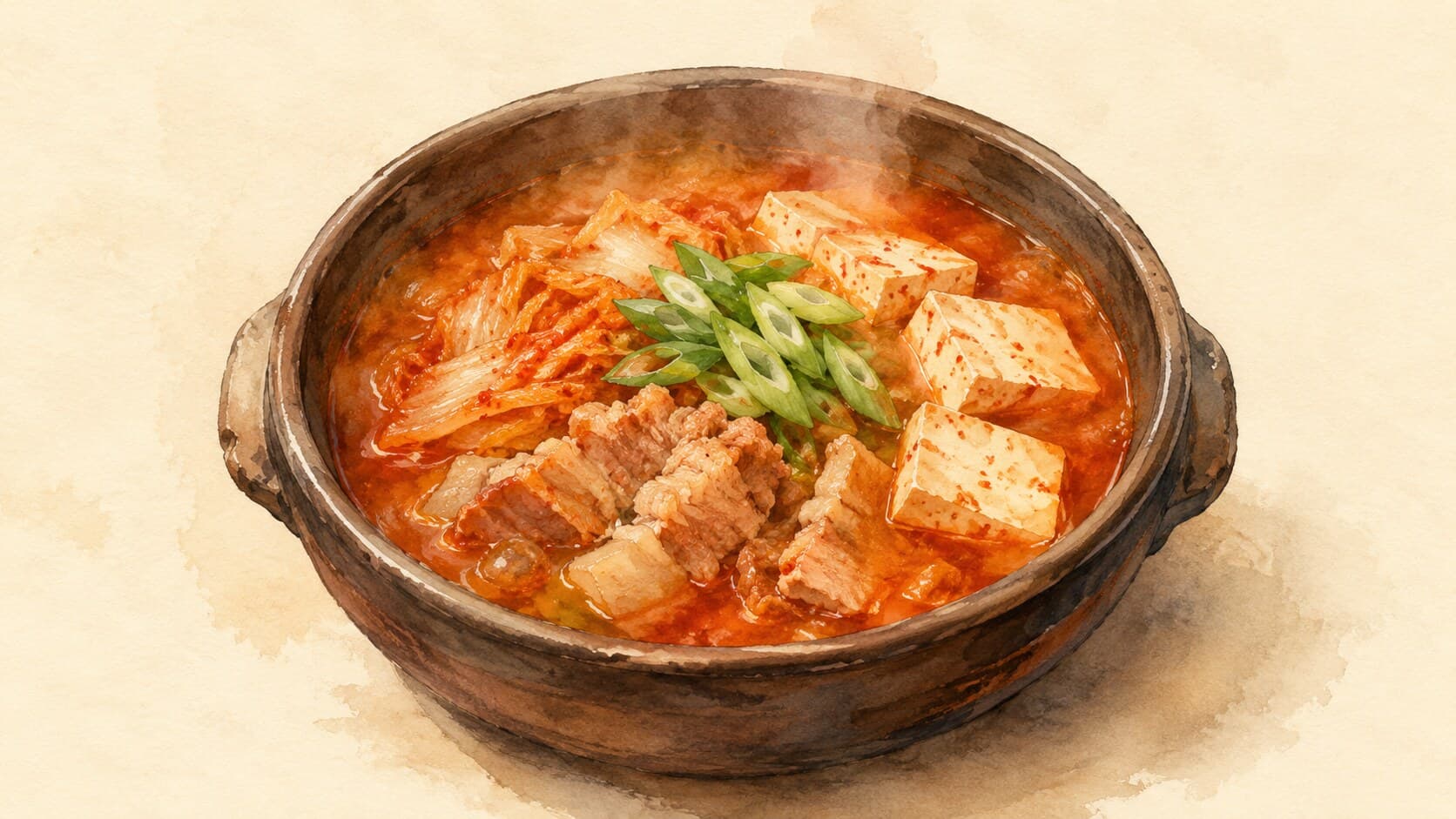
Ingredients
- 2 cups kimchi, chopped
- 1 cup pork belly, diced
- 1/2 onion, sliced
- 1/2 block tofu, cubed
- 2 green onions, chopped
- 2 cups water
- 2 tablespoons gochugaru (Korean red pepper flakes)
- 1 tablespoon soy sauce
Steps
In a wide heavy skillet, sauté pork belly over medium heat until browned.
Add onions and kimchi, stirring for 2-3 minutes until fragrant.
Pour in water, then add gochugaru and soy sauce; bring to a boil.
Reduce heat and simmer for 15 minutes, adding tofu halfway through.
Stir in green onions just before serving.
Tools you'll want
Why this works
Kimchi jjigae (a Korean stew built around aged, fermented kimchi) utilizes the umami depth of aged kimchi, which enhances the overall flavor complexity. The interaction between the fermented kimchi and the pork belly creates a savory base. Simmering over medium heat allows the ingredients to meld, while the gochugaru (Korean coarse-ground red chili flakes) infuses heat and color throughout the broth.
The tofu provides a contrasting texture, absorbing flavors while remaining soft. The balance of liquid to solid ingredients is crucial; too much water dilutes taste, whereas too little creates a thick stew. The addition of green onions at the end preserves their freshness, providing a bright note.
Common mistakes
Using fresh kimchi.
Target: Well-fermented kimchi (at least 2 weeks old) — sour, with visible bubbles. NOT freshly-made kimchi.
Why it matters: Fresh kimchi lacks the depth of flavor that fermentation develops. Old kimchi has the lactic acid sharpness and umami complexity that defines a great kimchi-jjigae. New kimchi produces a sweeter, shallower stew.
What to do: Buy aged kimchi from a Korean market, OR ferment your own for 2+ weeks. The "muk-eun ji" (deeply aged kimchi) is even better.
Workarounds:
- Only have fresh kimchi? Quick-age by leaving at room temperature for 2–3 days before cooking. Add 1 tbsp white vinegar to the stew to simulate the missing acid.
Skipping the sauté.
Target: Sauté pork belly + kimchi in oil for 5–7 minutes before adding water.
Why it matters: The sauté caramelizes the kimchi's natural sugars and renders the pork fat, building the deep umami base. Skipping it produces "boiled kimchi soup" — pleasant but missing the depth.
What to do: Heat sesame oil or pork fat in a pot. Add pork belly + kimchi + 1 tbsp gochugaru. Sauté until fragrant and the fat is red from the chili.
Workarounds:
- For vegetarian, use additional kimchi + dried mushroom for umami depth.
Wrong pork.
Target: Pork belly (samgyeopsal) sliced thin — with skin if possible. Fat content is essential.
Why it matters: Pork belly's rendered fat is the broth's body. Lean pork loin produces thin, watery stew without the silky mouthfeel of proper kimchi-jjigae.
What to do: Buy pork belly from a Korean or Asian market. Slice thin.
Workarounds:
- No pork belly? Bacon (unsmoked) is the closest substitute.
- For pork-free, tuna kimchi jjigae (with canned tuna) is a legitimate Korean variant.
Wrong broth base.
Target: Anchovy stock (myeolchi yuksu) — boil dried anchovies + dried kelp for 20 minutes, then strain.
Why it matters: Plain water produces flat kimchi-jjigae. Anchovy stock provides the umami foundation that makes a kimchi jjigae taste "real." It's a small step that dramatically changes the result.
What to do: Pre-make anchovy stock the day before. Or use packaged anchovy stock packets (sold at Korean markets).
Workarounds:
- No anchovies? Dashi packet (Japanese) is similar enough.
- Quick version: water + 1 tsp dashi powder + 1 tbsp soy sauce.
Adding tofu too early.
Target: Add tofu in the LAST 5 minutes of cooking, gently nestled into the stew.
Why it matters: Tofu becomes grainy and absorbs too much broth if cooked too long. Soft tofu also breaks down. The window is brief — add when the rest of the stew is fully cooked.
What to do: Cut tofu into 2 cm cubes. Add gently, let warm through 5 minutes, serve.
Workarounds:
- Use firm tofu for more handling reliability.
- For more substance, add tofu earlier with a piece of kombu underneath — kombu absorbs collision damage.
Insufficient gochugaru.
Target: 1 tbsp Korean gochugaru (chili flakes) per pot, in addition to the kimchi's own spice.
Why it matters: Kimchi alone doesn't provide enough kick — additional gochugaru intensifies the red color and rounds the heat. Without it, the jjigae looks pale and lacks the signature warmth.
What to do: Add gochugaru with the kimchi during sauté. Cook it briefly in the oil to bloom the spices.
Workarounds:
- No gochugaru? Korean gochujang (paste) — use 1 tbsp instead, with less heat but more body.
- Generic chili flakes: use less (they're hotter); add some smoked paprika for depth.
What to look for
- A vibrant red broth that signals a good amount of gochugaru.
- Tofu cubes should remain intact but soft.
- Kimchi should be tender but not mushy.
- Aromas of fermented cabbage and spices should fill the air.
Chef's view
Kimchi jjigae is more than a dish; it's a comforting staple in Korean households. Its roots trace back to the post-war era, where ingredients were often scarce. This stew embodies resourcefulness, transforming leftover ingredients into a hearty meal.
The cultural significance of kimchi jjigae extends beyond nourishment. It represents family gatherings and warmth. Each family has its variation, reflecting personal tastes and preferences. This adaptability makes it a dish rich in both flavor and history.
<!-- beginner-glossed v1 -->Get the essays in your inbox — free
Weekly notes on flavor, fermentation, and food history — the writing behind the Atlas of Flavor. No spam; unsubscribe anytime.