
Khao Soi
A rich and creamy curry noodle soup that balances texture and flavor.
Contents (5 sections)▾
Ingredients
- 200g egg noodles
- 400ml coconut milk
- 2 cups chicken broth
- 300g chicken thighs, boneless and skinless
- 2 tbsp red curry paste
- 1 tbsp soy sauce
- 1 tbsp fish sauce
- 1 tsp turmeric powder
- 1 onion, sliced
- 2 garlic cloves, minced
- 1 lime, juiced
- Fresh cilantro, for garnish
Steps
Cook the egg noodles according to package instructions; drain and set aside.
In a wide skillet, heat a little oil over medium heat and sauté onion and garlic until fragrant.
Add chicken thighs, cooking until browned, then stir in red curry paste and turmeric.
Pour in coconut milk and chicken broth; simmer for 15 minutes until chicken is tender. Cook until the thickest part reaches 74 °C / 165 °F on an instant-read thermometer — colour, juices and time are guides, not the safety test.
Shred the chicken and return it to the pot; add soy sauce and fish sauce.
Serve the soup over noodles, garnished with cilantro and a squeeze of lime.
Tools you'll want
Why this works
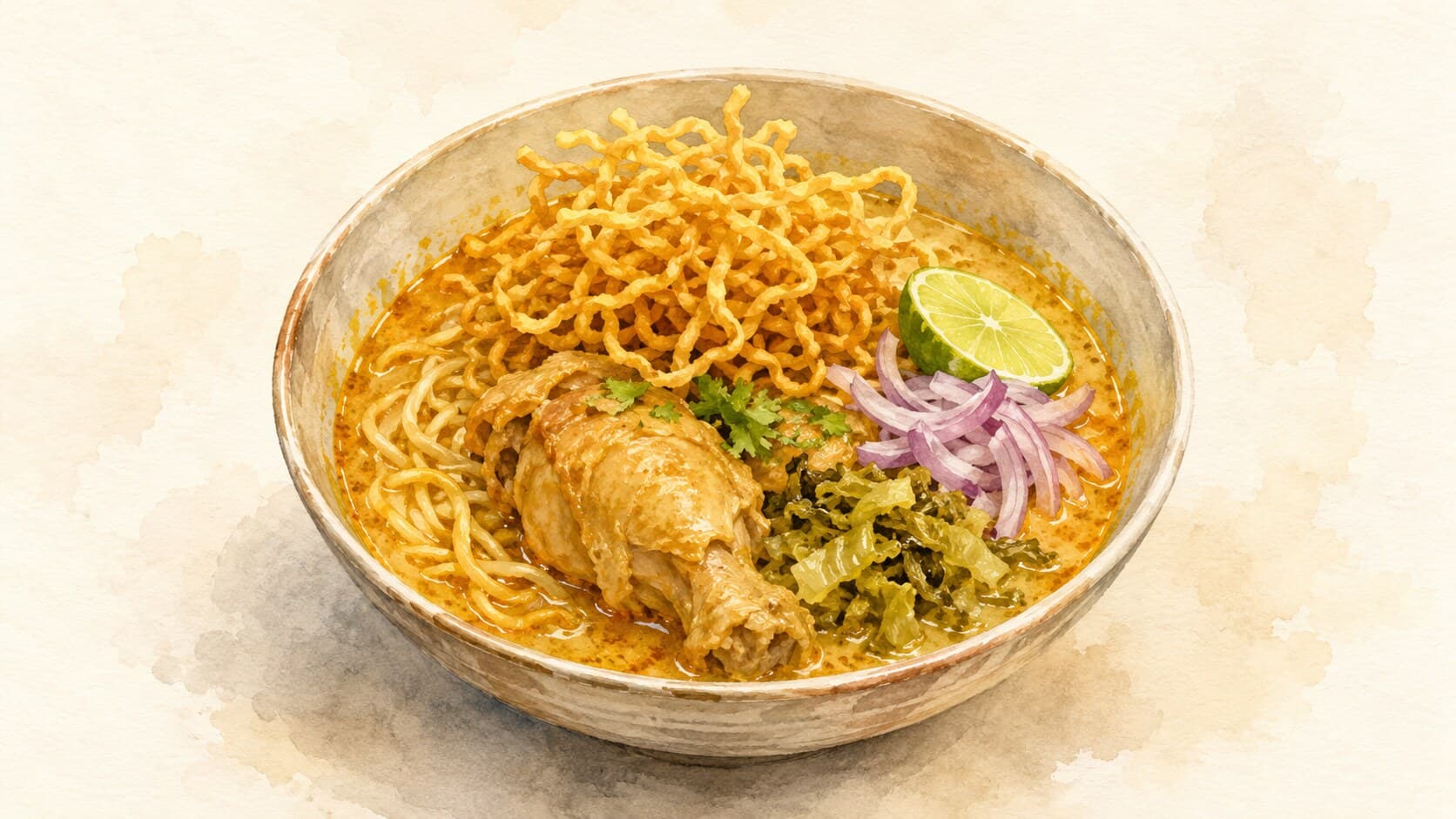
Khao Soi (Northern Thai coconut-curry noodle soup, with both boiled and crispy fried egg noodles in one bowl) relies on the combination of coconut milk and chicken broth to create a rich, creamy base. The curry paste infuses the liquid with deep flavors, while the turmeric adds warmth and an earthy tone. Cooking the chicken thighs in this mixture ensures they remain tender and flavorful, absorbing the spices fully.
The layering of textures is essential; the soft noodles contrast with the crispy fried noodles, enhancing the eating experience. The acidity of lime juice balances the richness, cutting through the creaminess. Properly simmering the soup allows the flavors to meld, creating a harmonious dish.
Common mistakes
Skipping the crispy noodle topping.
Target: Half the egg noodles fried until golden crispy, served as a topping over the soft noodles below.
Why it matters: Khao soi's defining textural signature is the contrast between soft soup noodles and crispy fried noodles on top. Without the crispy topping, the dish is just "yellow curry noodle soup" — pleasant but missing the identity.
What to do: Use a small handful of the same egg noodles, deep-fry at 170 °C until golden (about 60 seconds), drain. Crumble on top before serving.
Workarounds:
- Crunchy alternative: pre-fried Asian chow mein noodles from a packet (sold in Asian markets) work as a shortcut.
- Air-fryer version: spread soaked noodles thinly, air-fry at 200 °C for 8 minutes.
Using only red or green curry paste.
Target: Northern Thai khao soi paste (or "chicken khao soi paste") — features dried chilies, coriander seed, fennel seed, cardamom, ginger, garlic, shallot.
Why it matters: Khao soi has its own paste recipe, distinct from red or green Thai curry pastes. It contains spices (especially cardamom and fennel) that come from Burmese/Lao influence on northern Thai cuisine. Substituting red curry paste produces a Thai red curry with noodles — not khao soi.
What to do: Source from Asian markets (look for "Chiang Mai-style"). Or DIY: blend toasted dried chilies + cardamom + fennel + ginger + garlic + shallot + curry powder.
Workarounds:
- Quick approximation: red curry paste + 1/2 tsp ground cardamom + 1/2 tsp ground coriander + 1/4 tsp ground fennel + 1 tsp Madras curry powder.
Coconut milk added wrong.
Target: Crack coconut cream (the thick "head") in the pan with the curry paste at the start to fry the spices in coconut oil. Add the thinner coconut milk + broth later.
Why it matters: The aromatic oils in the curry paste are fat-soluble. Frying in the cracked coconut cream (which is mostly fat) extracts those aromatics dramatically. Pouring in liquid coconut milk straight produces a flatter, less aromatic soup.
What to do: Open a can without shaking — the cream rises to the top. Spoon off 4 tbsp of cream, fry with curry paste in a hot pan until the oil separates and turns red (about 3 minutes). Then add the rest.
Workarounds:
- Coconut cream and milk separated in the can already? Just use the cream directly.
- "Lite" coconut milk doesn't crack — use full-fat only for khao soi.
Skipping the pickled mustard greens.
Target: Pickled mustard greens (pak gad dong / 酸菜), thinly sliced, served as a topping/garnish.
Why it matters: The pickled greens provide the acidic cut that balances khao soi's richness. Without them, the soup feels heavy. This is one of three essential garnishes (the others being raw shallot and lime wedge).
What to do: Source from a Southeast Asian or Chinese grocery (usually canned). Drain and chop fine.
Workarounds:
- No pickled greens? Sauerkraut rinsed of its juice is a defensible substitute.
- For homemade quick-pickle, salt napa cabbage with rice vinegar overnight.
Wrong protein.
Target: Bone-in chicken thighs or drumsticks, simmered in the curry until the meat falls off the bone (about 40 minutes).
Why it matters: Khao soi uses braised bone-in chicken — the bones add flavor to the broth during the long simmer, and the meat becomes spoon-tender. Boneless breast in 10 minutes is dry and the broth is flat.
What to do: Use bone-in thighs. Brown briefly first if you want, then simmer in curry sauce.
Workarounds:
- For a faster version, use boneless thighs (no longer than 15 minutes simmer to avoid dryness).
- Beef variant exists — short ribs simmered for 90 minutes are spectacular.
Eating without the four garnish bowls.
Target: Serve with 4 separate small bowls: pickled mustard greens, raw shallot slices, lime wedges, dried chili flakes/oil.
Why it matters: Khao soi is meant to be customized by each eater. Pre-mixing or skipping garnishes removes that interactivity — and removes the textural and flavor variation that makes the dish exciting.
What to do: Set up the bowls before plating the soup.
What to look for
- A vibrant, golden color from the turmeric and curry paste.
- Creamy consistency of the broth, not too watery.
- Tender chicken pieces that shred easily.
- Crispy fried noodles on top, adding texture contrast.
- Fresh garnishes that are bright and aromatic.
Chef's view
Khao Soi is a dish from Northern Thailand, reflecting the region's cultural influences from neighboring Myanmar. Its unique blend of flavors showcases the harmony between spicy, sweet, and creamy elements. The dish often evokes memories of family gatherings and local markets, where vendors serve steaming bowls to eager customers.
In preparing Khao Soi, attention to detail is vital. The balance of ingredients and the method of cooking contribute significantly to its signature profile. This dish is not just food; it represents a connection to heritage and the sharing of traditions through cuisine.
<!-- beginner-glossed v1 -->Get the essays in your inbox — free
Weekly notes on flavor, fermentation, and food history — the writing behind the Atlas of Flavor. No spam; unsubscribe anytime.