
Japchae
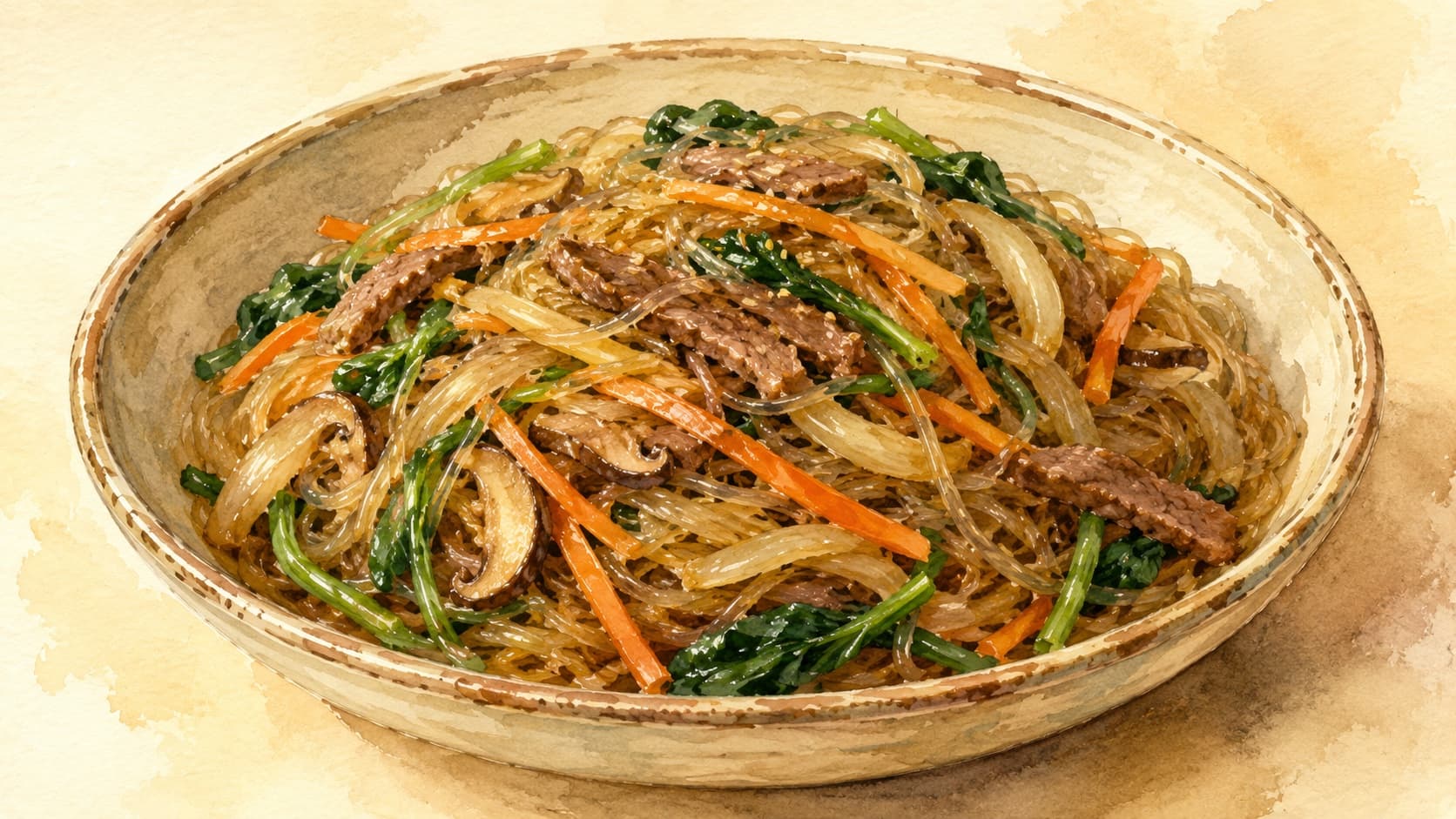
Japchae combines stir-fried glass noodles with vegetables and protein, showcasing the balance of flavors and textures.
Contents (5 sections)▾
Ingredients
- 200g sweet potato starch noodles
- 2 tablespoons vegetable oil
- 1 medium onion, sliced
- 1 carrot, julienned
- 1 bell pepper, sliced
- 100g spinach, blanched
- 2 green onions, chopped
- 2 cloves garlic, minced
- 3 tablespoons soy sauce
- 2 tablespoons sesame oil
- 1 tablespoon sugar
- Sesame seeds, for garnish
Steps
Soak the sweet potato starch noodles in warm water for 30 minutes.
In a large skillet, heat vegetable oil over medium heat, then sauté onion and garlic until fragrant.
Add carrot and bell pepper; stir-fry for 3-4 minutes.
Drain and add the soaked noodles, soy sauce, sesame oil, and sugar; toss to combine.
Fold in spinach and green onions, cooking until heated through.
Serve hot, garnished with sesame seeds.
Tools you'll want
- · Digital kitchen scale (gram precision)
Why this works
Japchae's success lies in the balance of flavors and textures. The sweet potato starch noodles absorb the sauce and retain a chewy texture, which contrasts with the crunch of the sautéed vegetables. Stir-frying at medium heat allows for even cooking without overcooking the ingredients. The quick cooking time preserves the bright colors and nutrients of the vegetables.
Proper soaking of the noodles is crucial. This step ensures they become pliable enough for stir-frying. The ratios of soy sauce and sesame oil enhance the umami flavor while providing a rich aroma. Incorporating sugar balances the saltiness, creating a harmonious taste profile.
The final step of adding blanched spinach and green onions adds freshness and a pop of color. This ensures the dish is not only flavorful but visually appealing.
Common mistakes
Wrong noodles.
Target: Korean sweet potato glass noodles (dangmyeon, 당면) — translucent, springy, made from sweet potato starch. NOT mung bean noodles, NOT rice noodles.
Why it matters: Japchae's defining ingredient is dangmyeon. Mung bean glass noodles (Vietnamese) are too soft; rice noodles have wrong texture. Korean sweet potato noodles have the chewy springiness that defines the dish.
What to do: Source from a Korean grocery. Look for "potato starch noodles" or "dangmyeon."
Workarounds:
- For the closest substitute, sweet potato starch noodles from any East Asian market work.
Cooking everything together.
Target: Stir-fry each vegetable separately, season each individually with sesame oil + soy + garlic, then combine.
Why it matters: Different vegetables cook at different rates. Cooked together, beef sprouts wilt while carrots stay raw. Separately cooked preserves each vegetable's identity and gives the final dish textural and visual variety.
What to do: Spinach, mushrooms, carrots, peppers, onions — each cooked alone in a hot pan with a touch of sesame oil. Combine at the end with noodles and beef.
Workarounds:
- For convenience, cook in order of resilience (longest-cooking first), removing each as done.
Boiling noodles too long.
Target: Boil dangmyeon for 5–6 minutes until tender but with bite. Rinse with cold water to stop cooking.
Why it matters: Overcooked dangmyeon turns soft and sticky — the signature springy chewiness is lost. The window is precise.
What to do: Time exactly 5 minutes. Test a strand for chew. Drain, rinse in cold water, drain again.
Workarounds:
- Once cooked and rinsed, the noodles can sit briefly with sesame oil — prevents sticking.
Skipping the spinach blanch.
Target: Blanch spinach 30 seconds in salted water, ice-bath, squeeze dry.
Why it matters: Raw spinach added directly to a hot pan releases a flood of water, deflating into limp green strings. Blanched-and-squeezed spinach retains color, texture, and adds the right amount of moisture.
What to do: Blanch first. Squeeze hard. Then season individually with sesame oil + salt before mixing with everything else.
Workarounds:
- For richer flavor, season the spinach with garlic + soy after squeezing.
Insufficient sesame oil.
Target: Toasted sesame oil added at multiple points: for cooking, for seasoning each vegetable, and as a finishing drizzle.
Why it matters: Sesame oil is the flavor signature of japchae. Skimping produces "Korean stir-fry" but not "japchae." The layered sesame aroma is structural.
What to do: Use Korean toasted sesame oil (darker, more aromatic than Japanese). Drizzle at every stage.
Workarounds:
- For deeper flavor, finish with sesame seeds toasted briefly — adds textural element.
What to look for
- Vibrant colors from the vegetables indicating freshness.
- A glossy sheen on the noodles, showing they are well-coated in sauce.
- The noodles should be chewy, not mushy.
- Vegetables should maintain some crunch, not be limp.
- A fragrant aroma from the sautéed garlic and sesame oil.
Chef's view
Japchae is a Korean dish with roots tracing back to the 17th century. Originally served at royal banquets, it symbolizes harmony and balance, reflecting the essence of Korean cuisine. The interplay of textures and flavors makes it a versatile dish, suitable for various occasions.
Mastering japchae involves understanding the timing and technique of stir-frying. Each ingredient plays a vital role in the final outcome. By focusing on the quality of the ingredients and proper preparation methods, you can create a dish that honors its cultural significance while satisfying modern palates.
<!-- beginner-glossed v1 -->Get the essays in your inbox — free
Weekly notes on flavor, fermentation, and food history — the writing behind the Atlas of Flavor. No spam; unsubscribe anytime.