
Inarizushi
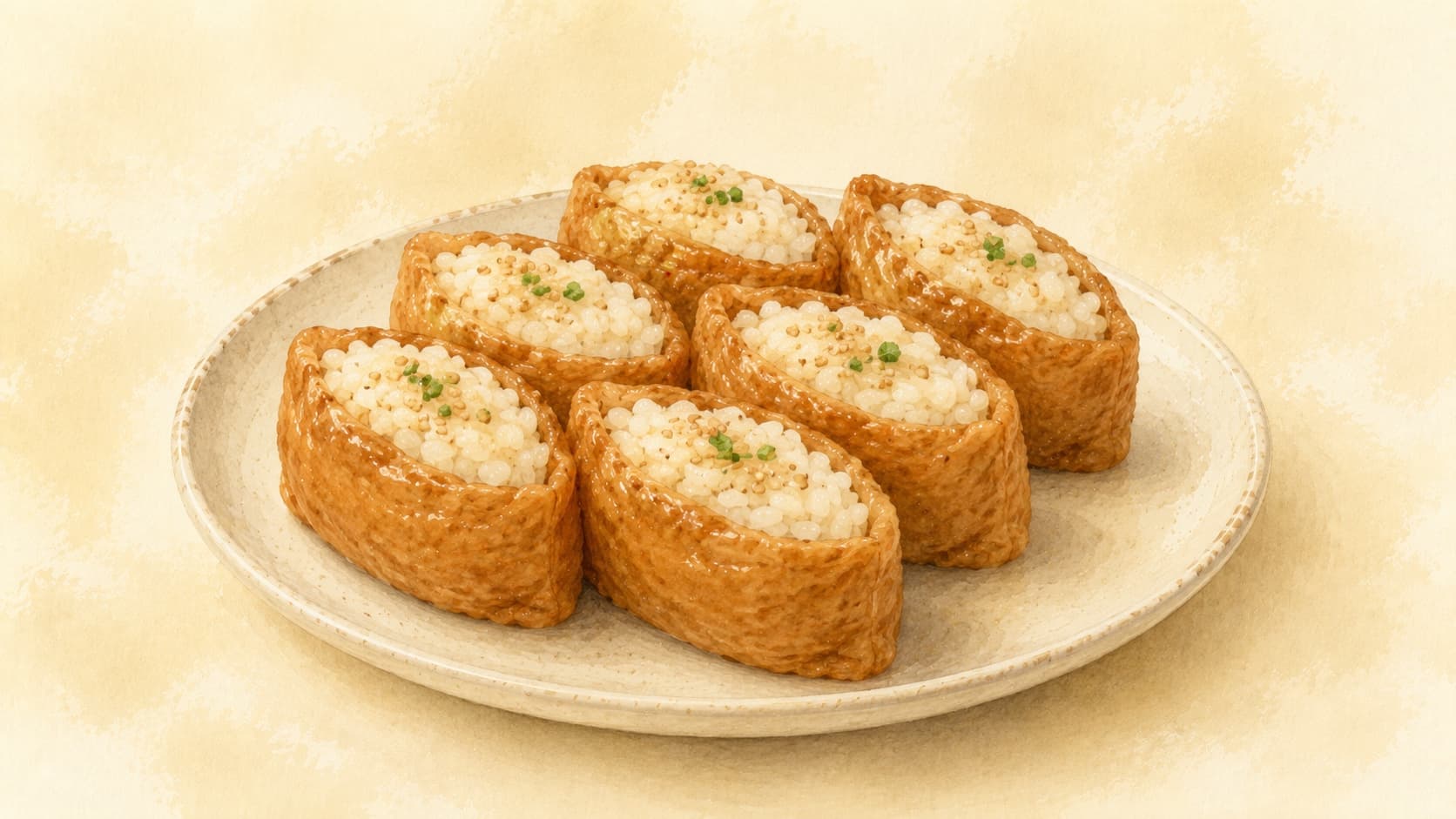
Inarizushi combines sweet, marinated tofu pouches with seasoned rice, creating a balanced bite.
Contents (5 sections)▾
Ingredients
- 12 pieces of inari-age (fried tofu pouches)
- 2 cups sushi rice
- 2 tablespoons rice vinegar
- 2 tablespoons sugar
- 1 tablespoon soy sauce
- 1 teaspoon salt
- 1 tablespoon sesame seeds, toasted
- 2 green onions, finely chopped
Steps
Rinse sushi rice under cold water until water runs clear.
Cook rice according to package instructions.
In a small saucepan, combine rice vinegar, sugar, soy sauce, and salt; heat until dissolved.
Once rice is cooked, mix with vinegar mixture, sesame seeds, and green onions.
Stuff each inari-age pouch with a generous amount of rice.
Serve chilled or at room temperature.
Tools you'll want
Why this works
Inarizushi relies on the balance of flavors and textures. The sweet marinade for the tofu pouches enhances the umami of the rice filling. Sushi rice, sticky and glossy, adheres well to the pouches and provides a satisfying bite. The ratio of vinegar to sugar is crucial; it prevents the rice from becoming overly sweet while retaining a balanced acidity.
The preparation method emphasizes attention to rice cooking. Proper rinsing removes excess starch, yielding fluffy grains. The cooking temperature must be controlled to ensure the rice cooks evenly without becoming mushy. Combining warm rice with the marinade allows for better absorption of flavors.
Common mistakes
Skipping the inari-age (aburaage) parboil.
Target: Pre-cook the fried tofu pouches in dashi + soy + mirin + sugar for 15–20 minutes until they absorb the seasoning.
Why it matters: Raw aburaage tastes bland and slightly oily. The simmering in seasoning liquid is what makes inarizushi distinctive — the sweet-savory pouch absorbs flavor that contrasts with the cool rice.
What to do: Halve aburaage diagonally OR rectangularly, open into pockets, simmer in seasoning, cool in the liquid.
Workarounds:
- For shortcut, canned seasoned inari-age is widely available and acceptable.
Pouring boiling water on aburaage causes blow-out.
Target: Pour boiling water over aburaage in a colander to remove excess oil BEFORE seasoning.
Why it matters: Aburaage is fried so it carries excess oil. The hot-water rinse (yu-toshi) removes that oil and helps the pouch absorb the seasoning liquid better.
What to do: Aburaage in a colander, pour boiling water over, drain.
Workarounds:
- For even cleaner taste, blanch briefly (30 seconds) instead of just pouring water.
Wrong rice — too wet.
Target: Rice cooked with slightly less water than usual (5–10% less). Sushi vinegar mixed in.
Why it matters: Sushi rice for inari needs to be slightly drier than nigiri rice — it sits inside a moist pouch and rehydrates. Too-wet rice from cooking + moist pouch = soggy inari.
What to do: Reduce water slightly. Cook normally. Fan while mixing in sushi vinegar.
Workarounds:
- For more body, mix in toasted sesame seeds + chopped pickled ginger for textural interest.
Overstuffing.
Target: Fill pouches to about 80% — leave room to tuck the opening shut.
Why it matters: Overstuffed pouches tear or won't close. Authentic inari can be open-faced or closed; either way, modest filling.
What to do: Pack rice firmly into a ball first, then place inside. Should fit comfortably with room to fold.
Workarounds:
- For visual variety, leave half open-faced and half closed.
Serving cold from fridge.
Target: Serve at room temperature — not cold.
Why it matters: Cold inari has hardened, chalky rice. Room-temp serves the rice's textural quality best while the pouch is moist.
What to do: Make ahead but bring to room temperature before serving. 1 hour out.
Workarounds:
- For travel/picnic, room-temperature inari are ideal — naturally holds well unrefrigerated for a few hours.
What to look for
- Pouches should be golden-brown and slightly shiny.
- Rice should be sticky but not mushy, holding its shape when packed.
- Garnish should be vibrant and fresh, adding color contrast.
- The aroma should be sweet and savory, hinting at the seasoning.
- Each pouch should feel plump but not overstuffed.
Chef's view
Inarizushi is a staple in Japanese cuisine, often enjoyed during festivals or as a quick snack. Its origins trace back to the Edo period, where it was crafted for offerings to the deity Inari. The sweetness of the pouches reflects the agricultural bounty in Japan, celebrating the harvest.
The technique of preparing inarizushi emphasizes simplicity and the quality of ingredients. It encourages mindful eating, as each bite is a reflection of the harmony within Japanese food culture. The dish represents sustenance as well as the artistry and thoughtfulness inherent in Japanese culinary practices.
<!-- beginner-glossed v1 -->Get the essays in your inbox — free
Weekly notes on flavor, fermentation, and food history — the writing behind the Atlas of Flavor. No spam; unsubscribe anytime.