
Green Curry Chicken
This recipe combines a balance of aromatic spices and fresh ingredients for a rich, flavorful dish.
Contents (5 sections)▾
Ingredients
- 1 lb chicken breast, cut into bite-sized pieces
- 2 tbsp green curry paste
- 1 can (13.5 oz) coconut milk
- 1 cup chicken broth
- 1 bell pepper, sliced
- 1 cup bamboo shoots, drained
- 1/2 cup fresh basil leaves
- 1 tbsp fish sauce
- 1 tbsp sugar
- 1 tbsp vegetable oil
- Juice of 1 lime
- Steamed jasmine rice for serving
Steps
Heat oil in a wide skillet over medium heat.
Add green curry paste, sauté for 1-2 minutes until fragrant.
Pour in coconut milk and chicken broth, stirring to combine; bring to a gentle simmer.
Add bell pepper and bamboo shoots, and simmer for a few minutes.
Add the chicken and simmer gently until cooked through to 74°C / 165°F at the thickest piece — about 6 minutes for thin slices.
Stir in basil, fish sauce, sugar, and lime juice; serve with rice.
Tools you'll want
Why this works
The balance of coconut milk and green curry paste (a Thai blend of green chiles, lemongrass, galangal, and herbs pounded into a paste) creates a creamy base. Coconut milk provides fat, enhancing flavor and texture. The paste contains ingredients like green chilies, herbs, and spices, contributing to complexity. Sautéing the paste releases essential oils, maximizing aroma.
Simmering the chicken in this mixture allows it to absorb flavors. The heat helps break down proteins, making the chicken tender without overcooking. The addition of lime juice at the end brightens the dish, adding acidity that balances richness.
Maintaining a steady simmer ensures even cooking and prevents the sauce from curdling. Fresh herbs like basil add freshness, contrasting with the warm spices. Each component works synergistically, creating a cohesive dish.
Common mistakes
Not cracking the coconut cream.
Target: Open a can of coconut milk without shaking — spoon out 4 tbsp of the thick cream on top. Fry the curry paste in this cream until oil separates.
Why it matters: Green curry paste's aromatic compounds (lemongrass oils, kaffir lime, basil) are fat-soluble. Frying them in coconut cream extracts those aromatics dramatically. Pouring straight liquid coconut milk over the paste produces a flat, weak curry.
What to do: Heat cream in a wide pan until the oil starts to separate (about 3 minutes). Add paste, stir-fry for 2 minutes until the oil turns bright green. Then add the rest of the coconut milk and aromatics.
Workarounds:
- "Lite" coconut milk doesn't crack — use full-fat for green curry.
- Can already shaken? You can't separate the cream — fry the paste in 1 tbsp neutral oil first instead.
Boiling the coconut milk.
Target: After all ingredients are combined, maintain a bare simmer — never boil hard.
Why it matters: Boiling breaks the coconut milk's emulsion, producing greasy surface slicks. Once broken, the visual appeal is lost and the texture becomes uneven.
What to do: Reduce to low heat once curry is assembled. Watch the surface — small bubbles, not roiling.
Workarounds:
- Already broken? Whisk in 1 tsp cornstarch slurry to partially re-emulsify.
Wrong curry paste.
Target: Authentic Thai green curry paste (Mae Ploy or Maesri brands), or homemade with fresh green chilies + lemongrass + galangal + kaffir lime zest + shrimp paste.
Why it matters: Generic "Thai curry paste" sold at supermarkets is often a sweet-leaning blend that lacks heat and complexity. Green curry depends on the punch of fresh green chilies and the aromatic foundation of the proper paste.
What to do: Buy authentic brands from an Asian grocery, or make fresh. Generic supermarket brands are a distant third.
Workarounds:
- Homemade quick paste: blend 4 fresh green chilies + 1 stalk lemongrass (white part) + 2 cm galangal + 2 kaffir lime leaves + 2 cloves garlic + 1 tsp shrimp paste.
Overcooking the chicken.
Target: Chicken thigh, sliced thin, cooked just until opaque — about 6 minutes in the simmering curry.
Why it matters: Even with thigh meat, prolonged simmering at boil-like temperatures toughens the muscle fibers. The chicken should finish cooking in the same time the vegetables (eggplant, peppers) need.
What to do: Add chicken to the curry once the coconut milk has come to a simmer. Time it: 6 minutes for thin-sliced thigh. Confirm safety with a food thermometer — 74°C / 165°F at the thickest piece — rather than by colour, which is not a reliable test.
Workarounds:
- For larger chunks of chicken, parboil first separately, then add to the curry in the final 5 minutes.
Adding Thai basil too early.
Target: Tear and add basil leaves in the FINAL 30 seconds, off-heat ideally.
Why it matters: Thai basil's aroma compounds (estragole, methyl chavicol, anethole) are volatile. Sustained heat destroys them — pre-added basil turns black and loses aroma.
What to do: Have the basil ready. The moment you turn off the heat, tear leaves in, give one stir, serve.
Workarounds:
- Italian basil works as a substitute (different but valid) — also add at the end.
- Cilantro can replace basil for a different but defensible profile.
Wrong vegetables.
Target: Thai eggplant (small pea eggplant or apple eggplant), bamboo shoots, kaffir lime leaves. NOT zucchini, broccoli, or "stir-fry vegetable mix."
Why it matters: Each authentic vegetable contributes specific texture and flavor. Thai eggplant has slight bitterness that balances the curry's sweetness; bamboo shoots add crunch and earthiness.
What to do: Source from an Asian market. Thai eggplants are sometimes labeled "pea eggplant" or "apple eggplant."
Workarounds:
- No Thai eggplant? Use Japanese eggplant (slender, purple) sliced thin — closest substitute.
- Add kabocha squash for sweetness (a legitimate variation, common in northern Thai versions).
What to look for
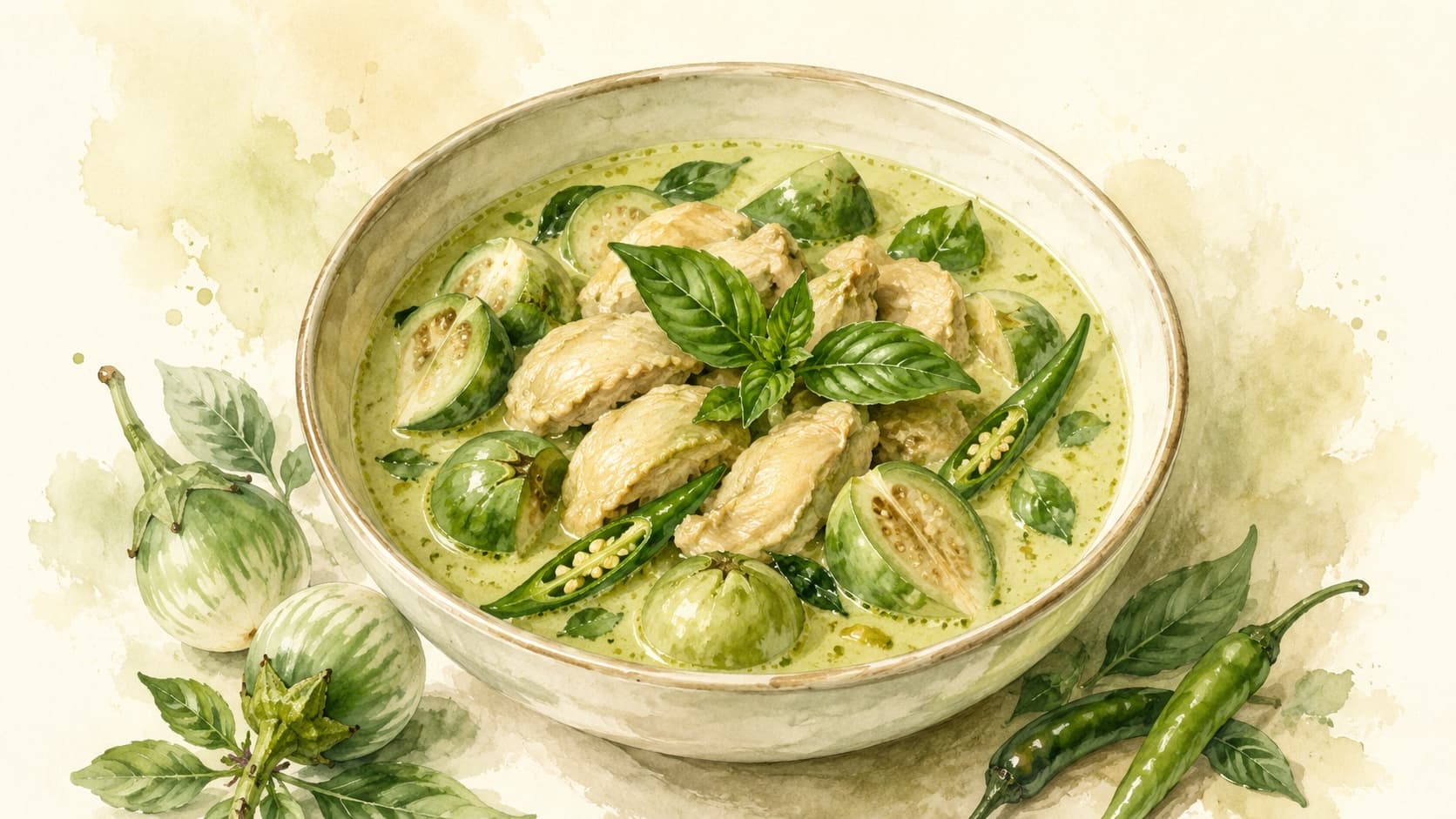
- The curry should have a bright green color.
- Chicken pieces should be tender but not falling apart.
- The sauce should be creamy without separation.
- Fresh basil should remain vibrant and not wilted.
- A fragrant aroma should fill the kitchen.
Chef's view
Green curry is a staple in Thai cuisine, representing a blend of flavors and textures. It reflects the balance of sweet, salty, and spicy, a hallmark of the region's culinary philosophy. The use of fresh ingredients is paramount; they enhance both flavor and visual appeal.
Historically, green curry symbolizes the harmony of rural Thai cooking. It showcases local herbs and spices, emphasizing seasonal ingredients. Making green curry is not merely a cooking process; it is an expression of culture and tradition, connecting the cook to their heritage.
<!-- beginner-glossed v1 -->Get the essays in your inbox — free
Weekly notes on flavor, fermentation, and food history — the writing behind the Atlas of Flavor. No spam; unsubscribe anytime.