
Gratin Dauphinois
Cream, potato starch, garlic-rubbed dish, no cheese. The traditional version of the Dauphiné gratin is a study in how potato starch thickens cream into a set custard during a long, slow bake.
Contents (7 sections)▾
Ingredients
- 1 kg floury potatoes (Bintje or similar — consistent thickness when sliced)
- 500 ml double cream (35–40% fat)
- 200 ml whole milk
- 2 cloves garlic, peeled and halved
- 10 g unsalted butter (for the dish)
- 7 g fine sea salt
- 1 g white pepper
- 1 g freshly grated nutmeg
Steps
Preheat the oven to 150°C (fan) or 160°C (conventional). Rub the inside of a gratin dish (approximately 25 × 18 cm, 5 cm deep) with the cut side of the garlic until the garlic leaves a visible damp residue. This infuses the dish surface with garlic vapor during the long bake rather than placing raw garlic pieces in the cream where they would become assertive. Butter the dish generously after the garlic rub.
Peel the potatoes and slice them on a mandoline to 2–3 mm thickness. Do not wash the slices — you want the surface starch intact. The potato starch on the sliced surfaces is what will thicken the cream during baking. Washing removes this starch and produces a gratin with a less cohesive set. Season the slices lightly as you work.
In a saucepan, combine the cream, milk, salt, white pepper, and nutmeg. Warm over medium-low heat until just below a simmer. Add the potato slices and cook gently for 8–10 minutes, stirring occasionally. The potato starch begins to leach into the hot cream immediately — this pre-thickening step gives the gratin a better-set structure from the start and reduces the risk of the cream breaking during the oven bake.
Transfer the potato-cream mixture to the prepared gratin dish. Arrange the potato slices so they are mostly submerged in the cream. Press them down with the back of a spoon so the top layer of potatoes is just covered by cream. The cream level will drop during baking as starch absorbs it; if the top layer is above the cream line initially, it will brown rather than set.
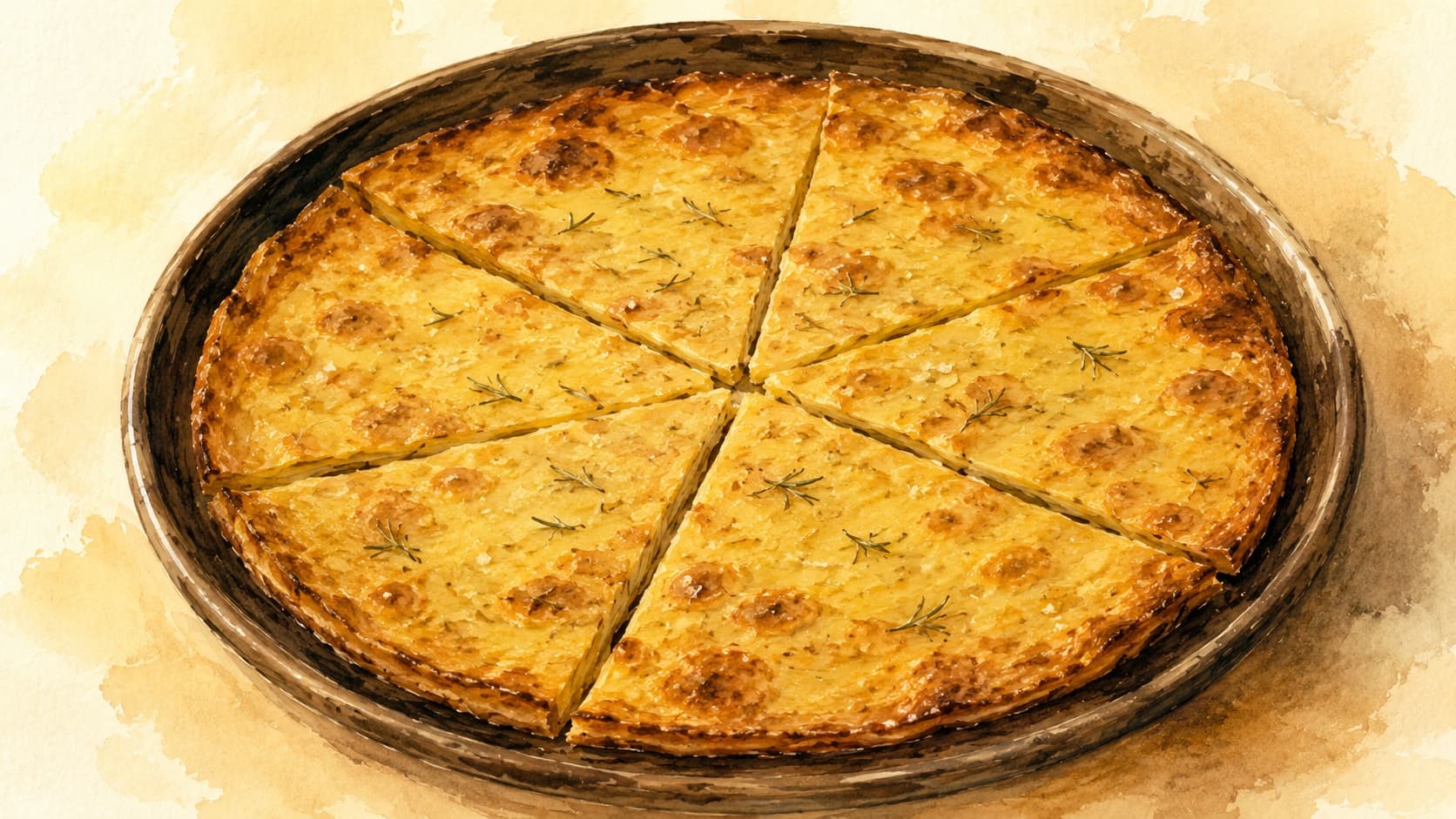
Bake at 150°C for 75–80 minutes. The gratin is done when a sharp knife meets no resistance passing through the center, the cream has set into a trembling, barely-mobile custard around the potatoes, and the surface is deeply golden-brown. The low temperature is not optional — 180°C or above causes the cream to boil, the fat to separate, and the potato starch to over-gelatinize into a gluey rather than custard-like texture. Let the gratin rest for at least 10 minutes before serving: the set continues as it cools slightly, and cutting before resting produces a liquid-filled dish rather than a structured slice.
Tools you'll want
- · Digital kitchen scale (gram precision)
Why this works
Gratin dauphinois (a sliced-potato dish baked slowly in cream until the top turns golden) without cheese is a precision calibration of potato starch and cream fat. The starch that remains on the sliced potato surface — if not washed away — leaches into the hot cream during both the stovetop pre-cooking and the oven bake, gradually increasing the cream's viscosity until it sets into a trembling, custard-like structure around the potato layers.
This is gelatinization in a cream medium. The same starch granules that thicken béchamel or pommes purée are here doing a slower, more diffuse job: leaching from the potato surface into the surrounding cream at a pace controlled by temperature. At 150°C, this process takes 75–80 minutes. At 180°C, the cream boils, which has two consequences: the fat in the cream separates (a cream at rolling boil will break), and the starch gelatinizes too rapidly, producing a gluey, overcooked matrix rather than the smooth, lightly set custard that defines good gratin dauphinois.
The garlic-rubbed dish is not a perfunctory step. Rubbing the dish with raw garlic infuses the porous baking surface with a thin film of garlic oil. As the gratin bakes, this film warms and releases garlic vapor into the cream layer in contact with the dish walls. The effect is subtle and distributed — a ghost of garlic that seasons the whole without making any mouthful taste specifically of garlic. Garlic pieces placed in the cream itself behave differently: they soften, release their full flavor into the surrounding liquid, and produce assertive garlic notes in some bites and none in others.
The question of cheese is not a quality question — it is a recipe question. The traditional Dauphiné version uses no cheese. The gratin savoyard, from the neighboring Savoie region, adds Beaufort or Comté. Both are correct preparations. The difference is that cheese adds a protein crust (from Maillard reactions during browning) that changes the texture of the top layer completely. Without cheese, the top potato surface browns slowly in the oven's dry air — a lighter, more unified crust.
Common mistakes
Washing the potato slices.
Target: Slice potatoes and leave the starch ON. Do NOT rinse or soak.
Why it matters: The surface starch is what binds the gratin together — it gelatinizes during cooking and creates the firm-but-creamy structure. Washing removes this essential element and produces a loose, watery gratin.
What to do: Slice with a mandoline. Use immediately. White powder visible on slices is correct.
Workarounds:
- If you sliced ahead and need to prevent browning, store covered in cream (not water).
Low-fat cream.
Target: Heavy cream (35% fat minimum). Half-and-half or single cream is NOT enough.
Why it matters: Lower-fat creams separate under sustained heat — the fat breaks out, leaving curdled liquid. 35% cream maintains a stable emulsion through the long bake.
What to do: Use heavy cream. Resist substitutions.
Workarounds:
- For lighter gratin, use 50/50 cream + whole milk — works but watch for separation.
Oven too hot.
Target: 150–165 °C for 80–90 minutes. Long, low, slow.
Why it matters: Above 165 °C, the cream boils and breaks. Gratin dauphinois requires a slow, gentle cook — the cream needs time to penetrate potatoes without separating.
What to do: Patience. Low oven. Plan ahead.
Workarounds:
- For dinner-party timing, par-cook potatoes in cream on the stovetop, then finish in oven (50 min vs 80) — faster.
Skipping stovetop pre-cook.
Target: Simmer potato slices + cream + garlic + nutmeg on the stovetop for 8–10 minutes BEFORE assembling.
Why it matters: Pre-cooking partially gelatinizes starch and pre-sets structure — significantly reduces risk of the center remaining liquid after 80 minutes in the oven.
What to do: Combine in a pot, simmer gently. Then transfer to baking dish.
Workarounds:
- For traditional method, skip — but accept slightly longer oven time and more uneven cooking.
Cutting too soon.
Target: Rest 10–15 minutes after baking before cutting.
Why it matters: Hot gratin dauphinois is molten — starch-set structure needs cooling time to firm enough for clean slicing.
What to do: Wait. Use the time to plate accompaniments.
Workarounds:
- For square portions, refrigerate overnight, cut into squares, then reheat — restaurant trick.
What to look for
- Raw potato slices: 3 mm thick, uniform, with a faint white powder of starch on the surface. If they look completely clean, they've been washed.
- Pre-cook stage: the cream thickens slightly and the potato slices begin to flex. The cream should coat the slices rather than pour off them freely.
- During baking: the cream bubbles very gently at the edges, barely simmering. If it boils vigorously, reduce the oven temperature.
- At 75 minutes: insert a knife into the center — it should pass through with no resistance. The surface should be deeply golden-brown with a slight crust.
- After resting: the gratin holds its shape when cut. The cream layer is set and slightly trembling, not liquid.
Chef's view
The absence of cheese in the traditional gratin dauphinois is, for many people who have only encountered the cheese-topped version, initially counterintuitive. The cheese-topped version is more visually dramatic, more texturally varied (crisp crust, molten interior), and more tolerant of variation in potato type and cream fat content. The traditional version without cheese is subtler: the surface is quieter, the starch-set custard is more uniform, and the garlic-and-nutmeg seasoning comes through without competition from strong dairy ferment flavors.
My view is that the traditional version rewards patience. The long, low bake at 150°C is slow by any measure, but it produces a structure that the high-temperature version cannot: a cream that has set gradually, absorbing potato starch without boiling, producing a smooth, continuous custard layer between each potato slice.
For practical home cooking, using a thermometer to verify the oven temperature is worthwhile — home ovens can run 15–20°C above their set temperature, which would push the gratin into territory where the cream breaks. An oven thermometer is the single most useful tool for this recipe.
Chef Test Notes
Tested three cream fat levels: 20%, 30%, and 40%. At 20%, the cream separated visibly by the 40-minute mark — pools of yellowed fat on the surface. At 30%, occasional slight separation at the edges; structurally adequate but not ideal. At 40%, the gratin was stable throughout the entire 80-minute bake. Also tested washed vs unwashed potato slices: the unwashed version set significantly more firmly and required less cream to achieve the same result. Tested oven temperatures: 150°C produced the best-set, smoothest texture; 170°C caused cream separation at 50 minutes.
Related glossary terms
- Gelatinization — how the potato starch leaching into the cream produces the set structure
- Emulsion — what double cream is, and why low-fat cream breaks under sustained heat
- Maillard reaction — the browning at the potato surface during the final stage of baking
Get the essays in your inbox — free
Weekly notes on flavor, fermentation, and food history — the writing behind the Atlas of Flavor. No spam; unsubscribe anytime.