
Potato Gnocchi
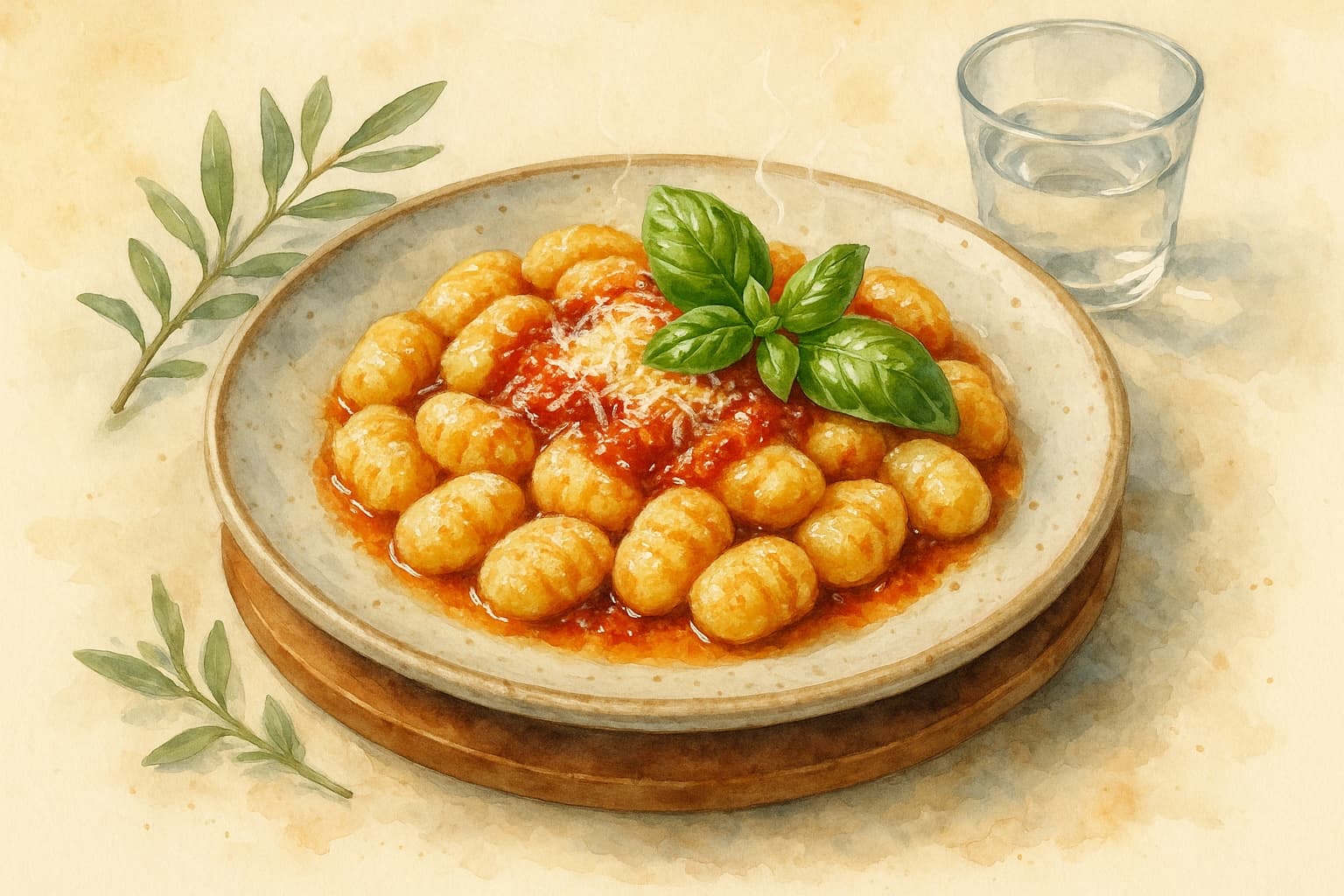
Gnocchi achieves its soft texture through the balance of starchy potatoes and precise flour incorporation.
Contents (5 sections)▾
Ingredients
- 2 lbs russet potatoes
- 1 ½ cups all-purpose flour
- 1 large egg
- 1 teaspoon sea salt
- ¼ teaspoon nutmeg (optional)
- ½ cup grated Parmesan (optional)
- sauce of choice for serving
- fresh herbs for garnish
Steps
Boil potatoes in salted water until tender, about 40 minutes.
Drain and cool slightly, then peel and mash until smooth.
Mix in flour, egg, salt, and nutmeg to form a soft dough.
Roll dough into logs, cut into pieces, and shape with a fork.
Boil gnocchi in salted water until they float, about 2-3 minutes.
Serve with sauce and garnish with herbs.
Tools you'll want
- · Digital kitchen scale (gram precision)
Why this works
Gnocchi's texture relies on the right potato variety, preferably russet for its high starch content. Boiling the potatoes keeps them moist while preventing excess water absorption, which would alter the dough consistency. The flour-to-potato ratio is critical; too much flour makes gnocchi (small Italian potato dumplings shaped by hand) dense, while too little leads to them falling apart.
Incorporating egg binds the ingredients and adds richness. Mixing should be gentle to avoid overworking the gluten, which can create a chewy texture. Rolling the dough into logs and cutting them into pieces helps maintain a light, airy structure. Proper cooking involves boiling until the gnocchi float, indicating they are cooked through.
Common mistakes
Using waxy potatoes.
Target: Starchy varieties — russet (US), Maris Piper or King Edward (UK), Bintje (Europe), 男爵 dansyaku (Japan). High starch, low moisture.
Why it matters: Waxy potatoes (Yukon Gold, Red Bliss, new potatoes) have a higher water content and lower starch ratio. The resulting dough requires more flour to bind, which produces dense, gummy gnocchi. Starchy varieties yield naturally light, fluffy results with minimal flour.
What to do: Old potatoes (stored a few weeks) work better than fresh — moisture has evaporated, intensifying starch.
Workarounds:
- Only waxy potatoes available? Reduce egg by half and use a coarser texture — produces a denser but still respectable gnocchi.
- For "0-flour" gnocchi (chef's challenge version), use the starchiest potatoes you can find + an egg yolk only.
Boiling potatoes instead of baking them.
Target: Bake whole, unpeeled potatoes at 200 °C for 1 hour. NEVER boil.
Why it matters: Boiling waterlogs the potatoes, which then need more flour to bind — creating the gummy texture you're trying to avoid. Baking drives off moisture and intensifies starch — the right starting point for gnocchi.
What to do: Pierce skins, bake on a rack (air circulation), peel while hot using a fork to hold them. Pass immediately through a ricer (a press that pushes potato through small holes like rice grains) or food mill.
Workarounds:
- No oven time? Microwave the potatoes for 10–12 minutes pierced — drier than boiling, works in a pinch.
- For maximum starch concentration, slice cold baked potatoes into thick rounds and re-bake for 10 more minutes.
Mashing instead of ricing.
Target: Pass the cooked potato through a ricer or food mill, NOT a masher or fork.
Why it matters: Mashing crushes the starch cells, releasing gluey amylopectin that binds the dough into a heavy mass. Ricing pushes the potato through without crushing — yielding light, fluffy particles ideal for gnocchi.
What to do: Use a potato ricer (cheap, single-purpose tool). Rice while the potatoes are HOT — easier to push through, and steam escapes during processing.
Workarounds:
- No ricer? A food mill works equally well. A box grater (fine side) is a distant third option.
- A wide-mesh strainer pushed through with a wooden spoon is the cheapest workaround.
Adding too much flour.
Target: About 25 % flour by weight (200 g flour for 800 g riced potato). Adjust DOWN if dough is workable.
Why it matters: Every gram of additional flour past the minimum makes gnocchi denser. Inexperienced cooks add flour until the dough "looks right" — by which point it's already too much.
What to do: Start with 80 % of the recipe's flour amount. Knead briefly. If dough is too sticky to shape, add more flour 1 tbsp at a time. Stop the moment you can roll a rope.
Workarounds:
- Test single gnocchi early: shape one, boil for 1 minute. If it falls apart, add a touch more flour. If it's gummy, you've already added too much for the rest of the batch.
- For absolute beginners, add 1 egg yolk per kg of potato — binds the dough with less flour required.
Overworking the dough.
Target: Mix only until JUST combined. 30 seconds maximum kneading.
Why it matters: Working the dough develops gluten in the flour, which produces chewy, tough gnocchi. Unlike pasta, gnocchi wants minimal gluten development.
What to do: Mix gently with a wooden spoon, then fold by hand only enough to make a cohesive mass. Walk away from kneading instinct.
Workarounds:
- Overworked? You can rest the dough 30 minutes in the fridge to let the gluten relax slightly — partial recovery.
- For very forgiving texture, use a 50/50 mix of all-purpose flour and rice flour (rice flour has no gluten).
Cooking too long.
Target: Gnocchi cook in 90 seconds — they float to the top as the signal of doneness. Remove with a slotted spoon immediately.
Why it matters: Gnocchi continue cooking after they float. Past 30 seconds of floating, they absorb water, weaken, and break apart on contact with sauce.
What to do: Boil in salted water (10 g salt per liter). Drop in, watch them float, count to 10, scoop out.
Workarounds:
- For dinner-party timing, par-boil gnocchi (50 seconds in water, ice bath, dry on a tray). Finish later in a hot pan with sauce — actually classier than freshly boiled.
- For pan-fried gnocchi, par-boil first, then crisp in butter — gives gorgeous golden edges.
What to look for
- Gnocchi should be light and airy, not dense.
- They will float to the surface of boiling water when cooked.
- The surface should have a slight sheen from the starch.
- A gentle bounce-back occurs when pressed lightly.
- The edges should be slightly ridged from shaping.
Chef's view
Gnocchi has a rich history in Italian cuisine, reflecting regional variations in ingredients and preparation methods. Traditionally, they are a peasant dish, utilizing available ingredients. The technique of shaping gnocchi with a fork creates texture and helps sauce adhere better.
In contemporary cooking, gnocchi continues to evolve with various flavors and fillings. The versatility of this dish allows for endless combinations, making it a staple in both home kitchens and fine dining. Understanding the fundamental mechanics behind gnocchi is essential for mastering this classic dish, ensuring a delightful dining experience.
<!-- beginner-glossed v1 -->Get the essays in your inbox — free
Weekly notes on flavor, fermentation, and food history — the writing behind the Atlas of Flavor. No spam; unsubscribe anytime.