
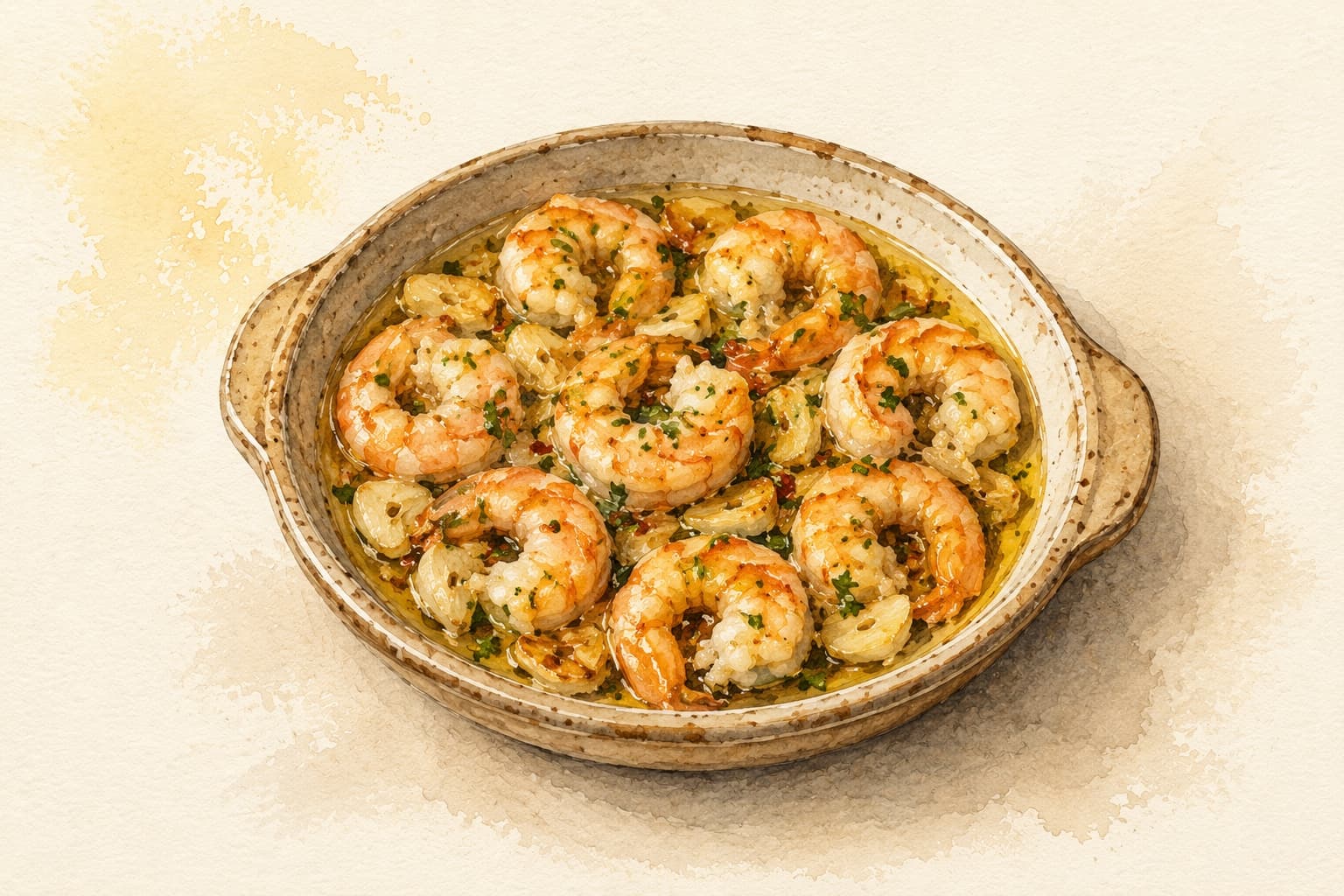
Gambas al Ajillo
This dish showcases the interplay of garlic and shrimp, highlighting the importance of timing in flavor development.
Contents (5 sections)▾
Ingredients
- 500g large shrimp, peeled and deveined
- 6 cloves garlic, thinly sliced
- 1 red chili, sliced
- 100ml olive oil
- Salt, to taste
- Fresh parsley, chopped
- Juice of 1 lemon
- Crusty bread, for serving
Steps
Heat olive oil in a wide skillet over medium heat.
Add sliced garlic and chili, sauté until garlic is golden.
Increase heat to high, add shrimp and season with salt.
Cook until shrimp are pink, about 3-4 minutes.
Stir in lemon juice and garnish with parsley.
Serve immediately with crusty bread.
Tools you'll want
Why this works
Gambas al Ajillo (Spanish shrimp sizzled in garlic-infused olive oil) relies on the Maillard reaction (the browning chemistry between amino acids and sugars that builds savory, roasted flavor) for flavor development. Cooking garlic until golden enhances its sweetness while mitigating bitterness. The oil serves as a medium for heat transfer, allowing the shrimp to cook evenly. High heat is essential; it ensures the shrimp are seared quickly, preserving their texture.
The ratio of oil to shrimp affects the dish's richness. Olive oil adds flavor and assists in extracting the aromatic compounds from the garlic. Sautéing the garlic first allows it to infuse the oil, creating a base layer of flavor. The final addition of lemon juice brightens the dish, balancing its richness.
Timing is crucial. Overcooking shrimp results in a rubbery texture. They should be removed from heat as soon as they turn pink. This precision ensures the shrimp remain tender and juicy.
Common mistakes
Burning the garlic.
Target: Sliced garlic in COLD olive oil, brought up slowly over medium heat — pale gold, never dark.
Why it matters: Burnt garlic is acrid and bitter, ruining the whole dish (the oil is the sauce, and burnt garlic infuses the entire pan). Once dark, the dish can't be saved.
What to do: Slice garlic thin. Start in cold oil with chili flakes. Heat over medium until garlic just turns pale golden — about 4 minutes. Pull garlic out OR keep going as long as it doesn't darken.
Workarounds:
- Burnt? Strain the oil, start over with fresh garlic. Cheap insurance.
- For more forgiveness, use smashed whole cloves (less surface area than slices) and remove before adding shrimp.
Wet shrimp.
Target: Shrimp patted aggressively dry before they hit the oil.
Why it matters: Water on shrimp surface flash-boils on contact with hot oil, creating steam that spatters and prevents browning. The shrimp turn rubbery instead of pink-and-tender.
What to do: Pat dry with paper towels right before cooking. Salt lightly to draw additional moisture.
Workarounds:
- Frozen shrimp? Thaw on a rack in the fridge overnight — produces drier shrimp than rushed thawing.
Cooking at low heat.
Target: Medium-high heat after garlic is infused. Oil shimmering, almost smoking when shrimp hit.
Why it matters: Gambas al ajillo's signature is a brief, hot sear — shrimp pink and curled in 90 seconds. Low heat steam-poaches the shrimp, producing flaccid texture and no caramelization.
What to do: After garlic is golden, RAISE the heat. Add shrimp, swirl once, count 90 seconds, off.
Workarounds:
- Use a wide skillet — more surface area, faster cooking, better browning.
Overcrowding the pan.
Target: Single layer of shrimp, NO touching.
Why it matters: Crowded shrimp release water that pools in the pan, dropping temperature and steaming the shrimp. The "ajillo" magic depends on each shrimp searing in oil.
What to do: Cook in batches if needed. Each shrimp should have 5 mm of space around it.
Workarounds:
- For 4+ portions, cook in 2 batches in the same pan — temperature recovers between batches.
Wrong shrimp.
Target: Medium-large shrimp (16/20 count per pound), head-on if possible.
Why it matters: Small shrimp overcook instantly; jumbo shrimp need slightly different technique. Head-on shrimp release flavor into the oil dramatically (the head fat).
What to do: Source from a fishmonger. Spanish recipes often use gamba blanca (white shrimp) or carabineros (large red shrimp). Standard Atlantic white shrimp work.
Workarounds:
- Smaller shrimp? Reduce cooking time to 60 seconds and increase the count.
- For deeper flavor without head-on, add 1 tsp pimentón (smoked paprika) to the oil.
Skipping the bread.
Target: Serve with crusty bread for sopping up the chili-garlic oil.
Why it matters: Half the joy of gambas al ajillo is the leftover oil — bread to sop is structurally important to the dish, not optional. Without bread, half the flavor goes uneaten.
What to do: Slice fresh crusty bread (sourdough, baguette) and toast briefly. Serve alongside.
Workarounds:
- No fresh bread? Toasted day-old bread works equally well and might be even better — sturdier for sopping.
What to look for
- Shrimp should be pink and opaque.
- Garlic should be golden, not brown.
- The oil should shimmer but not smoke.
- The aroma should be fragrant and inviting.
- A vibrant color contrast from the chili and parsley.
Chef's view
Gambas al Ajillo is a classic Spanish dish, often enjoyed as a tapa (small Spanish shared plate). Its origins lie in the Andalusian region, where seafood is abundant. The simplicity of the ingredients allows the quality of the shrimp to shine.
The dish reflects the Spanish culinary philosophy of using fresh, high-quality components. Each ingredient plays a role, from the aromatic garlic to the vibrant chili. It’s a celebration of flavor and technique, perfect for sharing with friends over a glass of wine.
<!-- beginner-glossed v1 -->Get the essays in your inbox — free
Weekly notes on flavor, fermentation, and food history — the writing behind the Atlas of Flavor. No spam; unsubscribe anytime.