
Focaccia
This recipe illustrates the balance of hydration and fermentation to create a light, airy bread.
Contents (5 sections)▾
Ingredients
- 500g all-purpose flour
- 350ml water, lukewarm
- 2 tsp instant yeast
- 10g salt
- 50ml olive oil, plus extra for drizzling
- 1 tbsp fresh rosemary, chopped
- 1 tsp sea salt, for topping
- Optional: cherry tomatoes, olives, or other toppings
Steps
In a bowl, mix flour, yeast, and salt.
Gradually add lukewarm water and olive oil, mixing until a sticky dough forms.
Knead for 5-10 minutes until smooth, then let rise for 1 hour, or until doubled in size.
Preheat oven to 220°C (428°F).
Spread dough onto a greased baking tray, dimple the surface, and add toppings.
Bake for 20 minutes or until golden brown, then drizzle with olive oil.
Tools you'll want
- · Digital kitchen scale (gram precision)
Why this works
Focaccia's success hinges on the hydration level (how much water the dough holds, relative to flour weight) of the dough. A higher hydration (70% or more) yields a softer crumb. The instant yeast allows for quicker fermentation, creating gas bubbles that expand during baking. The addition of olive oil enriches the dough, enhancing flavor and texture.
Fermentation is critical. Allowing the dough to rise for at least an hour develops gluten structure and flavor. Dimples created before baking trap olive oil and toppings, preventing sogginess. Baking at high temperatures ensures a crisp crust while keeping the inside tender.
Common mistakes
Using too little water (dry dough).
Target: 80–85 % hydration — a wet, sticky dough that's almost too soft to handle.
Why it matters: Focaccia's signature open crumb (large irregular holes) comes from high hydration. Dry dough produces a dense, bready focaccia that's essentially a thick crust without the airy interior. Most home recipes under-hydrate because the dough feels "wrong."
What to do: Trust the wet dough. Use a stand mixer or stretch-and-fold method (no traditional kneading). The dough should pour, not sit.
Workarounds:
- For beginners, start at 75 % and work up — high-hydration doughs are challenging.
- For ultra-open crumb (Genovese style), push to 90 % hydration with extended cold fermentation.
Skipping the long, cold ferment.
Target: Cold-ferment dough for 18–24 hours in the fridge after the initial bulk rise.
Why it matters: Cold ferment develops flavor (organic acids, complex carbohydrates) and structure (stronger gluten network from slow protein development). Same-day focaccia tastes flat compared to long-fermented.
What to do: Mix dough, bulk-rise 1 hour at room temperature, transfer to a covered container, refrigerate overnight. Continue the next day.
Workarounds:
- No time for cold ferment? Use 2 % salt + 0.5 % less yeast in same-day dough — partial flavor compensation.
Too little olive oil.
Target: Generous extra-virgin olive oil — both in the dough (5 % by flour weight) and on the surface (4 tbsp per 30 cm pan).
Why it matters: Olive oil IS the focaccia's flavor and texture signature. Without enough, you get bread, not focaccia. The oil hydrates the crust, creates the characteristic crispy bottom, and fills the dimples.
What to do: Generously coat the pan with oil before placing dough. Drizzle more oil on top before the final rise and dimpling.
Workarounds:
- For deeper flavor, use a fruity Sicilian or Pugliese EVOO.
Skipping the dimpling.
Target: Press fingers deep into the dough, creating dimples that nearly reach the pan bottom.
Why it matters: Dimples hold oil, salt, and topping in pockets — they're the texture signature of focaccia. Smooth top makes flatbread, not focaccia. They also help structure during baking.
What to do: After the final rise (1 hour at room temperature after shaping), oiled fingers, deep dimples. Be aggressive — don't be afraid to deflate slightly.
Workarounds:
- For visual flair, after dimpling press in cherry tomatoes, olives, or rosemary sprigs — they nestle in the holes.
Baking too low or too short.
Target: 220 °C for 20–25 minutes, until deep golden and the bottom (lift with a spatula) is browned.
Why it matters: Focaccia needs aggressive heat to develop the contrast between crispy bottom + chewy interior + golden top. Low heat produces pale, doughy focaccia.
What to do: Pre-heat oven thoroughly. Use a metal pan (better heat transfer than glass).
Workarounds:
- For ultra-crispy bottom, bake on a pizza stone or steel pre-heated for 45 minutes.
Salting too late or too little.
Target: Coarse flaky salt sprinkled on TOP after dimpling, just before baking. About 1/2 tsp per 30 cm pan.
Why it matters: Flaky salt on top provides the textural and flavor punctuation that defines a finished focaccia. Fine salt dissolves into the dough; flaky salt remains visible and tasteable.
What to do: Maldon or Sicilian sea salt flakes. Sprinkle just before the oven.
Workarounds:
- For variation, mix the salt with rosemary + lemon zest for an aromatic finish.
What to look for
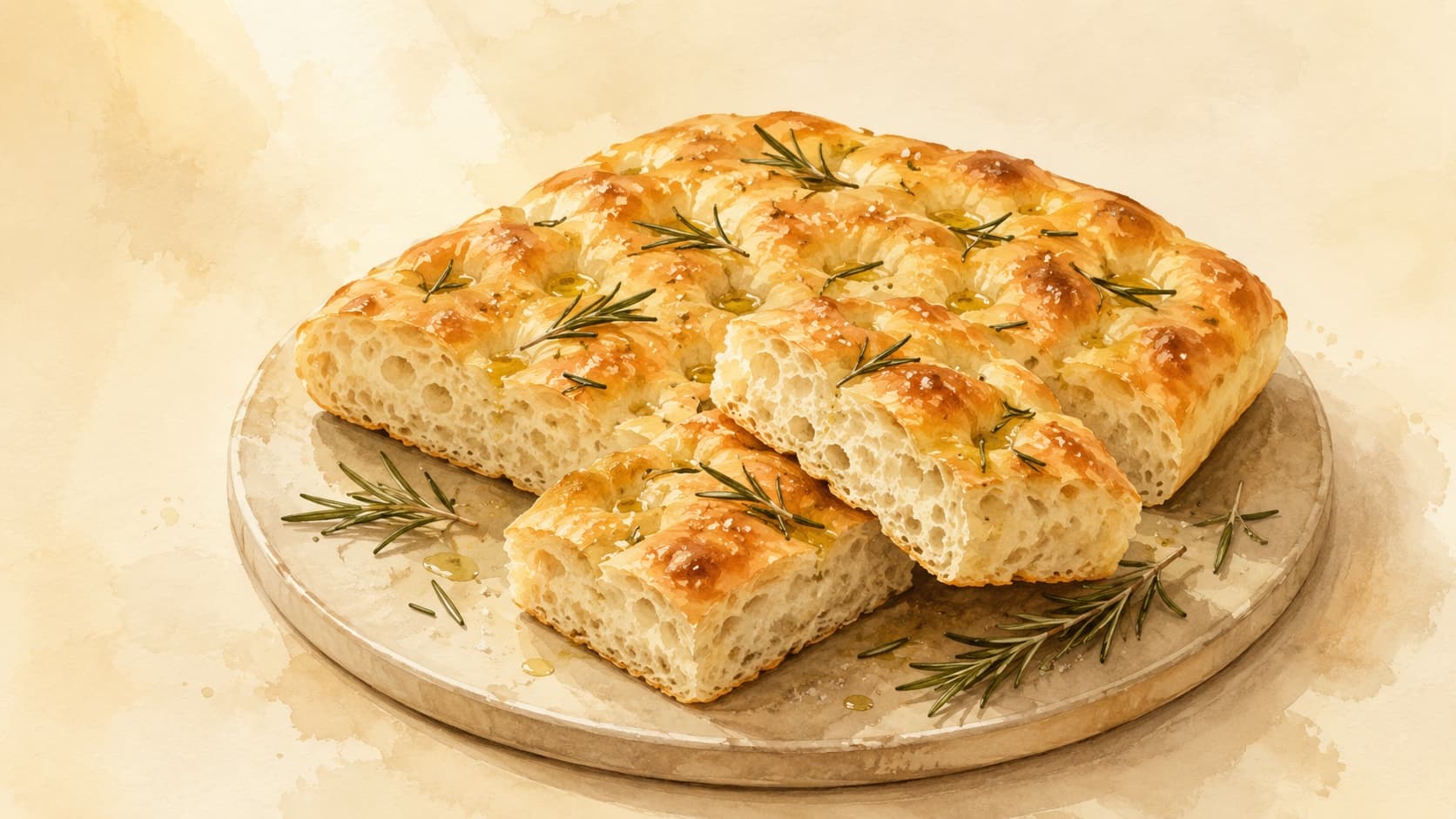
- A golden brown crust on top.
- A light, airy crumb when sliced.
- Distinct dimples holding olive oil and toppings.
- A pleasant aroma during baking.
Chef's view
Focaccia hails from ancient Roman times, originally known as "panis focacius." Its simplicity makes it versatile, serving as a base for various toppings or as a side. The texture and flavor can be adjusted with different oils and herbs, allowing for personal expression.
In Italian culture, focaccia often complements meals, used for sandwiches or as a snack. Mastering this bread technique opens a world of artisan baking, connecting home cooks to their culinary roots.
<!-- beginner-glossed v1 -->Get the essays in your inbox — free
Weekly notes on flavor, fermentation, and food history — the writing behind the Atlas of Flavor. No spam; unsubscribe anytime.