
Falafel
This recipe highlights the balance of texture and flavor in fried chickpea balls.
Contents (5 sections)▾
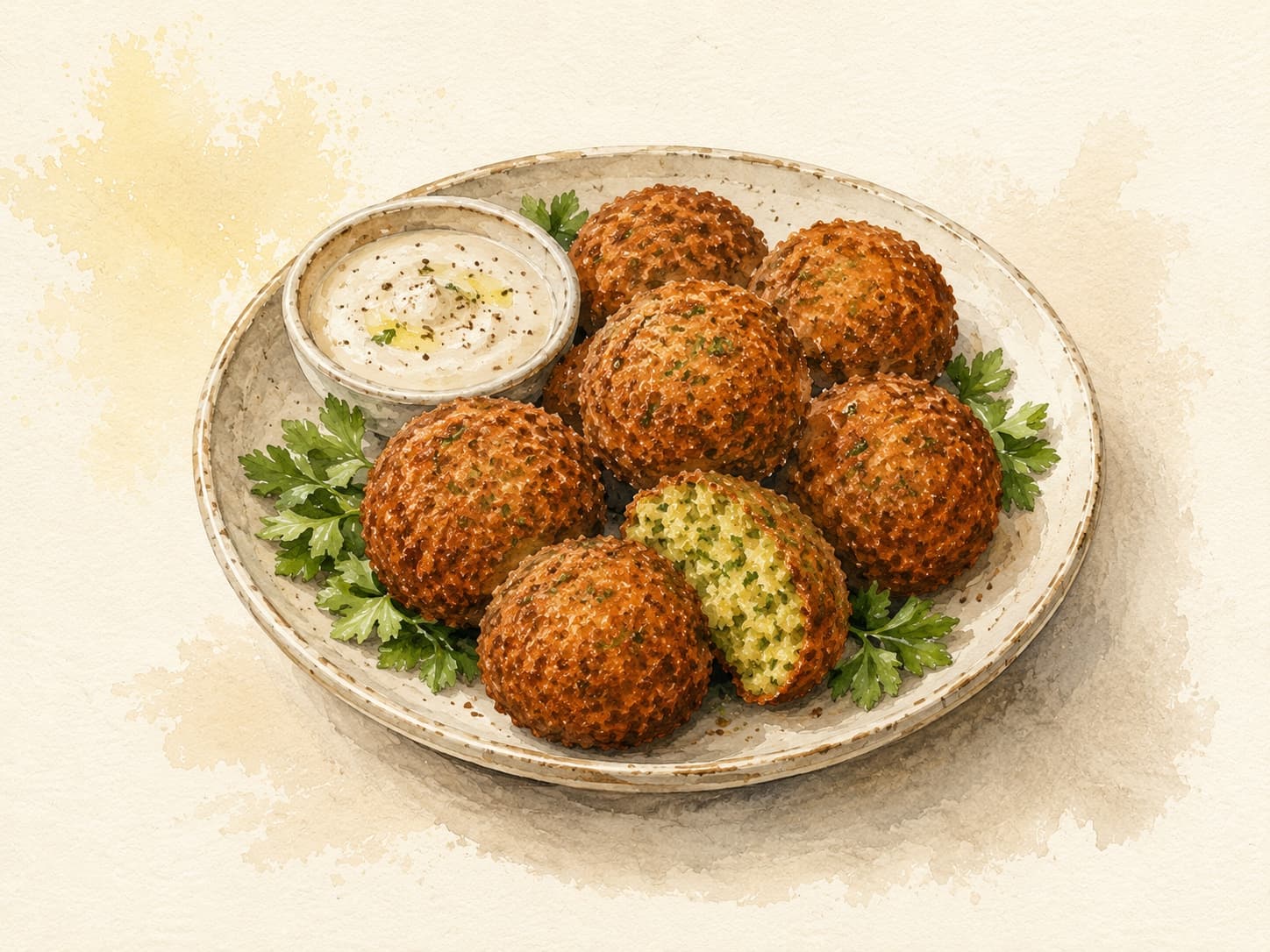
Ingredients
- 1 cup dried chickpeas, soaked overnight
- 1 small onion, roughly chopped
- 2 cloves garlic
- 1/4 cup fresh parsley
- 1/4 cup fresh cilantro
- 1 teaspoon ground cumin
- 1 teaspoon ground coriander
- 1/2 teaspoon baking powder
- Salt, to taste
- Pepper, to taste
- Vegetable oil, for frying
Steps
Drain and rinse soaked chickpeas.
In a food processor, combine chickpeas, onion, garlic, parsley, cilantro, cumin, coriander, baking powder, salt, and pepper.
Pulse until a coarse mixture forms, then refrigerate for 30 minutes.
Form mixture into balls or patties.
Heat oil in a skillet over medium heat and fry until golden brown, about 4-5 minutes per side.
Drain on paper towels and serve hot.
Tools you'll want
- · Digital kitchen scale (gram precision)
Why this works
The key to a successful falafel is the balance of moisture and structure. Soaking dried chickpeas overnight allows them to hydrate, resulting in a tender yet firm texture when processed. Blending with fresh herbs and spices enhances flavor. Baking powder introduces airiness, creating a light center. Frying at 350°F (175°C) ensures a crisp exterior while maintaining moisture inside.
The choice of frying oil affects flavor and texture. Neutral oils like vegetable oil prevent overpowering the falafel's taste. Maintaining consistent oil temperature is crucial; too low results in grease absorption, while too high may burn the exterior before cooking the interior.
Chilling the mixture before frying helps firm it up, preventing breakage during cooking. Forming uniform balls ensures even cooking, enhancing texture. Frying in small batches avoids temperature drops that lead to soggy falafel.
Common mistakes
Using canned chickpeas.
Target: Dried chickpeas soaked overnight (12+ hours) in cold water. NOT cooked, NOT canned.
Why it matters: Canned chickpeas are pre-cooked, so their starch is already gelatinized. The mixture turns into hummus, not falafel — too soft to form, too dense to fry properly, falls apart in oil. Dried-and-soaked chickpeas have raw, hard starch that grinds into a granular paste that holds shape and develops a crisp exterior.
What to do: Soak overnight with 1 tsp baking soda (helps soften and lifts the pH for fluffier interior). Drain thoroughly before processing.
Workarounds:
- Forgot to soak? Quick-soak method: cover dried chickpeas with boiling water, rest 1 hour, drain. Not quite as good but acceptable.
- Absolute emergency: combine canned chickpeas with 1 tbsp gram flour (besan) to add the binding-and-structure that dried chickpeas provide naturally.
Overprocessing into a smooth paste.
Target: Coarse, granular, holds together when squeezed. Visible bits of chickpea, herbs, onion.
Why it matters: A smooth paste produces dense, gummy falafel with no internal texture. The granular structure is what allows steam to escape during frying and creates the characteristic fluffy interior.
What to do: Pulse the food processor in 1-second bursts. Stop when the mixture holds together but you can still see individual chickpea fragments.
Workarounds:
- For traditional texture, use a hand-cranked meat grinder — produces a perfect coarse grind every time.
Skipping the chill.
Target: Refrigerate the mixture for at least 30 minutes (1 hour is better) before shaping.
Why it matters: Chilling firms the mixture, allows the herbs and spices to hydrate evenly, and helps the falafel hold shape during frying. Warm mixture is sticky and prone to disintegration in hot oil.
What to do: Cover the mixture, refrigerate, then shape just before frying.
Workarounds:
- Short on time? Freeze for 15 minutes instead — faster firming.
- Add 1 tbsp gram flour or 1 tsp baking powder for extra hold — slight texture trade-off.
Wrong oil temperature.
Target: 170–175 °C, measured with a thermometer.
Why it matters: Below 165 °C, the falafel absorbs oil and turns greasy. Above 180 °C, the outside burns before the inside cooks through — undercooked center.
What to do: Use a thermometer. Test with one falafel first; assess the color in 3–4 minutes.
Workarounds:
- No thermometer? Drop a small piece of the mixture — it should sizzle vigorously but not violently, browning in 3 minutes.
Frying balls instead of patties.
Target: Slightly flattened discs (3 cm diameter, 1.5 cm thick), NOT spheres.
Why it matters: Spheres take longer to cook through, so by the time the center is done, the outside is over-browned. Patties cook evenly through to the center.
What to do: Shape into discs with a falafel scoop (special device) or by hand. Slightly flatter than instinct suggests.
Workarounds:
- For traditional balls, lower the oil temperature to 165 °C and fry slightly longer.
Skipping the soda water trick.
Target: Add 1 tbsp baking soda + 2 tbsp ice water to the mixture just before shaping.
Why it matters: Baking soda raises pH, which weakens proteins and allows for a fluffier interior. The ice water creates micro-steam pockets during frying, lifting the texture further. This is the difference between street-vendor falafel and home falafel.
What to do: Mix the soda water in only at the final stage — its effect fades over time.
Workarounds:
- No baking soda? Just accept a denser texture. Still good, just not light.
- For extra fluff, add 1 tsp baking powder as well (different leavening mechanism, complements the soda).
What to look for
- Golden brown crust indicating proper frying.
- A slight puffing of the falafel balls during cooking.
- A firm exterior with a soft interior upon cutting.
- Aromatic scents of spices and herbs while frying.
- Even shapes for uniform cooking.
Chef's view
Falafel has roots in Middle Eastern cuisine, often served as street food or in pita sandwiches. Its popularity extends globally, adapting to various culinary traditions. The technique of frying creates a delightful contrast between textures while maintaining a rich flavor.
Culturally, falafel represents resourcefulness, transforming humble ingredients into a dish. Its versatility allows for numerous variations, from adding spices to incorporating different legumes. This dish exemplifies how simple techniques can yield complex results, embodying the essence of home-cooked meals.
<!-- beginner-glossed v1 -->Get the essays in your inbox — free
Weekly notes on flavor, fermentation, and food history — the writing behind the Atlas of Flavor. No spam; unsubscribe anytime.