
Dorayaki
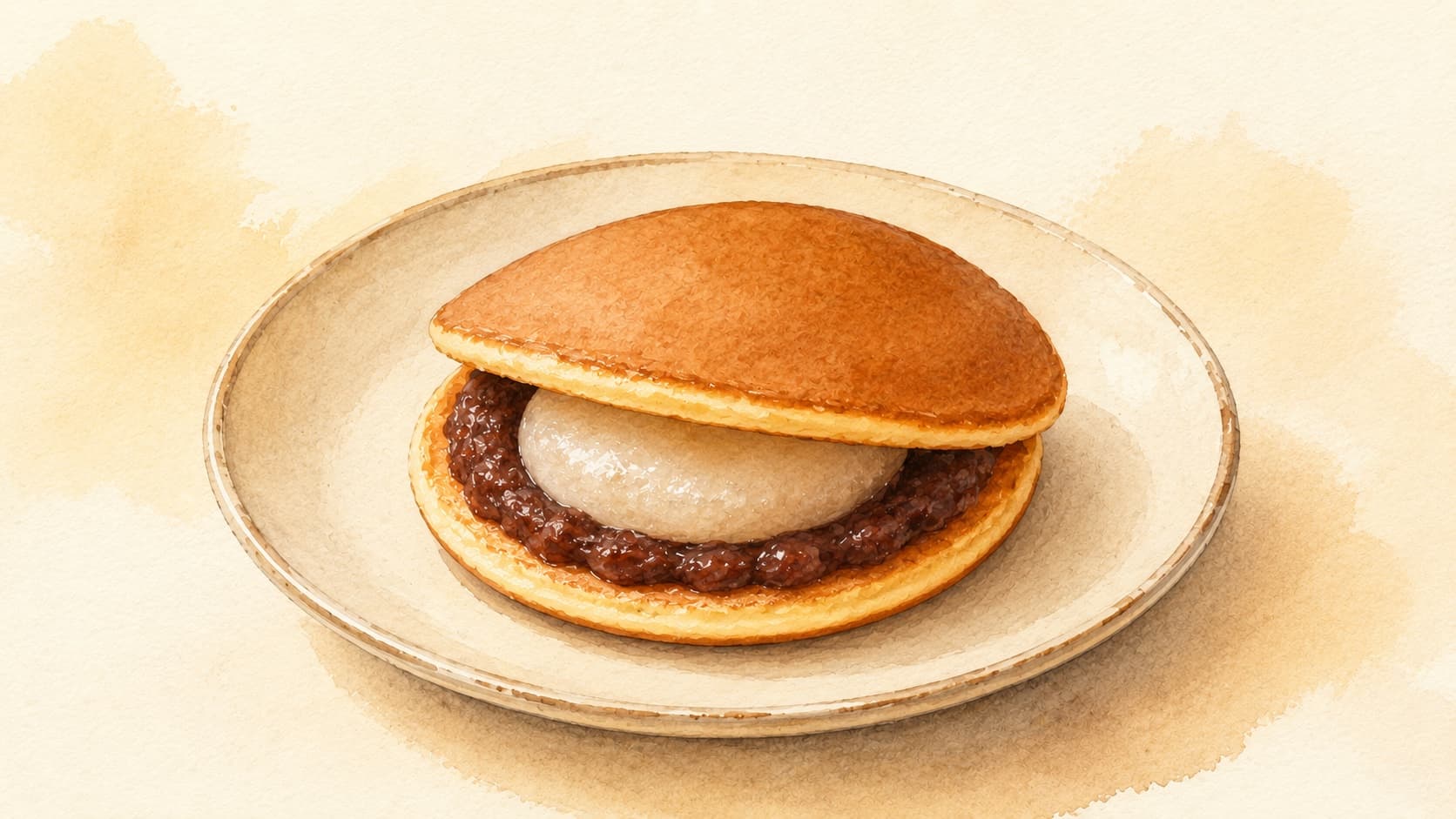
Dorayaki consists of fluffy pancakes filled with sweet red bean paste, showcasing a balance of texture and flavor.
Contents (5 sections)▾
Ingredients
- 1 cup all-purpose flour
- 1/2 cup sugar
- 1 teaspoon baking powder
- 2 large eggs
- 1/2 cup milk
- 1 tablespoon honey
- 1 cup sweet red bean paste
- Butter for cooking
Steps
In a bowl, whisk together flour, sugar, and baking powder.
In another bowl, beat eggs, then mix in milk and honey.
Combine wet and dry ingredients until smooth.
Heat a skillet over medium-low heat and lightly grease with butter.
Pour batter to form small pancakes, cooking until bubbles appear, then flip.
Sandwich red bean paste between two pancakes and serve.
Tools you'll want
Why this works
Dorayaki's success lies in the batter's balance. The ratio of flour to liquid creates an airy texture. Eggs contribute to the fluffiness while sugar enhances browning. Baking powder provides lift, ensuring even cooking. Low heat prevents burning, yielding soft, tender pancakes.
The use of honey adds moisture and a subtle flavor. This enhances the overall sweetness without overwhelming the red bean filling. The filling's consistency must match the pancake; too runny will leak, while too thick won't spread.
Cooking in a well-greased skillet allows the pancakes to slide easily. This technique ensures they maintain a perfect round shape. The goal is a golden exterior with a soft, pillowy center.
Common mistakes
Wrong batter consistency.
Target: Batter should pour smoothly from a ladle in a thick stream — slightly thinner than American pancake batter.
Why it matters: Too thick → dry, doughy pancakes. Too thin → spread too wide and tear. The right consistency creates the signature soft, rounded shape with even browning.
What to do: Test with one pancake first. Adjust with water (too thick) or flour (too thin).
Workarounds:
- For consistent results, weigh ingredients precisely rather than measuring by volume.
Skipping the honey or mirin.
Target: Add honey OR mirin (about 1 tbsp per cup of flour) to the batter — gives the characteristic moisture and shine.
Why it matters: Honey/mirin is structural to dorayaki — provides the moist crumb and slightly chewy texture that distinguishes it from a plain pancake.
What to do: Don't substitute with plain sugar. Honey/mirin's hygroscopic property is what produces the texture.
Workarounds:
- No honey/mirin? Maple syrup is the closest substitute.
Pan too hot.
Target: Medium-LOW heat — pan surface 140 °C. Drop test: batter should set in 30 seconds, not instantly.
Why it matters: High heat browns the outside before the inside cooks — dorayaki should have a uniform pale gold color, not dark burnt spots. Cool heat is essential.
What to do: Use a non-stick pan or well-seasoned cast iron. Pre-heat thoroughly but at low setting.
Workarounds:
- Test with a small drop first. If it browns immediately, lower heat.
Flipping too early.
Target: Flip ONLY when bubbles appear and pop on the surface AND edges look dry. About 90 seconds.
Why it matters: Premature flipping breaks the rising structure — produces dense, uneven pancakes.
What to do: Watch the surface. Wait for the bubbles to pop, leaving small holes.
Workarounds:
- For uniform color, brush a tiny bit of oil on the top BEFORE flipping — produces pan-on-both-sides color.
Wrong anko filling.
Target: Tsubuan (chunky red bean paste) — has the texture and intensity dorayaki needs. NOT smooth koshian.
Why it matters: Tsubuan provides textural interest with whole bean pieces. Smooth koshian disappears into the pancake — different (Western-style) dessert feel.
What to do: Buy quality tsubuan from a Japanese grocery, or make from scratch.
Workarounds:
- For variety, fill with kuri an (sweet chestnut paste) for autumn variation.
What to look for
- Bubbles on the pancake surface indicate readiness to flip.
- A golden-brown color on both sides suggests proper cooking.
- Soft, fluffy texture when pressing the pancakes lightly.
- A smooth, consistent filling without excess leaking.
- Evenly sized pancakes for a uniform presentation.
Chef's view
Dorayaki is a cultural staple in Japan, often enjoyed as a snack or dessert. Its history dates back to the Edo period, evolving from simple pancakes to the modern version we know today. Its sweet red bean paste filling represents traditional Japanese flavors, marrying simplicity with depth.
The technique of making dorayaki emphasizes precision and timing. Each pancake must be cooked to perfection, allowing for the ideal texture contrast between the fluffy exterior and the rich, sweet interior. This dish encapsulates the philosophy of Japanese cuisine: balance and harmony in every bite.
<!-- beginner-glossed v1 -->Get the essays in your inbox — free
Weekly notes on flavor, fermentation, and food history — the writing behind the Atlas of Flavor. No spam; unsubscribe anytime.