
Dong Po Rou
This recipe achieves tender, flavorful pork belly through a careful balance of braising and caramelization.
Contents (5 sections)▾
Ingredients
- 500g pork belly, skin-on
- 3 tbsp soy sauce
- 2 tbsp dark soy sauce
- 2 tbsp Shaoxing wine
- 1 tbsp sugar
- 4 slices ginger
- 2 green onions, chopped
- 2 cups water
Steps
Cut the pork belly into 2-inch cubes.
In a skillet, sauté ginger until fragrant.
Add pork belly and cook until browned on all sides.
Pour in soy sauces, Shaoxing wine, sugar, and water.
Bring to a boil, then reduce heat and simmer for 20 minutes.
Serve topped with chopped green onions.
Tools you'll want
- · Digital kitchen scale (gram precision)
Why this works
The braising method (slow, gentle cooking in a small amount of seasoned liquid with a lid on) softens the pork belly, breaking down collagen into gelatin, which enriches the sauce. The combination of soy sauces introduces umami while sugar creates a caramelization that enhances flavor. Maintaining a low simmer allows gradual cooking, ensuring tenderness without dryness.
The balance of moisture is crucial. Water helps to tenderize while preventing the meat from becoming too salty. The initial browning of the pork belly develops depth through the Maillard reaction, contributing to the overall flavor.
Common mistakes
Lean cuts of pork.
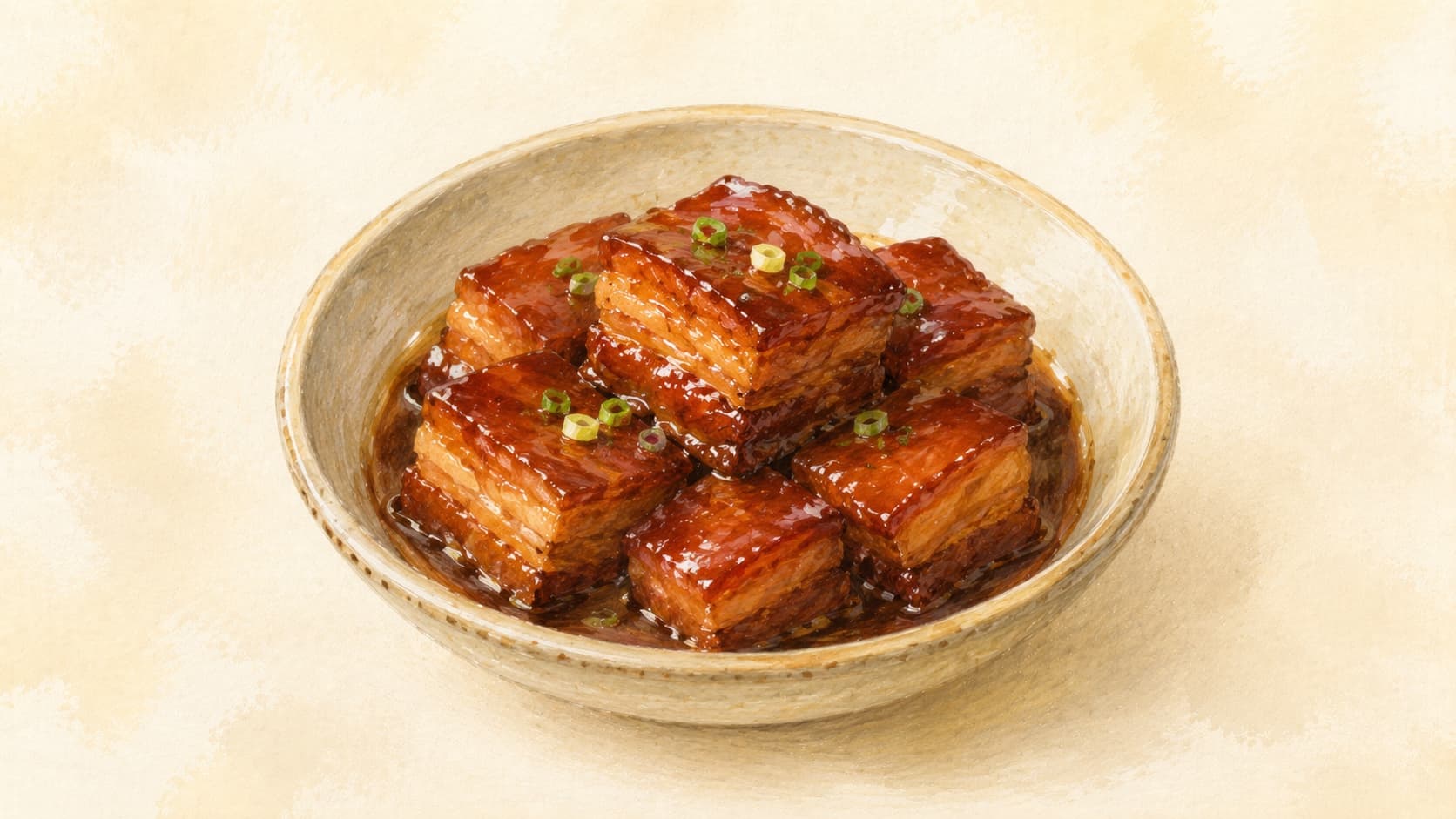
Target: Pork belly with skin (五花肉) — 5 layers visible: skin + fat + lean + fat + lean. Cubes 5 cm.
Why it matters: Dong po rou's defining quality is the layered melting fat with skin gelatin. Lean cuts can't replicate the dish — produces dry, tough cubes.
What to do: Buy pork belly with skin from a Chinese butcher. Cubes large.
Workarounds:
- No skin? Pork belly without skin works, just lacking the gelatinous top layer.
Skipping the parboil.
Target: Parboil pork belly cubes in plain water with ginger and scallion for 10 minutes. Drain, rinse.
Why it matters: Removes blood proteins and excess fat. Without it, the braising liquid is muddy and the final glaze is greasy.
What to do: Cover with cold water, add ginger and scallion tops, bring to boil, simmer 10 min, drain.
Workarounds:
- For deeper cleanup, parboil twice — produces the cleanest base.
Wrong wine.
Target: Shaoxing wine (Chinese cooking wine), about 1 cup per kg pork.
Why it matters: Shaoxing's complex aged character is structural to dong po rou. Substitutes (white wine, sake) shift the flavor fundamentally.
What to do: Source from a Chinese grocery (not "cooking wine" in the supermarket, which is salted). Real shaoxing.
Workarounds:
- No shaoxing? Dry sherry is the closest substitute (similar oxidative character).
Braising too hot.
Target: Very low simmer (85 °C) for 2+ hours, covered.
Why it matters: Hard boil tightens the lean meat fibers — produces dry, chewy pork even after long cooking. Low simmer allows collagen → gelatin without damaging the muscle.
What to do: Cover with the seasoning liquid (shaoxing + soy + sugar + ginger + star anise). Maintain bare simmer.
Workarounds:
- For best results, steam dong po rou after the initial braise — most tender method.
Skipping the reduction.
Target: After meat is tender, remove pork, reduce liquid to a glossy glaze (about 1/4 the original volume).
Why it matters: Dong po rou's signature is the lacquer-like glaze that coats each cube. Thin sauce just runs off — wrong presentation entirely.
What to do: Remove pork. Reduce sauce hard. Return pork, baste to coat. Should look mahogany-glossy.
Workarounds:
- For deeper color, finish with 1 tsp dark soy sauce during reduction.
What to look for
- A glossy, caramelized surface on the pork belly.
- Fork-tender meat that easily pulls apart.
- A fragrant aroma of soy and ginger wafting from the pot.
Chef's view
Dong Po Rou is steeped in history, originating from the Song Dynasty and named after a famous poet. The dish represents comfort and celebration in Chinese culture. It embodies skillful techniques passed down through generations, combining simplicity with depth of flavor.
The art of braising is foundational in many cuisines. Understanding the balance of flavors and textures is key to mastering dishes like Dong Po Rou. This recipe invites exploration and connection to culinary traditions.
<!-- beginner-glossed v1 -->Get the essays in your inbox — free
Weekly notes on flavor, fermentation, and food history — the writing behind the Atlas of Flavor. No spam; unsubscribe anytime.