
Dan Dan Noodles
This dish balances silkiness, heat, and umami through precise ingredient layering.
Contents (5 sections)▾
Ingredients
- 200g wheat noodles
- 150g ground pork
- 2 tablespoons sesame paste
- 2 tablespoons soy sauce
- 1 tablespoon chili oil
- 1 tablespoon black vinegar
- 2 cloves garlic, minced
- 2 green onions, chopped
Steps
Cook the wheat noodles according to package instructions.
In a skillet, brown the ground pork over medium heat, breaking it up until no longer pink and it reaches 71 °C / 160 °F on an instant-read thermometer.
Add the minced garlic and sauté until fragrant.
Stir in the sesame paste, soy sauce, chili oil, and black vinegar.
Combine the cooked noodles with the pork mixture.
Garnish with chopped green onions and serve immediately.
Tools you'll want
Why this works
Dan Dan Noodles achieve their signature flavor through a balance of ingredients. The sesame paste (a thick spread made from ground sesame seeds — Chinese versions use toasted seeds for a deep, dark aroma) provides creaminess, while the chili oil adds heat. Stirring these components at medium heat helps emulsify (whisk fat and water together until they hold as one smooth sauce) the sauce, creating a cohesive coating for the noodles. The addition of black vinegar introduces acidity, cutting through the richness and enhancing flavor complexity.
Cooking the pork until browned renders fat that contributes to the dish’s depth. This fat carries flavors from the garlic and chili oil, enriching the overall profile. Using fresh ingredients like green onions adds a crisp texture and brightness, complementing the dish's layered flavors.
Noodle cooking time is crucial. Overcooked noodles become mushy and fail to hold sauce. Aim for al dente (cooked through but with a slight firm bite at the center) to ensure the noodles maintain structure when tossed with the sauce.
Common mistakes
Sesame paste vs tahini confusion.
Target: Chinese sesame paste (zhīma jiàng / 芝麻醬) — made from TOASTED white sesame. NOT tahini.
Why it matters: Tahini is made from raw sesame, mild and oily. Chinese sesame paste is toasted to deep aroma — completely different flavor. Substituting tahini produces a "tahini noodle" dish, not dan dan.
What to do: Source from a Chinese grocery (often labeled "芝麻醬"). Stir well before using — separates in jar.
Workarounds:
- No Chinese sesame paste? Toast tahini in a dry pan briefly, then use — closer flavor.
Skipping Sichuan peppercorn oil.
Target: Make Sichuan peppercorn oil by infusing toasted huājiāo in hot oil. About 2 tsp per portion.
Why it matters: The "má" in dan dan refers to the numbing tingle from Sichuan peppercorn. Without it, the dish lacks its defining character.
What to do: Toast peppercorns 30 seconds, steep in hot oil 5 minutes, strain. Drizzle over the finished bowl.
Workarounds:
- Use whole toasted peppercorns ground at the end — different but acceptable.
Wrong meat preparation.
Target: Crispy minced pork — fried in a dry pan with preserved vegetables (yacai / 芽菜) until deeply browned and crispy.
Why it matters: Dan dan's signature topping is dry, crispy pork — NOT saucy. The preserved vegetables (yacai or zha cai) provide salt and pickled depth.
What to do: Dry-fry pork in a hot pan, breaking apart, until truly crispy. Add yacai near the end.
Workarounds:
- No yacai? Use Chinese pickled mustard greens (zha cai) — closest substitute.
Bottom-of-bowl sauce setup neglected.
Target: Combine sauce ingredients (sesame paste + chili oil + soy + black vinegar + Sichuan peppercorn) in the BOTTOM of the bowl, then add noodles on top. Diners mix at the table.
Why it matters: Pre-mixing the sauce with noodles makes uniform-flavored noodles. The "sauce-on-bottom" technique provides escalating intensity as diners eat — texture and flavor variation.
What to do: Set up each bowl with sauce in the bottom. Noodles on top. Crispy pork on top of noodles.
Workarounds:
- For crowded service, mix everything at the table.
Wrong noodles.
Target: Thin alkaline wheat noodles — fresh if possible.
Why it matters: Spaghetti or non-alkaline noodles lack the chew dan dan requires. The alkaline (kansui) treatment provides springiness.
What to do: Source from a Chinese grocery. Fresh or dried both work.
Workarounds:
- DIY: boil spaghetti with 1 tsp baking soda per liter — approximates alkaline texture.
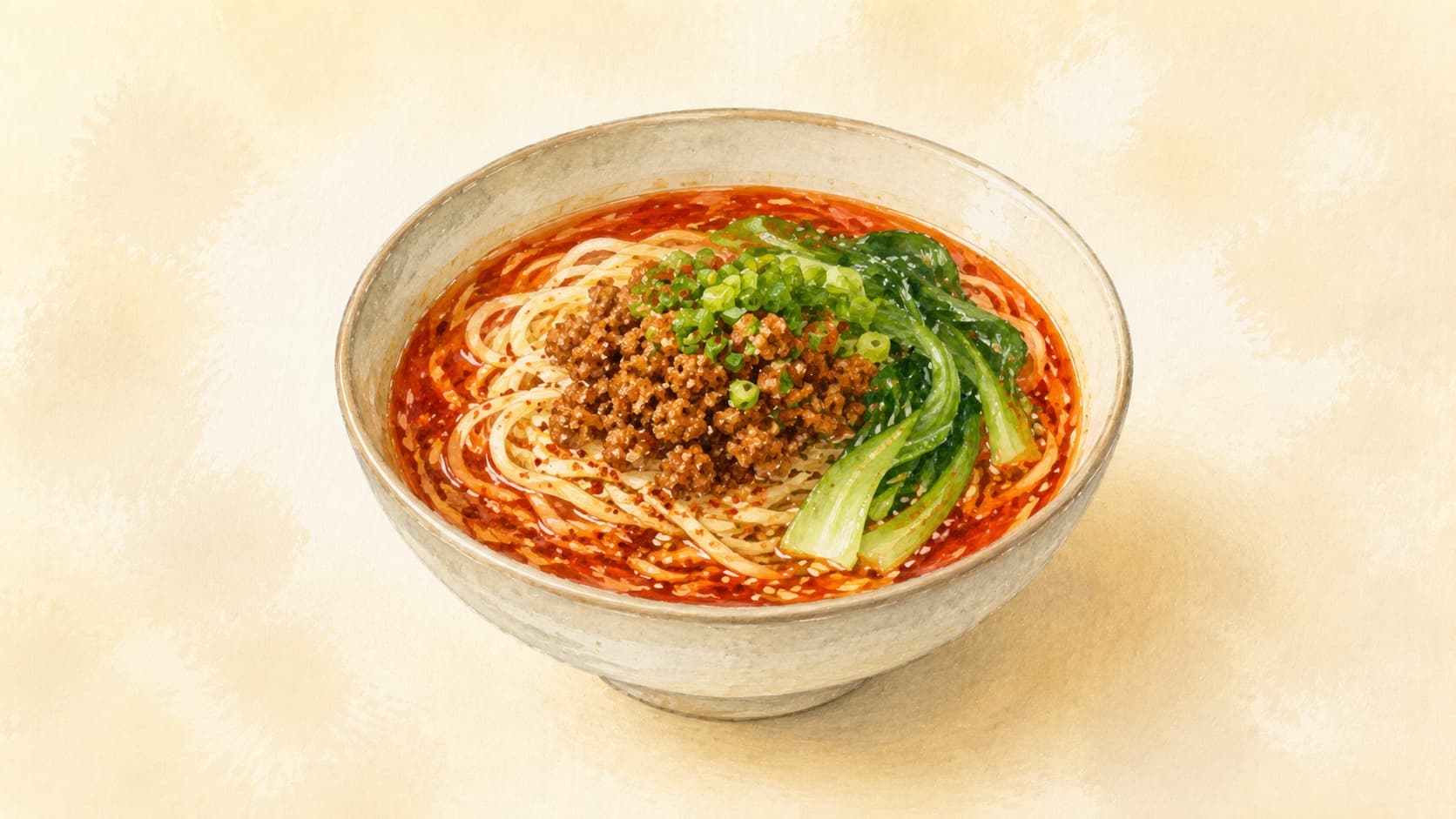
What to look for
- Noodles should be firm yet tender, holding their shape.
- The pork should be browned and slightly crispy, not soggy.
- Sauce consistency should be creamy and cling to the noodles without pooling.
- The dish should look vibrant with contrasting colors from the chili oil and fresh green onions.
- Aromas of garlic, sesame, and chili should be noticeable.
Chef's view
Dan Dan Noodles are deeply rooted in Sichuan cuisine. Traditionally sold by street vendors, they embody the region's love for bold flavors and textures. The dish's origins reflect a balance of convenience and richness, making it both a quick meal and a comfort food.
The technique of emulsifying the sauce is key. It allows for a seamless integration of flavors, which is crucial for a dish that relies heavily on a few ingredients. Mastering this method opens the door to a range of similar dishes, making it a valuable skill in any cook's repertoire.
<!-- beginner-glossed v1 -->Get the essays in your inbox — free
Weekly notes on flavor, fermentation, and food history — the writing behind the Atlas of Flavor. No spam; unsubscribe anytime.