
Dakgalbi
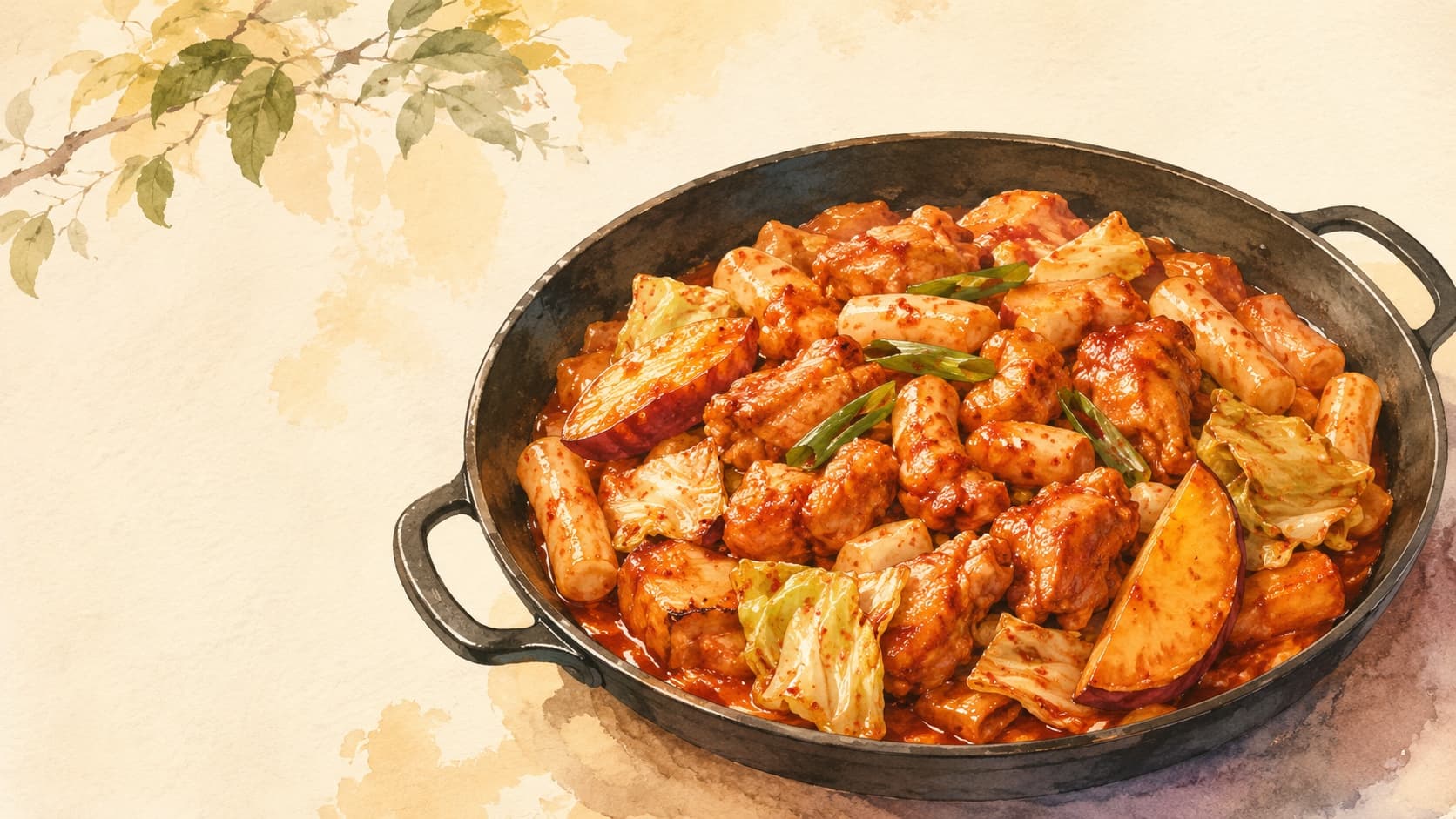
Dakgalbi is a Korean dish of marinated chicken and vegetables stir-fried in a spicy sauce, served communally.
Contents (5 sections)▾
Ingredients
- 500g chicken thighs, boneless and skinless, cut into bite-sized pieces
- 2 tablespoons gochujang (Korean chili paste)
- 1 tablespoon gochugaru (Korean chili flakes)
- 2 tablespoons soy sauce
- 1 tablespoon sesame oil
- 1 tablespoon honey
- 1 medium onion, sliced
- 2 medium zucchinis, sliced
- 1 cup cabbage, chopped
- 4 green onions, chopped
- 1 tablespoon minced garlic
- 1 tablespoon minced ginger
Steps
In a bowl, mix gochujang, gochugaru, soy sauce, sesame oil, honey, garlic, and ginger.
Add chicken pieces to the marinade, coating well, and let sit for 10 minutes.
Heat a wide heavy skillet over medium-high heat and add the marinated chicken.
Stir-fry for 5 minutes, then add onion, zucchini, and cabbage.
Cook for another 10-15 minutes until the chicken is cooked through and vegetables are tender. Cook until the thickest part reaches 74 °C / 165 °F on an instant-read thermometer — colour, juices and time are guides, not the safety test.
Garnish with green onions and serve hot.
Tools you'll want
Why this works
Dakgalbi relies on marinating chicken in a spicy mixture, allowing flavors to penetrate. The gochujang (a thick fermented Korean red-chili paste) adds depth and heat, while honey balances spiciness with sweetness. Cooking at medium-high heat ensures a good sear, building browned flavor. Vegetables cook quickly, maintaining crunch and freshness.
The combination of chicken and vegetables in one skillet promotes even cooking and flavor melding. Stir-frying at a high temperature allows for caramelization, enhancing taste. This method also creates a delightful texture contrast between tender chicken and crisp vegetables.
The dish’s communal nature encourages sharing, enhancing the dining experience. It’s traditionally cooked at the table, fostering interaction. The vibrant colors invite appetite and excitement, making it a favorite in Korean cuisine.
Common mistakes
Wrong chicken cut.
Target: Boneless skin-on chicken thighs, cut into bite-sized pieces.
Why it matters: Chicken breast dries out at the high heat dakgalbi requires. Thighs have enough collagen and fat to stay juicy through aggressive stir-frying.
What to do: Use thighs. Cube 3 cm.
Workarounds:
- For chicken-skin lovers, leave the skin on — extra flavor and texture.
Short marination.
Target: Marinate chicken in gochujang sauce 2+ hours, ideally overnight.
Why it matters: Dakgalbi's signature deep red color and complex spice come from extended marination. 10 minutes produces "spicy chicken stir-fry" — not dakgalbi.
What to do: Make sauce: gochujang + gochugaru + soy + sake + sugar + ginger + garlic. Marinate the day before.
Workarounds:
- Time short? Score chicken deeply, marinate at least 1 hour.
Cooking in a small pan.
Target: Wide pan (30 cm+) or specifically a Korean flat dakgalbi pan.
Why it matters: Dakgalbi has a LOT of ingredients (chicken + cabbage + sweet potato + tteok (chewy Korean rice cakes, usually cylindrical) + onion). Small pan crowds them — they steam instead of stir-fry, producing soft mushy texture.
What to do: Use the widest pan available. For tabletop service, get a Korean dakgalbi pan.
Workarounds:
- Cast iron skillet (large) approximates the dakgalbi pan well.
Adding cheese before serving.
Target: Sliced mozzarella added in the FINAL 2 minutes, melted on top.
Why it matters: Cheese added too early burns and separates. Added at the end, it melts into a creamy "cheese-dakgalbi" cap — the modern Korean BBQ-restaurant style.
What to do: Push the chicken to one side, add cheese to the cleared zone, let melt, then drag chicken through cheese to coat.
Workarounds:
- Skip cheese for traditional style. Modern Korean restaurants almost always include it.
Skipping the bokkeumbap (fried rice finish).
Target: After eating the chicken, add cooked rice + sesame oil + seaweed flakes to the pan. Stir-fry briefly to absorb the leftover sauce.
Why it matters: The rice finish is part of dakgalbi's structure — uses the rendered fat and sauce that would otherwise be wasted. The crispy rice bits at the bottom are coveted.
What to do: Time the meal to leave sauce in the pan. Add rice + seasonings. Stir-fry 2 minutes for crispy bottom.
Workarounds:
- For simpler version, skip — but you're missing half the experience.
What to look for
- Chicken should be tender and fully cooked.
- Vegetables should retain a slight crunch.
- The sauce should cling to the chicken and vegetables, creating a glossy finish.
- A vibrant red color indicates proper seasoning.
- Aromatic scents of garlic and spicy chili should fill the air.
Chef's view
Dakgalbi originated in the city of Chuncheon, South Korea. It reflects a blend of flavors and communal eating, typically enjoyed in groups. The dish embodies the spirit of Korean dining, where sharing enhances the experience.
The technique of stir-frying in a skillet encourages interaction among diners. The sizzling sound and aromatic steam create a lively atmosphere. Cooking at the table promotes engagement, making it a familiar choice for gatherings.
<!-- beginner-glossed v1 -->Get the essays in your inbox — free
Weekly notes on flavor, fermentation, and food history — the writing behind the Atlas of Flavor. No spam; unsubscribe anytime.