
Classic Cheeseburger
The classic cheeseburger balances rich flavors with a satisfying texture, creating an iconic American dish.
Contents (5 sections)▾
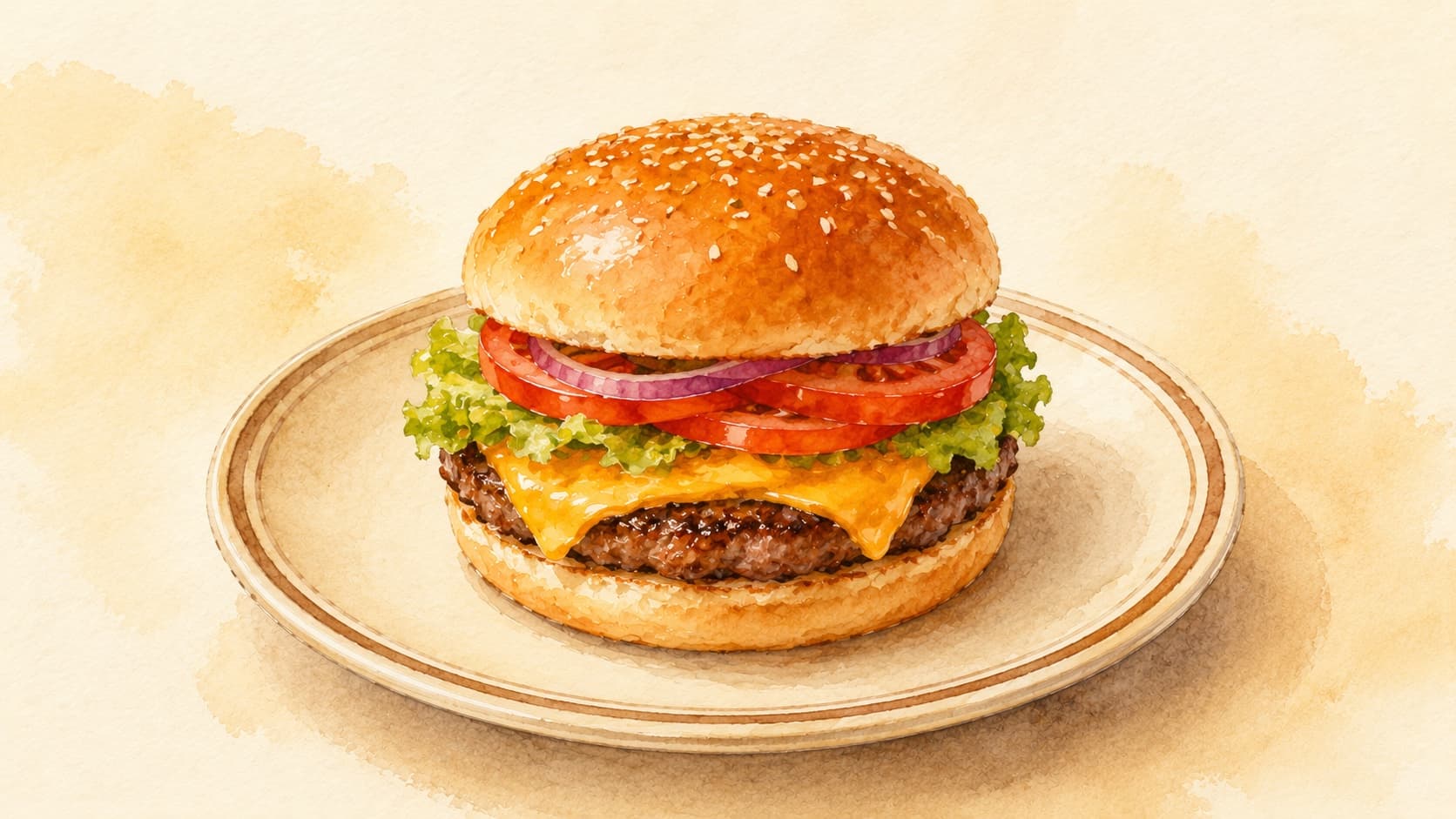
Ingredients
- 1 lb ground beef (80/20)
- 4 slices cheddar cheese
- 4 hamburger buns
- 1 tbsp salt
- 1 tsp black pepper
- 1 tbsp Worcestershire sauce
- 1 cup lettuce, shredded
- 1 tomato, sliced
- 1/2 cup pickles, sliced
- 1/4 cup onions, sliced
Steps
Preheat grill or skillet to medium-high heat.
In a bowl, mix ground beef with salt, pepper, and Worcestershire sauce.
Form beef into 4 patties, slightly larger than buns.
Cook patties for 3-4 minutes on each side, adding cheese in the last minute. Cook the ground meat until it reaches 71 °C / 160 °F on an instant-read thermometer (no longer pink throughout) — colour, float and time are guides, not the safety test.
Toast buns on the grill until golden.
Assemble burgers with lettuce, tomato, pickles, and onions.
Tools you'll want
Why this works
The classic cheeseburger thrives on the Maillard reaction, which occurs when proteins in the beef caramelize at high temperatures. This creates a rich, savory crust. The fat content (80/20) ensures juiciness, while the Worcestershire sauce enhances umami. Melting cheese at the end adds creaminess and binds flavors.
Buns are toasted to prevent sogginess. The crisp texture contrasts with the juicy patty. Fresh vegetables contribute crunch and acidity, balancing the burger's richness. Use fresh, high-quality ingredients for optimal flavor and texture.
Because these are ground-beef patties, cook them all the way through to a measured 71°C/160°F — not left pink in the middle — which is the safety endpoint; the 80/20 fat keeps the bite tender even when fully cooked. Use a meat thermometer to confirm doneness rather than judging by colour alone.
Common mistakes
Wrong fat ratio.
Target: 80% lean / 20% fat ground beef — chuck is ideal.
Why it matters: Lean ground beef produces dry, crumbly burgers. The fat is essential — it provides flavor, juiciness, and the sizzling render that crisps the surface. 80/20 is the burger sweet spot.
What to do: Buy ground chuck, NOT "lean ground beef." For premium, ask the butcher to grind chuck + short rib + brisket (a classic blend).
Workarounds:
- Lean ground beef? Add a tablespoon of butter to the meat OR brush the patties with butter during cooking.
Overworking the meat.
Target: Form patties with the LIGHTEST possible touch. Just gather into a disc — don't squeeze or knead.
Why it matters: Working ground beef develops myosin (sticky protein), producing dense, rubbery patties. The signature loose, tender burger comes from minimal handling.
What to do: Scoop a portion, gently form a disc with both hands. Don't compact. Make a thumb-print indent in the center (prevents puffing into a meatball shape).
Workarounds:
- For "smash burger" style, form a loose ball, smash directly on the hot pan — different technique, same minimal-handling principle.
Cooking at too low temperature.
Target: Cast-iron pan or grill at maximum heat — pan smoking before patties go in.
Why it matters: High heat creates the deep Maillard crust that defines a burger. Medium heat steams the patty before browning, producing pale, sad burgers.
What to do: Pre-heat thoroughly. Oil should shimmer. Add patty with confidence — it should HISS immediately.
Workarounds:
- Weak burner → use a cast-iron skillet (better heat retention than thin pans).
Flipping too often.
Target: Flip ONCE — about 3 minutes per side, then check internal temperature reaches 71°C (160°F) on a 2 cm patty.
Why it matters: Multiple flips prevent crust development. The deep brown sear (the browned, flavorful surface from high heat) requires sustained contact.
What to do: Place patty → leave alone → flip ONCE → leave alone → done.
Workarounds:
- Exception: smash burgers DO flip frequently (different technique, different physics).
Skipping the rest.
Target: Rest patties 2 minutes after pulling from heat before assembling.
Why it matters: Biting in while the patty is screaming-hot means more juice runs out. A brief rest lets it come off its peak heat, so less runs out when you bite in.
What to do: Place patty on a rack, melt cheese on top during the rest (residual heat).
Workarounds:
- For service speed, assemble immediately — accept slightly more "burger juice on the plate."
What to look for
- A well-browned crust on the patty.
- Cheese that is bubbly and slightly melted.
- Toasted, golden-brown buns.
- Fresh, vibrant colors in vegetables.
- Juices running clear and no pink at the centre — a fully cooked patty reads 71°C/160°F on a thermometer (colour and juices are cues; the temperature is the test).
Chef's view
The cheeseburger is a cornerstone of American culinary culture, embodying comfort. Its origins trace back to the early 20th century, evolving from simple meat patties to the gourmet variations seen today.
Crafting the perfect cheeseburger is a blend of technique and creativity. Each component must harmonize—flavors, textures, and temperatures must align. Understanding these principles turns a standard burger into a memorable meal.
<!-- beginner-glossed v1 -->Get the essays in your inbox — free
Weekly notes on flavor, fermentation, and food history — the writing behind the Atlas of Flavor. No spam; unsubscribe anytime.