
Cinnamon Roll
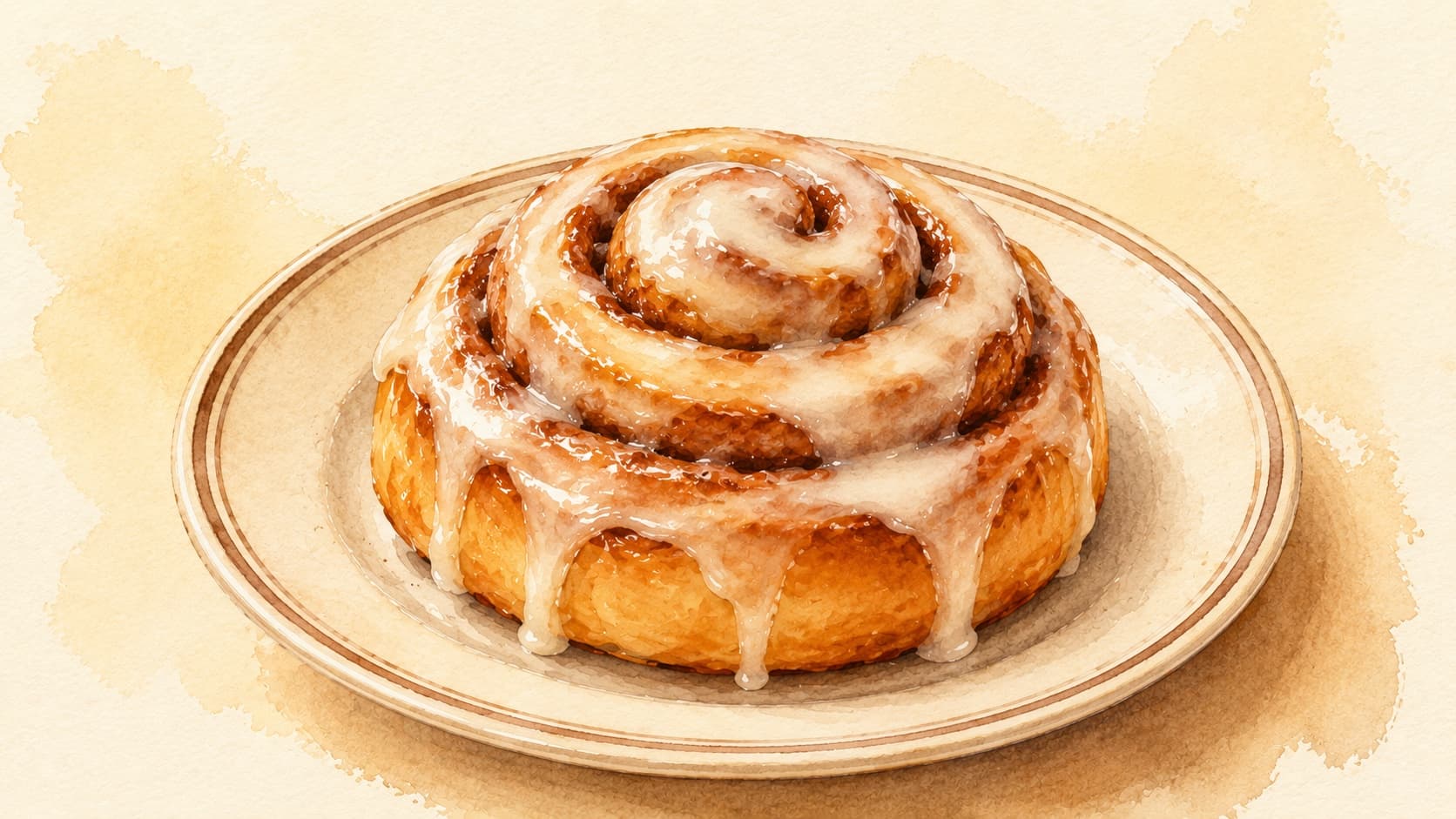
A dough-based pastry enriched with sugar and spices, rolled, sliced, and baked for a soft, gooey texture.
Contents (5 sections)▾
Ingredients
- 4 cups all-purpose flour
- 1 cup milk, warmed
- 1/2 cup granulated sugar
- 1/4 cup unsalted butter, melted
- 2 large eggs
- 1 packet active dry yeast (2 1/4 tsp)
- 1 tsp salt
- 2 tbsp ground cinnamon
- 1/2 cup brown sugar
- 1/4 cup butter, softened
- 1 cup powdered sugar
- 2-3 tbsp milk for icing
Steps
In a bowl, combine warm milk, sugar, and yeast; let sit for 5 minutes.
Add melted butter, eggs, salt, and flour; mix until a dough forms.
Knead the dough for 5-7 minutes; let rise in a warm place for 1 hour.
Roll out dough, spread softened butter, and sprinkle cinnamon and brown sugar.
Roll tightly, slice into rounds, place in a greased pan, and let rise for 30 minutes.
Bake at 350°F (175°C) for 20 minutes; mix icing and drizzle over warm rolls.
Tools you'll want
- · Digital kitchen scale (gram precision)
Why this works
The dough's hydration level, achieved through warm milk and melted butter, creates a soft texture. Yeast activation is critical; the ideal temperature for yeast is around 100°F (38°C) to 110°F (43°C), promoting optimal rise. Kneading develops gluten, giving structure and chewiness. The cinnamon and sugar filling caramelizes during baking, adding flavor and moisture.
Common mistakes
Milk too hot for yeast.
Target: Warm milk at 40–43 °C — feels like warm bath water on your wrist.
Why it matters: Below 35 °C, yeast won't fully activate. Above 50 °C, yeast dies. The 40-degree sweet spot maximizes activity.
What to do: Heat milk and test with a thermometer or your finger. Should be pleasantly warm, never hot.
Workarounds:
- Use instant yeast (no proofing needed) — more forgiving than active dry yeast.
Insufficient first rise.
Target: First (bulk) rise: 1.5–2 hours in a warm spot until doubled.
Why it matters: Under-proofed dough (risen too briefly) produces dense, hard rolls. The yeast needs time to develop flavor and structure.
What to do: Cover with damp towel, place in a warm spot (oven with light on works). Test by pressing — should slowly spring back.
Workarounds:
- For deeper flavor, cold-ferment overnight in the fridge — develops complex flavor like artisan bread.
Rolling the dough too loose.
Target: Roll dough into a tight log — no gaps between layers. Use the "pinch and seal" method at the seam.
Why it matters: Loose rolls unravel during baking, producing weird-shaped, uneven rolls. Tight rolls hold the spiral structure during proofing and baking.
What to do: After spreading filling, roll TIGHTLY from the long edge. Pinch the seam to seal. Slice with unflavored dental floss (sharp knife crushes the spiral).
Workarounds:
- For dental-floss slicing: slide floss under, cross over the top, pull both ends to slice cleanly.
Crowding the pan.
Target: Place rolls with 1–2 cm gap between them — they expand during the second rise.
Why it matters: Crowded rolls fuse together during baking — not necessarily bad, but limits even browning. Slightly spaced rolls have golden edges.
What to do: Use a slightly larger pan than seems necessary. Even spacing.
Workarounds:
- For "pull-apart" rolls, intentionally crowd — different style.
Skipping cream cheese frosting.
Target: Cream cheese frosting: 100 g cream cheese + 50 g butter + 100 g powdered sugar + 1 tsp vanilla.
Why it matters: Plain glaze (powdered sugar + milk) is fine but cinnamon rolls' iconic finish is the cream cheese frosting. The tangy richness balances the cinnamon-sugar.
What to do: Apply frosting on STILL-WARM rolls — it melts slightly into the spirals.
Workarounds:
- Healthier: maple-glaze (maple syrup + butter + powdered sugar) — different but excellent.
What to look for
- Rolls should be golden-brown on top.
- The dough should have doubled in size during proofing.
- A sweet, spicy aroma should fill the kitchen while baking.
- The icing should be glossy and slightly runny when drizzled.
Chef's view
Cinnamon rolls have roots in various cultures, often evolving from simple bread doughs. In American cuisine, they became a staple breakfast item, celebrated for their sweet, comforting qualities. The combination of warm spices and sweet dough reflects a tradition of home baking that brings family and friends together. Mastering this recipe involves understanding yeast behavior and the balance of flavors, making it a rewarding endeavor for any home baker.
<!-- beginner-glossed v1 -->Get the essays in your inbox — free
Weekly notes on flavor, fermentation, and food history — the writing behind the Atlas of Flavor. No spam; unsubscribe anytime.