
Chocolate Mousse
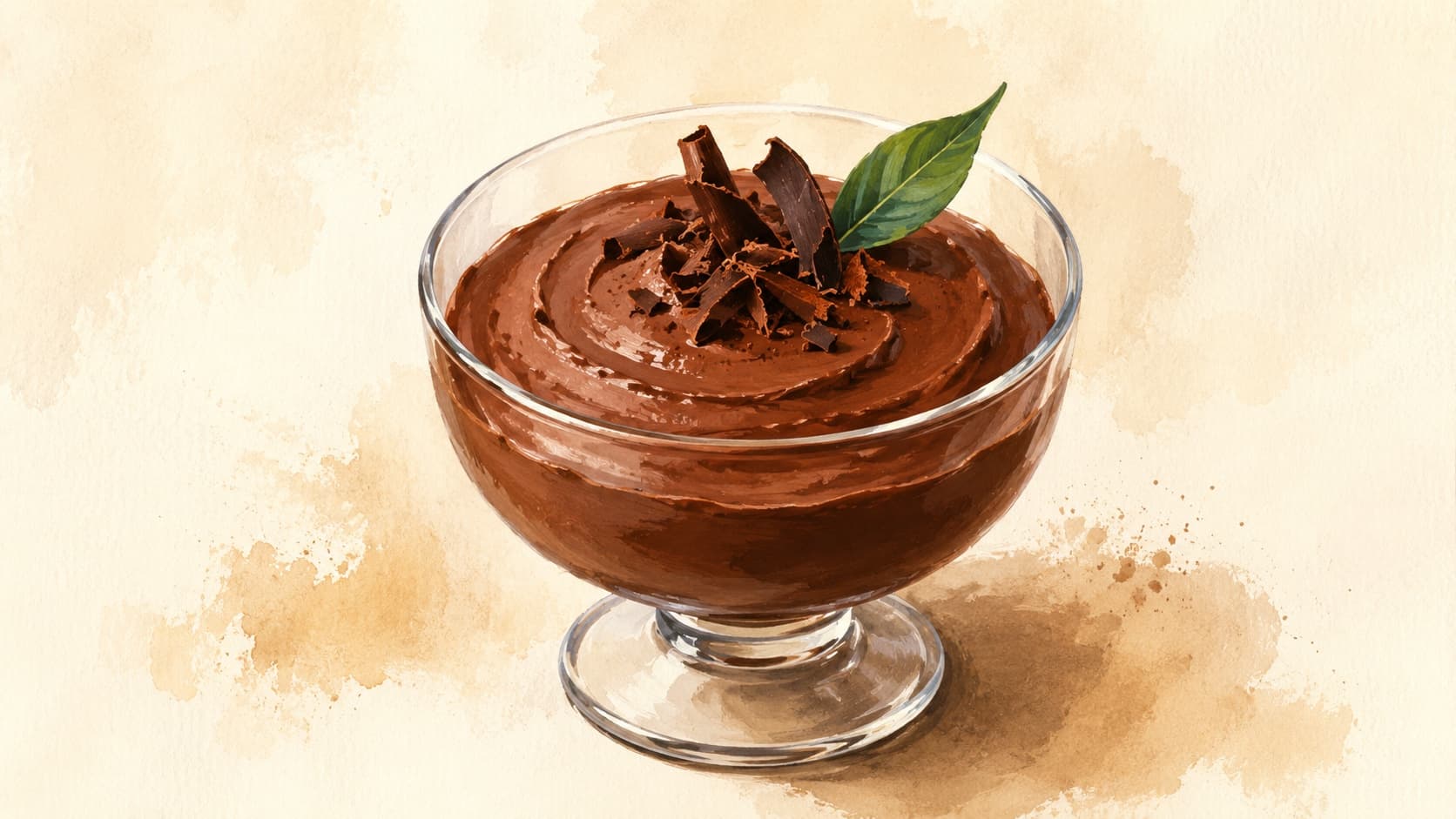
This classic French dessert combines whipped egg whites and rich chocolate to achieve a light yet decadent texture.
Contents (5 sections)▾
Ingredients
- 200g dark chocolate (70% cocoa)
- 3 large eggs, separated
- 50g granulated sugar
- 1 pinch of salt
- 200ml heavy cream
- 1 tsp vanilla extract
- Optional: chocolate shavings for garnish
Steps
Melt the dark chocolate in a heatproof bowl over simmering water.
In a separate bowl, whisk egg yolks with sugar until pale and creamy.
Fold the melted chocolate into the egg yolk mixture.
In another bowl, whisk egg whites with salt until stiff peaks form.
Fold egg whites into the chocolate mixture gently.
In a final bowl, whip heavy cream with vanilla until soft peaks form, then fold into the mixture.
Tools you'll want
- · Digital kitchen scale (gram precision)
Why this works
Mousse achieves its signature texture through the combination of whipped egg whites and cream, which aerate the mixture. Dark chocolate provides a rich flavor, balanced by the sweetness of sugar and the creaminess of egg yolks. The folding technique (gently lifting and turning the mixture so you keep the air in, instead of stirring) minimizes air loss, maintaining volume and lightness.
Temperature control is essential when melting chocolate; too high can cause it to seize. Using room temperature ingredients aids in smoother blending. The ratio of chocolate to cream influences the final consistency, with heavier chocolate yielding a denser mousse.
Safety — raw eggs: This mousse is never cooked — the yolks and whipped whites stay raw, so it carries a Salmonella risk. Whipping, chocolate, sugar, and chilling do not make raw egg safe, and refrigeration only slows bacteria rather than removing the hazard. When the egg won't be cooked, use pasteurized eggs (pasteurized in-shell eggs, or pasteurized whites and yolks). Pregnant people, infants and young children, older adults, and anyone immunocompromised should avoid mousse made with unpasteurized raw egg.
Common mistakes
Wrong chocolate.
Target: Dark chocolate (60–70% cacao) — high-quality bar chocolate (Valrhona, Callebaut, or similar).
Why it matters: Mousse flavor is dominated by the chocolate — cheap chocolate produces flat mousse. Cocoa content matters for body: too low (under 50%) lacks intensity; too high (over 80%) makes the mousse bitter and dry.
What to do: Splurge on the chocolate. Chop into small pieces for even melting.
Workarounds:
- For sweeter mousse, use 50% cacao + reduce added sugar.
Burning the chocolate.
Target: Melt chocolate over a double boiler (water at simmer, NOT boiling) OR microwave in 15-second bursts, stirring between.
Why it matters: Chocolate burns at relatively low temperatures (45 °C is starting to compromise). Direct heat or microwave abuse produces grainy, separated, or scorched chocolate — unrecoverable.
What to do: Patient melting. Stir frequently. Pull when ALMOST melted — residual heat finishes.
Workarounds:
- Burnt chocolate? Start over with fresh chocolate. Burnt chocolate cannot be saved.
Over-whipping cream or egg whites.
Target: Cream to soft peaks (curls back on the whisk, doesn't hold rigid). Egg whites to firm-but-glossy peaks.
Why it matters: Over-whipped cream becomes grainy and won't fold properly. Over-whipped whites become dry and break apart during folding. Both cause dense, deflated mousse.
What to do: Stop whipping early. The folding step continues to develop structure.
Workarounds:
- Over-whipped cream? Add 1 tbsp fresh liquid cream and gently whisk — can sometimes recover.
Rough folding technique.
Target: Gentle figure-8 motions with a large rubber spatula. Fold whites/cream into chocolate, not the reverse.
Why it matters: Aggressive stirring deflates the air bubbles you just whipped in — produces dense, flat mousse. Folding direction also matters: heavier into lighter, in stages.
What to do: Add 1/3 of the whipped component first (sacrificial — loses some volume) to lighten the chocolate. Then fold in the rest gently.
Workarounds:
- Use a balloon whisk for the first incorporation — gentler than a spatula.
Insufficient chilling.
Target: Refrigerate 4+ hours, ideally overnight.
Why it matters: Chocolate mousse sets through butter fat solidifying as it cools. Under-chilled mousse is runny and lacks the silky structure of properly set mousse.
What to do: Make ahead. Portion into glasses before chilling for easy serving.
Workarounds:
- For 2-hour set, use slightly less liquid in the recipe — firmer base sets faster.
What to look for
- Light and airy texture.
- Smooth, glossy surface.
- Rich chocolate aroma.
- Set but still soft upon tapping the side of the dish.
Chef's view
Chocolate mousse is a quintessential French dessert, embodying elegance and simplicity. Its origins trace back to the 18th century, evolving from a simple chocolate mixture to the airy delight we know today. The technique of folding is critical, allowing chefs to create a balance of flavors without losing the airy quality.
In modern culinary practice, mousse serves as a canvas for creativity, adapting flavors and ingredients while maintaining its traditional roots. Enjoying mousse is not just about taste; it’s a sensory experience that celebrates chocolate's depth and versatility.
<!-- beginner-glossed v1 -->Get the essays in your inbox — free
Weekly notes on flavor, fermentation, and food history — the writing behind the Atlas of Flavor. No spam; unsubscribe anytime.