
Chicken Biryani
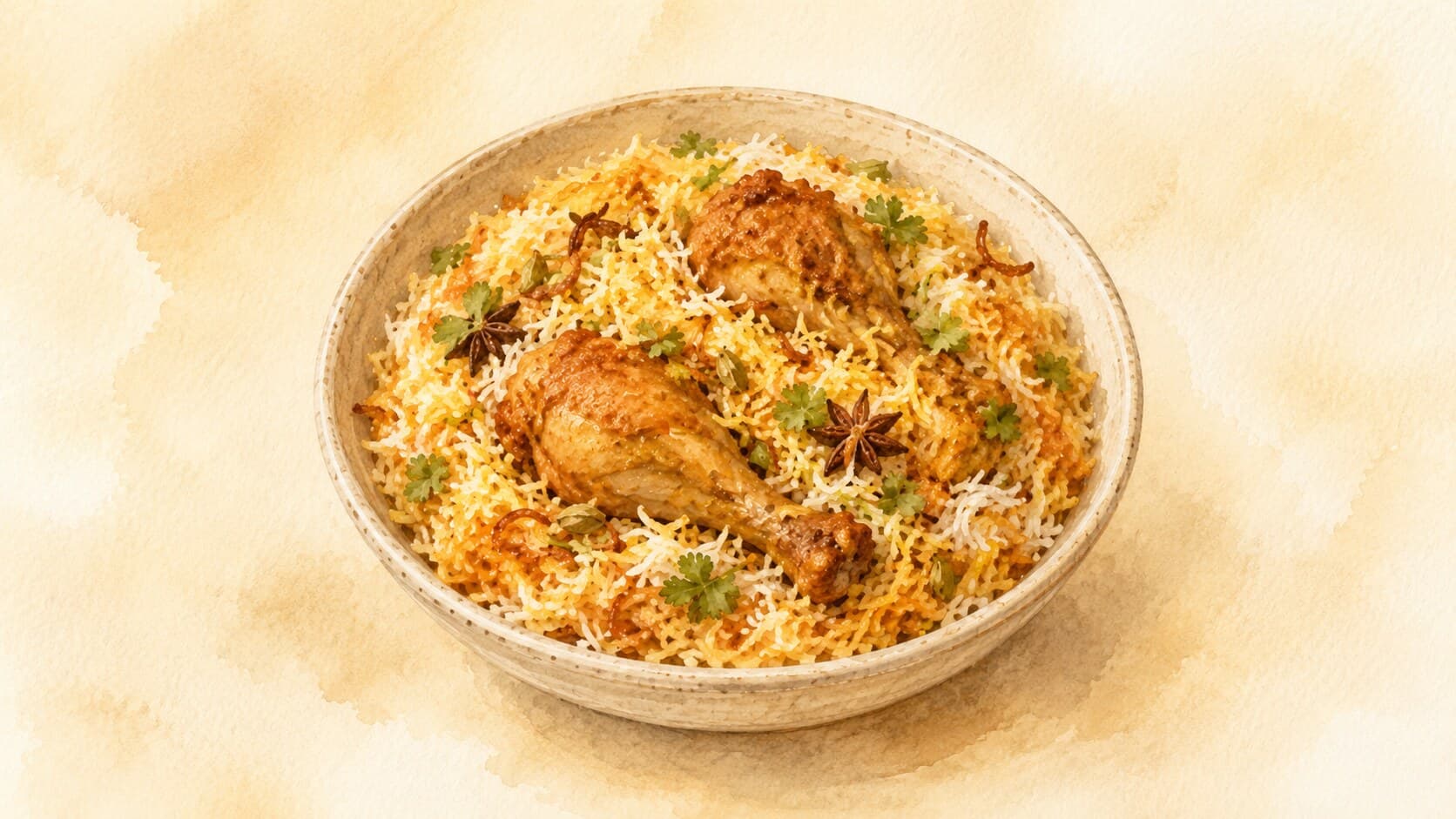
Chicken Biryani combines marinated chicken and layered rice to create a complex flavor profile.
Contents (5 sections)▾
Ingredients
- 500g chicken, cut into pieces
- 2 cups basmati rice
- 1 large onion, thinly sliced
- 2 tomatoes, chopped
- 3 tablespoons yogurt
- 4 tablespoons biryani masala
- 4 tablespoons cooking oil
- 2 cups water
- Salt to taste
- Fresh cilantro for garnish
Steps
Heat oil in a wide skillet over medium heat.
Add sliced onions and sauté until golden brown.
Stir in chicken, tomatoes, biryani masala, and yogurt; cook until chicken is browned on the outside — this is for colour and flavour, and does not mean it is fully cooked yet.
Add washed basmati rice and water; bring to a boil.
Reduce heat, cover, and simmer until rice is cooked and water is absorbed, and the chicken is cooked through to 74°C/165°F at the center of the thickest piece (instant-read thermometer; no pink at the center).
Garnish with cilantro and serve hot.
Tools you'll want
Why this works
The layering technique in Chicken Biryani allows for even cooking and flavor distribution. Basmati rice, soaked beforehand, ensures grains remain separate and fluffy. The marinated chicken (soaked beforehand in a seasoned mix so the flavor sinks in) releases moisture, enhancing the rice's texture. Using a wide skillet promotes steam retention, crucial for cooking.
The combination of spices in biryani masala infuses both the chicken and rice with depth. Yogurt tenderizes the chicken, while sautéed onions add sweetness. Precise timing prevents overcooking, preserving the integrity of each ingredient.
Common mistakes
Using the wrong rice.
Target: Aged long-grain Basmati rice — minimum 2 years aged, ideally Indian/Pakistani brands (Daawat, Tilda, India Gate).
Why it matters: Biryani's signature is each grain remaining separate, long, and elegant. Short-grain or fresh-harvest Basmati lacks the necessary structure — grains clump and break. Aged Basmati has lost surface moisture and developed the firm starch profile that holds shape through long cooking.
What to do: Look for "aged" on the package. Soak in cold water for 30 minutes before cooking — pre-hydrates and reduces breakage.
Workarounds:
- Only fresh Basmati available? Skip the soak (it would over-hydrate), and undercook by 1 minute during par-boil.
- For "khichdi-style" biryani (more forgiving), short-grain rice works but produces a different, softer dish — not authentic biryani.
Skipping the par-boil and direct-cooking the rice in liquid.
Target: Par-boil rice 70 % in salted water, then drain. The final cook happens in the layered dum (steam) stage.
Why it matters: Direct-cooking rice in flavored liquid (the "pulao method") produces a different dish — it's pulao, not biryani. The defining technique of biryani is par-boiled rice layered with the curry, then steamed together to finish.
What to do: Bring heavily salted water (more salt than seems right) to a boil. Add soaked rice, time exactly 5–6 minutes, drain immediately. Rice should be 70 % cooked with a hard center.
Workarounds:
- For Sindhi/Hyderabadi-style biryani, par-boil even shorter (4 minutes) — the dum step is longer.
- For a one-pot biryani, use the "absorption method" with rice on top of the meat curry — different result but workable.
Inadequate marination.
Target: Marinate chicken in yogurt + ginger-garlic paste + spices for minimum 4 hours, ideally overnight.
Why it matters: Yogurt's lactic acid tenderizes the chicken proteins; the spices penetrate the meat over time. 30 minutes is the bare minimum — meat is still mostly bland. Long marination is the difference between "spiced chicken" and "biryani chicken."
What to do: Marinate overnight in the fridge. The longer the better (up to 48 hours for tougher cuts).
Workarounds:
- Last-minute? Score the chicken pieces deeply before marinating — 1-hour marination on scored meat ≈ 4 hours on unscored.
- For pre-marinated convenience, prep marinade ahead and store in the fridge in zip bags; add chicken when ready.
Skipping the birista (fried onions).
Target: Thinly sliced onions deep-fried in ghee until deep mahogany brown — not "golden," but truly dark.
Why it matters: Birista is biryani's flavor amplifier. The sustained frying produces deep caramelization and a slightly bitter complexity that the dish requires. "Lightly browned" onions don't deliver this.
What to do: Slice onions paper-thin, fry in batches in plenty of oil at 170 °C, drain on paper. Dark brown, NOT black.
Workarounds:
- Store-bought fried onions (sold in Indian stores) are an excellent shortcut — they're typically fried correctly.
- For oil-free, oven-roast sliced onions at 180 °C for 35 minutes, turning every 10 minutes.
Using ground "biryani spice mix."
Target: Whole spices toasted and ground fresh: cardamom (green + black), cinnamon, cloves, star anise, mace, bay leaves.
Why it matters: Pre-ground spice mixes have lost 70 % of their volatile aromas. Toasted whole spices ground fresh produce dramatically more flavor.
What to do: Toast spices in a dry pan for 30 seconds, cool, grind in a spice mill or mortar.
Workarounds:
- No time to grind? At least use whole spices (intact) infused into the cooking — better than stale ground mix.
- Cheat using good-quality garam masala added at the end of cooking (preserves volatile aromas).
Inadequate dum sealing.
Target: Seal the pot with a tight lid + dough (atta) seal or aluminum foil under the lid. Cook on very low heat (after high-heat start) for 25–30 minutes.
Why it matters: The dum step (sealed slow cook) is where the rice absorbs the curry's flavors and the spices marry. A loose lid lets steam escape and the rice stays separate from the chicken — same ingredients, different dish.
What to do: Use a heavy lid + a folded foil rim under the lid edge OR a flour-water "dough seal" pressed around the rim.
Workarounds:
- Modern shortcut: use a pressure cooker on low pressure for 5 minutes — produces nearly identical results in less time.
- Oven version: seal pot with foil and place in 180 °C oven for 25 minutes.
What to look for
- Rice grains should be distinct and fluffy.
- Chicken should be cooked through — 74°C/165°F at the center, with clear juices and no pink — as well as tender and well-coated in spices.
- A vibrant color from saffron or turmeric should be evident.
- Aromatic steam should rise when the lid is lifted.
Chef's view
Biryani has deep cultural roots in Indian cuisine, often served during celebrations. It reflects a blend of regional flavors, showcasing local ingredients and techniques. Mastering biryani involves understanding the balance of spices and cooking methods, taking it beyond mere rice and meat.
The dish evolves with each region, adapting to local preferences. This versatility makes biryani a staple in homes and restaurants alike, cherished for its rich flavors and communal appeal.
<!-- beginner-glossed v1 -->Get the essays in your inbox — free
Weekly notes on flavor, fermentation, and food history — the writing behind the Atlas of Flavor. No spam; unsubscribe anytime.