
Carnitas
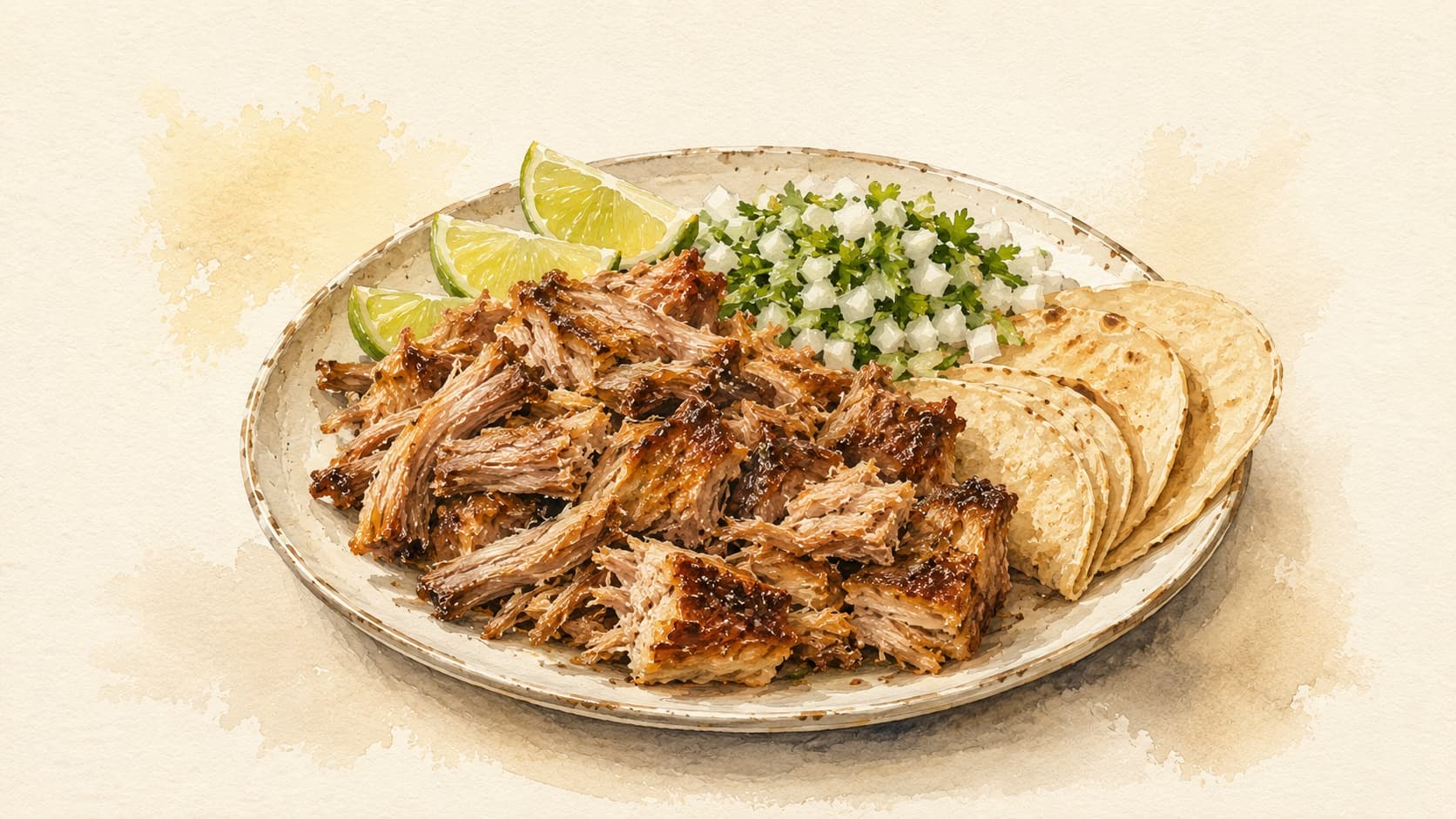
Carnitas relies on slow cooking to render fat and infuse flavor into the meat.
Contents (5 sections)▾
Ingredients
- 2 lbs pork shoulder, cut into large chunks
- 1 tablespoon salt
- 1 teaspoon black pepper
- 1 teaspoon cumin
- 1 teaspoon oregano
- 1 onion, quartered
- 4 cloves garlic, minced
- 1 orange, juiced
- 1 lime, juiced
- 2 bay leaves
- 1 cup chicken broth
Steps
Season the pork shoulder with salt, pepper, cumin, and oregano.
In a large skillet, sear the pork on all sides over medium-high heat.
Add the onion, garlic, juices, bay leaves, and chicken broth to the pan.
Cover and simmer on low heat for 2-3 hours, until the meat is tender.
Shred the pork with two forks and cook uncovered to crisp the edges.
Serve with tortillas, cilantro, and lime.
Tools you'll want
- · Digital kitchen scale (gram precision)
Why this works
Carnitas requires low and slow cooking to break down the tough fibers in pork shoulder. The fat renders slowly (the solid fat melts down into liquid), keeping the meat moist. Simmering at a low temperature allows for a rich infusion of flavors from spices and aromatics.
The use of citrus juices enhances the dish's flavor. Acid from the orange and lime balances the richness of the pork. This combination creates a complex taste.
Achieving a crisp texture requires finishing the pork uncovered. This step allows moisture to escape, promoting browning. The final sear adds a caramelized flavor, enhancing the overall experience.
Common mistakes
Using lean pork.
Target: Pork shoulder (Boston butt) — well-marbled, with at least 20% fat. Cubes 5 cm.
Why it matters: Carnitas is a confit-style dish — the pork cooks in its OWN rendered fat. Lean pork (loin, tenderloin) has no fat to render, produces dry meat that can't crisp at the end.
What to do: Buy bone-in pork shoulder for maximum flavor. Cut into large chunks (5 cm) — small pieces dry out before they tenderize.
Workarounds:
- Only lean pork available? Add 200 g of pork lard to the cooking pot to compensate.
Skipping the orange.
Target: Halved orange (with peel) thrown into the pot along with the pork.
Why it matters: The orange peel oils + juice contribute the subtle citrus brightness that defines Michoacán-style carnitas. Without it, the meat is good but not "carnitas" — missing the regional signature.
What to do: Quarter an orange, throw into the pot with the pork. Remove and discard before serving.
Workarounds:
- No orange? Lime + a piece of orange peel approximates.
Cooking at too high a temperature.
Target: Low simmer (95 °C) for 2–3 hours. The fat should be bubbling slowly, not violently.
Why it matters: High heat boils the meat into stringy, tough strands. Low and slow allows the collagen to convert to gelatin while keeping the muscle fibers tender.
What to do: Use a heavy pot. Maintain bare simmer. Check the meat at 2 hours — should pull apart easily.
Workarounds:
- Pressure cooker: 45 minutes high pressure approximates 3-hour simmer.
Skipping the crisping step.
Target: After braising, drain off most of the fat. Crisp the meat in the remaining fat over high heat for 5–10 minutes until edges are golden and shatteringly crispy.
Why it matters: Tender shredded pork without crispy edges is "pulled pork" — fine but not carnitas. The crispy bits are signature: golden, slightly crackling, contrast with the tender interior.
What to do: Two-stage cook: braise slow → crisp hot. Don't skip stage 2.
Workarounds:
- For oven crisping, spread shredded meat on a sheet pan, broil for 3–5 minutes.
Wrong tortillas / no toppings.
Target: Small corn tortillas + diced onion + cilantro + lime + salsa verde. Served warm.
Why it matters: Carnitas needs its tortilla + topping structure to balance the richness. Carnitas in a flour tortilla, or without toppings, becomes one-dimensional.
What to do: Warm corn tortillas on a hot dry pan. Set up toppings in separate bowls.
Workarounds:
- For variety, add avocado slices or pickled red onion to the spread.
What to look for
- Shredded pork should be tender and juicy.
- The meat should have a golden-brown color on the edges.
- Aromatic scents from the spices and citrus should fill the air.
Chef's view
Carnitas is a traditional Mexican dish with deep cultural roots. It is often prepared for celebrations, symbolizing festivity and abundance. The process is communal, reflecting the spirit of sharing and togetherness.
Mastering carnitas involves understanding the balance of flavors and textures. This dish highlights the importance of technique in Mexican cooking, where each step builds upon the last to create something truly special.
<!-- beginner-glossed v1 -->Get the essays in your inbox — free
Weekly notes on flavor, fermentation, and food history — the writing behind the Atlas of Flavor. No spam; unsubscribe anytime.