
Carbonara
This dish combines pasta, eggs, cheese, and cured pork into a creamy sauce through careful temperature control.
Contents (5 sections)▾
Ingredients
- 400g spaghetti
- 150g guanciale, diced
- 100g Pecorino Romano cheese, grated
- 4 large eggs — pasteurized (in-shell pasteurized, or a pasteurized egg product); see the safety note
- 2 garlic cloves, crushed
- Salt, to taste
- Freshly ground black pepper, to taste
- Parsley, for garnish (optional)
Steps
Cook spaghetti in salted boiling water until al dente.
In a skillet, sauté guanciale over medium heat until crispy, add garlic, and remove from heat.
Whisk eggs and cheese together in a bowl, then add pepper.
Drain pasta, reserving some water, and add to the skillet with guanciale.
Quickly mix in egg mixture, adding reserved pasta water to achieve desired creaminess.
Serve immediately, garnished with parsley and more cheese.
Tools you'll want
- · Digital kitchen scale (gram precision)
Why this works
Carbonara relies on the emulsion (egg and cheese whisked into one smooth, glossy sauce) of egg and cheese to create a creamy sauce. The heat from the freshly cooked pasta gently cooks the eggs, preventing them from scrambling. The key is timing; the pasta must be hot when mixed with the egg mixture to achieve a smooth consistency. The guanciale (cured pork from the pig's cheek, fatty and savory) adds flavor and richness, while the pasta water helps adjust the sauce's thickness.
The ratio of cheese to egg is crucial. Pecorino Romano provides a sharp, salty flavor, balancing the richness of the guanciale. This balance is essential for preventing the dish from becoming overly heavy. The use of freshly cracked black pepper adds complexity and a slight kick, enhancing the overall flavor without overpowering the dish.
Safety — the egg sauce. Carbonara is bound by egg that the hot pasta only warms, not cooks through, so this normal soft-sauce method does not provide a validated Salmonella kill step — the residual pan and pasta heat are there for texture, and appearance or timing do not on their own prove the egg is safe. To keep the classic silky sauce, use pasteurized eggs (pasteurized in the shell, or a pasteurized egg product). Pregnant people, infants and young children, older adults, and anyone immunocompromised should use pasteurized egg; cooking the egg fully would set it into scramble and would no longer be carbonara.
Common mistakes
Scrambling the eggs.
Target: Pan off the heat, sauce temperature stays under 70 °C.
Why it matters: Egg yolks start to set near 65 °C and curdle into scrambled lumps above 70 °C. Carbonara works because the pasta itself is the heat source — the residual heat is just enough to thicken the eggs into a glossy emulsion, not to cook them through.
What to do: Pull the skillet off the burner BEFORE adding the egg mixture. Toss continuously for 30–60 seconds — the sauce will thicken from the latent heat of the pasta.
Workarounds:
- If the sauce begins to scramble, add a splash of cool reserved pasta water and whisk hard — it can sometimes be rescued.
- For more emulsion stability, use only egg yolks (4 yolks instead of 2 whole eggs per 4 portions).
Adding cream.
Target: Zero cream. The "creaminess" is an egg-and-cheese emulsion.
Why it matters: Authentic carbonara has no cream. Cream is a shortcut introduced outside Italy to mask scrambled-egg results — it adds heaviness without the actual silken texture of a real emulsion.
What to do: Trust the eggs, cheese, and pasta water. The sauce thickens like a savory zabaglione.
Workarounds:
- If you want extra richness, increase Pecorino by 30 % or shift to all yolks.
- Add 1 tbsp of butter at the very end for a glossier finish (not traditional, but defensible).
Using the wrong cheese.
Target: Pecorino Romano (DOP), freshly grated. Acceptable alternative: 50/50 Pecorino + Parmigiano-Reggiano.
Why it matters: Pecorino's sharp, salty character balances the fat of the guanciale. Pre-grated supermarket "parmesan" contains anti-caking agents (cellulose powder) that prevent smooth melting and leave a chalky residue.
What to do: Buy a wedge, microplane it just before cooking.
Workarounds:
- No Pecorino? Use 100 % Parmigiano-Reggiano and finish with extra cracked black pepper to compensate for the lost sharpness.
- In an emergency, a high-quality aged Manchego comes closest in flavor.
Using bacon instead of guanciale.
Target: Guanciale (cured pork jowl). Acceptable alternative: pancetta (unsmoked).
Why it matters: Guanciale has ~70 % fat and a sweet, complex pork flavor. Bacon is smoked, and the smoke aroma dominates and shifts the dish away from carbonara entirely.
What to do: Source guanciale from an Italian deli or specialty grocer.
Workarounds:
- Pancetta is the standard substitute — close enough that most restaurants outside Italy use it.
- If you only have bacon, blanch it for 30 seconds in boiling water first to dial back the smoke, then dice and render.
Not reserving pasta water.
Target: 1 cup (240 ml) of starchy water set aside before draining.
Why it matters: Starch from the pasta water binds the sauce, helps the emulsion stay stable on the plate, and lets you adjust consistency on the fly.
What to do: Place a coffee mug in the colander before draining — visual cue not to forget.
Workarounds:
- If you forgot, plain hot water + a pinch of cornstarch can mimic the starch loading in a pinch.
- For an extra-silky sauce, cook the pasta in less water than usual (around 2 L per 400 g instead of 4 L) — the water concentrates more starch.
Over-salting the pasta water.
Target: 7–10 g salt per liter (less than the typical "as salty as the sea" rule).
Why it matters: Guanciale, Pecorino, and reserved pasta water all contribute salt. The cumulative load can easily turn the dish inedible.
What to do: Salt the water lightly, taste the sauce before adding any further salt, and skip salt entirely from the egg mixture.
Workarounds:
- If the sauce is over-salted, stir in an extra unsalted pasteurized yolk or two — yolk dilutes salinity without thinning the texture.
- Add a small splash of unsalted hot water to loosen and re-balance.
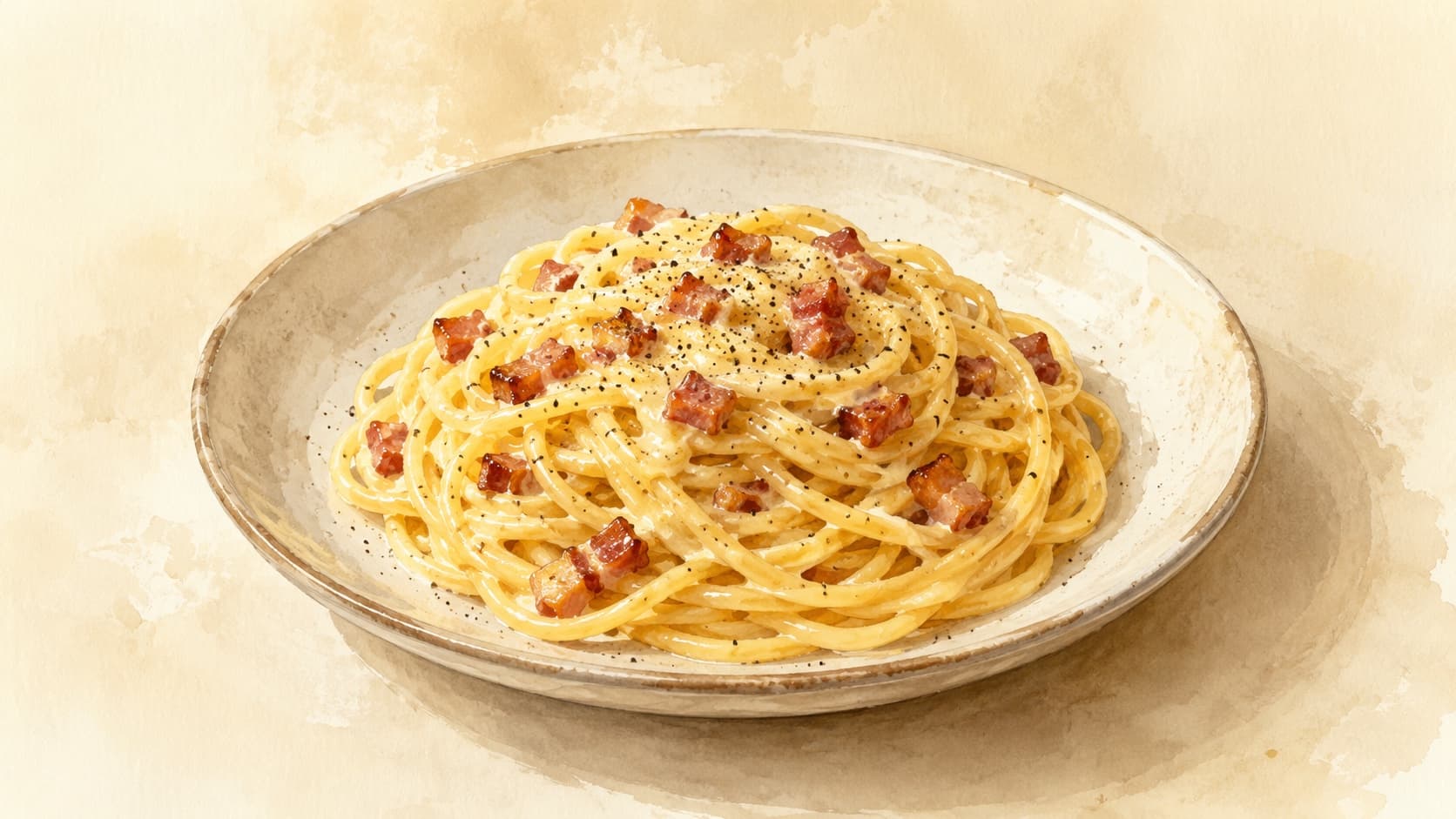
What to look for
- A creamy, cohesive sauce that clings to the pasta without being runny.
- Crispy guanciale pieces scattered throughout the dish.
- A vibrant yellow color from the egg mixture, not scrambled bits.
- Freshly grated cheese melting into the pasta.
- A finishing sprinkle of black pepper, adding visual contrast.
Chef's view
Carbonara has its roots in Roman cuisine, traditionally made with simple, quality ingredients. Its history reflects the resourcefulness of Italian cooks, using pantry staples to create a satisfying dish. The technique emphasizes the importance of timing and temperature, showcasing how minimal ingredients can yield maximum flavor.
In Italy, carbonara is often enjoyed as a comfort food, emblematic of home cooking. Mastering this dish connects one to culinary traditions, highlighting the balance of flavors and the importance of technique in Italian cuisine.
<!-- beginner-glossed v1 -->Get the essays in your inbox — free
Weekly notes on flavor, fermentation, and food history — the writing behind the Atlas of Flavor. No spam; unsubscribe anytime.