
Caprese Salad
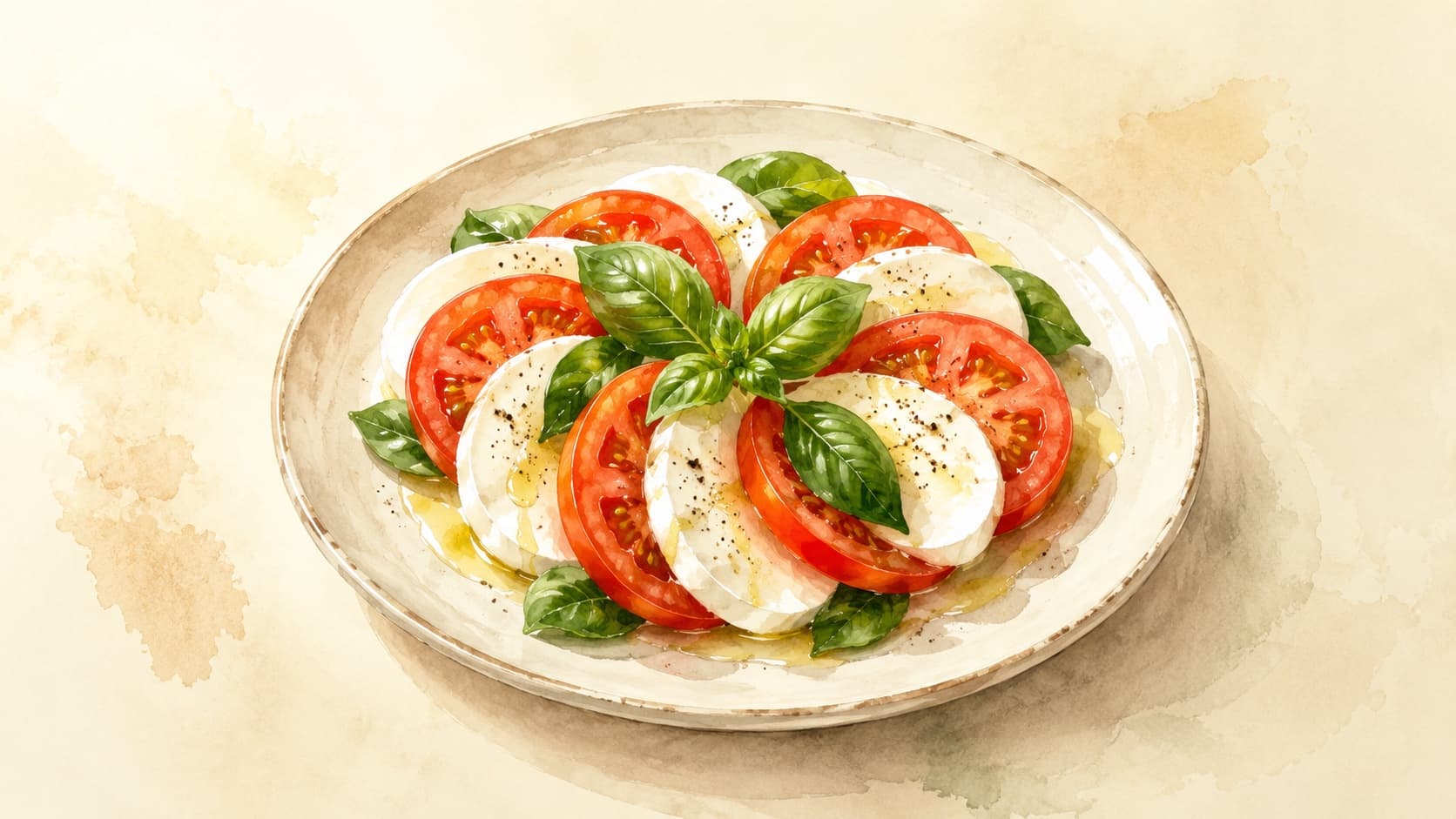
A classic Italian dish that balances fresh flavors and textures through simple but quality ingredients.
Contents (5 sections)▾
Ingredients
- 4 ripe tomatoes, sliced
- 250g fresh mozzarella, sliced
- 1 bunch fresh basil leaves
- 3 tablespoons extra virgin olive oil
- 1 tablespoon balsamic vinegar
- Salt, to taste
- Black pepper, to taste
- Optional: Arugula, for garnish
Steps
Slice the tomatoes and mozzarella into even rounds.
On a large plate, alternate layers of tomato slices and mozzarella.
Tuck fresh basil leaves between the layers.
Drizzle with olive oil and balsamic vinegar.
Season with salt and black pepper.
Garnish with arugula if desired.
Tools you'll want
Why this works
Caprese salad relies on the quality of its ingredients. Ripe tomatoes provide sweetness and acidity, while fresh mozzarella offers a creamy texture. The balance of flavors is enhanced through careful layering. Olive oil adds richness, while balsamic vinegar introduces a tangy note that cuts through the creaminess.
Temperature matters. Serve the salad at room temperature to allow the flavors to meld. Chilling the tomatoes or mozzarella can dull their taste. Uniform slicing ensures even distribution of flavors with each bite. Fresh basil adds aromatic brightness.
Common mistakes
Out-of-season tomatoes.
Target: Ripe summer tomatoes — heirloom, on-the-vine, or beefsteak. Should smell tomato-y through the skin.
Why it matters: Caprese has 4 ingredients. Each must be excellent. Mediocre tomatoes (hothouse, off-season) produce mediocre caprese — there's nothing to mask poor quality. This is strictly a summer dish.
What to do: Buy from farmers' markets at peak season. Smell-test, weight-test (heavier = better).
Workarounds:
- Off-season? Skip caprese, make something else. Out-of-season tomatoes will never be saved by a great mozzarella.
- For winter, sun-dried tomatoes + fresh herbs make a different "panzanella-style" caprese.
Wrong mozzarella.
Target: Mozzarella di Bufala Campana DOP (water buffalo milk), or high-quality fior di latte (cow milk fresh mozzarella).
Why it matters: Pre-shredded "mozzarella" or low-moisture mozzarella (the pizza kind) has the wrong texture entirely — rubbery, dense, mild. Real fresh mozzarella is milky, soft, and slightly tangy.
What to do: Buy from an Italian deli or specialty grocery. Use within 24 hours of opening.
Workarounds:
- No buffalo mozzarella? High-quality cow's milk fresh mozzarella (not low-moisture).
- Burrata is an upgrade — creamier and more luxurious.
Cold ingredients.
Target: Everything at ROOM TEMPERATURE. Take tomatoes and mozzarella out of the fridge 30 minutes before serving.
Why it matters: Cold tomatoes lose 50 % of their aroma — the volatile compounds need warmth to express. Cold mozzarella has rubbery, squeaky texture. Room temperature is when both ingredients shine.
What to do: Plan ahead. Take out 30 minutes minimum, longer in cold weather.
Workarounds:
- Forgot to warm? Brief microwave (15 seconds) of mozzarella alone — takes the chill off.
Acidic dressing (balsamic, vinegar).
Target: Just extra-virgin olive oil + flaky salt + black pepper + fresh basil. NO balsamic vinegar, NO lemon juice.
Why it matters: Traditional caprese is intentionally minimal — the tomato's natural acidity and the mozzarella's milkiness need no addition. Balsamic glaze is an American addition that overpowers both. The flag of Italy (red-white-green) is best served without distraction.
What to do: Drizzle good olive oil. Salt and pepper. Tear basil. Stop.
Workarounds:
- Want acid balance? A tiny pinch of citrus zest is acceptable. Balsamic should be reserved for non-traditional "caprese-style" variations.
Pre-assembling too early.
Target: Assemble within 5 minutes of serving. Dress immediately before eating.
Why it matters: Tomatoes weep moisture; mozzarella warms; basil wilts. The dish degrades within 10 minutes of assembly. Pre-made caprese for parties is a downgrade.
What to do: Slice components ahead, store separately. Assemble at the moment.
Workarounds:
- For dinner parties, set up "caprese station" with components and let guests assemble.
Wrong basil treatment.
Target: Tear basil leaves by hand, never chop. Whole or torn leaves only.
Why it matters: Chopping bruises basil, releasing dark "bruise juice" that oxidizes within minutes. Torn leaves stay green and aromatic. This is a small detail with visible impact.
What to do: Tear leaves at the very end. Scatter generously.
Workarounds:
- For variety, use Genovese basil (small leaves, more aromatic) — premium choice.
What to look for
- Bright red, firm tomatoes with smooth skin.
- Soft, creamy mozzarella with a slight bounce.
- Vibrant green basil leaves, free of browning.
- A glossy sheen from the olive oil.
- A balanced arrangement of ingredients on the plate.
Chef's view
Caprese salad is a symbol of Italian cuisine's simplicity and elegance. Originating from the island of Capri, it showcases the importance of fresh, local ingredients. The dish exemplifies the Italian belief that less is more, allowing each component to shine.
Historically, it has roots in rustic Italian cooking. The salad often appears in summer, when tomatoes are at their peak. Its ease of preparation makes it a favorite for gatherings, embodying the communal spirit of sharing and enjoying food together.
<!-- beginner-glossed v1 -->Get the essays in your inbox — free
Weekly notes on flavor, fermentation, and food history — the writing behind the Atlas of Flavor. No spam; unsubscribe anytime.