
Cannoli Siciliani
A structured assembly of fried pastry shells filled with sweet ricotta cream.
Contents (5 sections)▾
Ingredients
- 2 cups all-purpose flour
- 2 tablespoons granulated sugar
- 1/2 teaspoon salt
- 1/4 cup unsalted butter, chilled and cubed
- 1 large egg
- 1/4 cup white wine or vinegar
- 2 cups ricotta cheese, drained
- 1 cup powdered sugar
- 1 teaspoon vanilla extract
- 1/2 teaspoon cinnamon
- Chocolate chips or candied fruit (optional, for garnish)
- Oil for frying
Steps
In a bowl, combine flour, sugar, and salt.
Cut in butter until mixture resembles coarse crumbs.
Mix in egg and wine until dough forms; wrap and chill.
Roll out dough thinly, cut into circles, and wrap around cannoli molds.
Fry in hot oil until golden; drain on paper towels.
Mix ricotta, powdered sugar, vanilla, and cinnamon; fill cooled shells.
Tools you'll want
Why this works
Cannoli requires a delicate balance of ingredients. The flour provides structure. The fat from butter creates a tender shell. Wine or vinegar contributes acidity, which enhances flavor and aids in gluten development, yielding a flaky texture. Frying at 350°F (175°C) ensures a crispy exterior without overcooking the filling.
The ricotta (a soft, mild, slightly sweet fresh Italian cheese) filling is key. Drain the ricotta to remove excess moisture. This prevents sogginess in the shells. Sweetening with powdered sugar ensures a smooth texture. Adding cinnamon and vanilla introduces aromatic depth.
Chilling the dough before rolling is crucial. It relaxes gluten, making the dough easier to work with. Thinly rolled dough promotes even frying, avoiding chewy shells.
Common mistakes
Using wet ricotta.
Target: Sheep's milk ricotta drained in a cheesecloth-lined sieve for 12+ hours.
Why it matters: Standard supermarket ricotta is wet — straight from the tub, it makes a runny filling that immediately sogs the shell. Authentic Sicilian cannoli use drained sheep's milk ricotta with a much firmer texture.
What to do: Line a sieve with cheesecloth, place ricotta inside, refrigerate over a bowl for 12 hours. Discard liquid.
Workarounds:
- For maximum stability, mix drained ricotta with 1 tbsp powdered sugar per cup — sugar absorbs additional moisture.
- For substitute, use strained Greek yogurt mixed 50/50 with ricotta — different but workable.
Filling too early.
Target: Fill cannoli shells WITHIN 5 MINUTES of serving — never earlier.
Why it matters: Even properly drained ricotta releases some moisture over time. Pre-filled cannoli (more than 10 minutes ahead) have soggy shells, no matter how dry the filling.
What to do: Fill at the table or just before serving. Have a pastry bag of filling ready and shells stored separately.
Workarounds:
- For dinner parties, set up a "cannoli bar" where guests fill their own.
Frying at the wrong temperature.
Target: 175 °C oil. Use a thermometer.
Why it matters: Below 165 °C, shells absorb oil and turn greasy. Above 185 °C, shells brown before the dough cooks through.
What to do: Use a deep-fry thermometer. Adjust heat between batches.
Workarounds:
- No thermometer? Drop a small piece of dough — it should sizzle and rise within 5 seconds.
Wrong dough.
Target: Cannoli dough = flour + sugar + cocoa + Marsala wine + butter + egg yolk. Rolled VERY thin (1 mm).
Why it matters: The Marsala wine adds flavor AND helps the shells blister and crisp during frying. Skipping the wine produces flat, dense shells. Rolling too thick produces tough shells; too thin produces shells that shatter on first bite (which is actually desirable).
What to do: Use a pasta roller for consistent thinness. Rest dough 30 minutes before rolling.
Workarounds:
- No Marsala? Dark rum or sweet sherry as a substitute.
Using bare metal cannoli tubes.
Target: Wrap dough around oiled stainless-steel cannoli tubes (typical size 1.5 × 12 cm).
Why it matters: Without tubes, dough collapses during frying. Bare metal sticks. Oiled metal allows the dough to release after frying.
What to do: Brush tubes with a thin layer of neutral oil before wrapping. Seal the dough overlap with a dab of egg white.
Workarounds:
- No cannoli tubes? Aluminum foil rolled into cylinders can substitute (homemade tubes).
Sweet filling overpowering ricotta.
Target: 1/2 cup sugar per 500 g drained ricotta — sweetness should highlight, not mask, the cheese.
Why it matters: Over-sweetened filling tastes like dessert cream cheese, losing the ricotta's distinctive milky-tangy character. Sicilian cannoli are balanced.
What to do: Mix sugar gradually, taste as you go. Add citrus zest (orange, lemon) for aromatic interest without more sweetness.
Workarounds:
- For traditional Sicilian, fold in chocolate chips + candied citrus peel at the end.
Skipping the orange-zest finish.
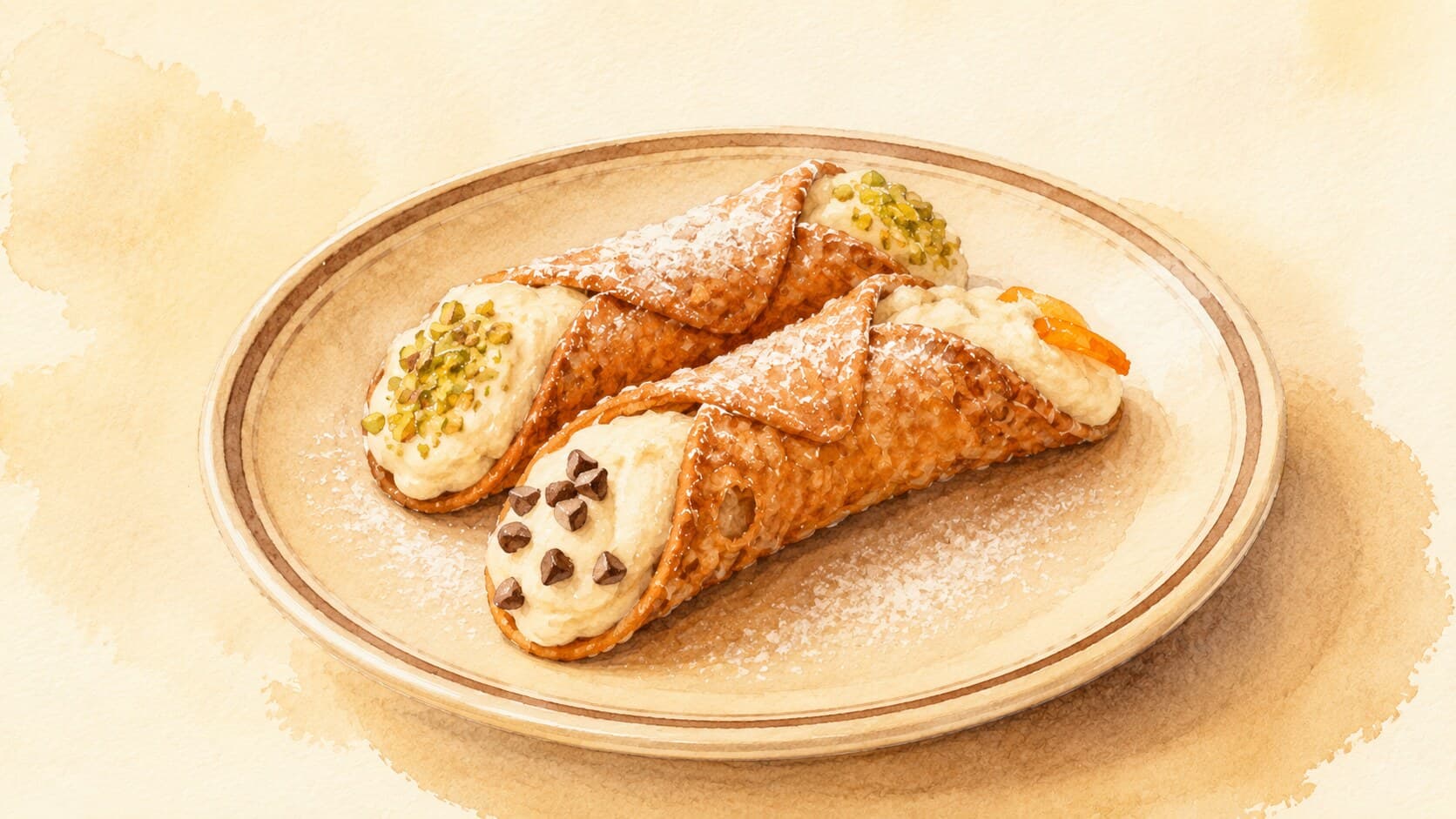
Target: Dust with powdered sugar + finely chopped pistachios + a strip of candied orange peel on the visible end.
Why it matters: The garnishes are part of the structure — pistachio for texture, candied orange for aromatic punctuation, powdered sugar for visual identity.
What to do: Have all garnishes ready before filling. Apply immediately after filling.
Workarounds:
- No candied orange? Fresh orange zest dusted on top.
What to look for
- Golden-brown color on the shells.
- A crisp sound when biting into a shell.
- Filling that remains firm, not runny.
- A smooth, creamy texture in the ricotta.
- Presentation should be neat with no excess filling spilling out.
Chef's view
Cannoli have a rich cultural history in Sicily, often enjoyed during festive occasions. Their creation is an art form, reflecting the balance of techniques passed down through generations. Each bite should evoke a sense of celebration, encapsulating the essence of Italian pastry-making.
Crafting cannoli is not just about flavor; it's about tradition. The process connects the maker to a lineage of Italian cooks. The attention to detail in each step transforms simple ingredients into an extraordinary dessert.
<!-- beginner-glossed v1 -->Get the essays in your inbox — free
Weekly notes on flavor, fermentation, and food history — the writing behind the Atlas of Flavor. No spam; unsubscribe anytime.