
Classic Brownies
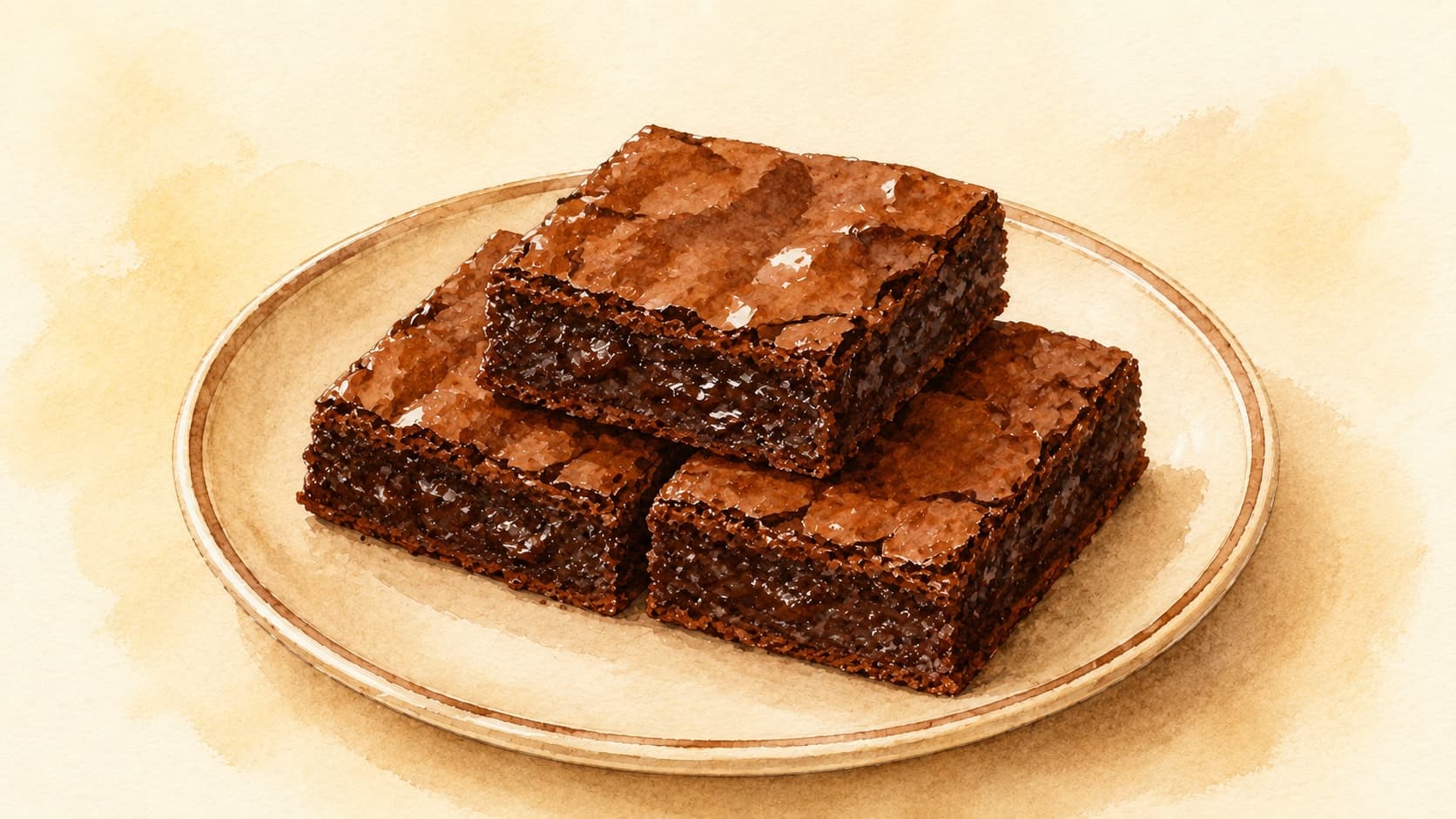
Classic brownies achieve a fudgy texture through precise ratios of fat, sugar, and flour.
Contents (5 sections)▾
Ingredients
- 1/2 cup unsalted butter
- 1 cup granulated sugar
- 2 large eggs
- 1 teaspoon vanilla extract
- 1/3 cup unsweetened cocoa powder
- 1/2 cup all-purpose flour
- 1/4 teaspoon salt
- 1/4 teaspoon baking powder
Steps
Preheat oven to 350°F (175°C) and grease a 9x9 inch baking pan.
Melt the butter in a saucepan over low heat.
Remove from heat and stir in sugar, eggs, and vanilla.
Mix in cocoa, flour, salt, and baking powder until just combined.
Pour the batter into the prepared pan and spread evenly.
Bake for 20-25 minutes, or until a toothpick comes out with a few moist crumbs.
Tools you'll want
Why this works
Classic brownies rely on a balance of fat and sugar to create their signature fudgy texture. The butter melts and combines with sugar, creating a glossy surface when baked. Eggs add structure and moisture, while cocoa powder infuses a rich chocolate flavor. Flour's role is minimal; it binds the mixture without creating a cake-like texture.
Baking at 350°F (175°C) ensures the brownies cook evenly. Too high a temperature can lead to a dry exterior, while too low may result in undercooked centers. The combination of baking powder and salt enhances flavor and texture without overpowering the chocolate.
The key to achieving the perfect brownie lies in not overmixing once the flour is added. Overmixing incorporates air, which can lead to a cake-like outcome instead of the desired fudginess.
Common mistakes
Overbaking.
Target: Pull from oven when a toothpick inserted in the center comes out with moist crumbs, NOT clean.
Why it matters: Brownies continue cooking from residual heat as they cool. Pulling at "clean toothpick" means dry, cakey brownies. The signature fudge texture requires pulling slightly underdone.
What to do: Check 5 minutes early. Toothpick test — should pick up moist batter clumps.
Workarounds:
- Slightly overbaked? Drizzle with caramel or chocolate ganache to add moisture back.
Wrong chocolate.
Target: Dark chocolate (60–70% cacao) chopped from a bar OR high-quality cocoa powder. NOT chocolate chips.
Why it matters: Chocolate chips contain stabilizers (lecithin, sugar coatings) that prevent them from melting smoothly into batter. Bar chocolate melts cleanly and integrates fully.
What to do: Chop a chocolate bar. For mix-ins (chunks within the brownie), chips ARE acceptable — but the base needs chopped bar.
Workarounds:
- Cocoa-powder-only brownies: use Dutch-processed (alkalized) for deeper, smoother flavor.
Whisking the eggs in too vigorously.
Target: Beat eggs + sugar lightly — just to combine. NOT to ribbon stage like cake batter.
Why it matters: Over-aerated eggs produce cakey brownies. The dense, fudge brownie texture requires minimal air incorporation.
What to do: Stir with a spatula or whisk briefly. Stop when eggs and sugar are uniform.
Workarounds:
- For "crackly top" effect, beat the eggs more aggressively — different style (still good).
Cooling in the pan.
Target: Cool completely (1+ hour) BEFORE cutting.
Why it matters: Hot brownies are too soft to cut cleanly. Cutting cool brownies produces sharp, neat squares.
What to do: Resist the urge. Wait. Cool on a wire rack in the pan.
Workarounds:
- For sharp clean cuts, refrigerate brownies for 1 hour first — slices like fudge.
Wrong fat.
Target: Butter (unsalted) for richer flavor. NOT vegetable oil.
Why it matters: Butter provides flavor as well as fat. Oil-based brownies are moist but lack the depth that butter contributes.
What to do: Use real unsalted butter. Brown it first (noisette) for next-level brownies.
Workarounds:
- For vegan brownies, use coconut oil — different but flavorful.
What to look for
- A shiny top that indicates a well-emulsified batter (the fat and liquid blended smoothly into one).
- A slight jiggle in the center when shaken gently.
- Edges that pull away from the pan but remain moist.
- A rich chocolate aroma while baking.
- A firm crust on top that slightly cracks.
Chef's view
Brownies are a quintessential American treat, embodying both simplicity and indulgence. They have evolved since their invention in the late 19th century, becoming a staple in both home kitchens and dessert menus. The combination of chocolate, butter, and sugar creates a deeply satisfying experience, appealing to all ages.
The technique emphasizes the importance of timing and temperature. Perfecting brownies is about listening to the batter and understanding how ingredients react under heat. Each batch is an opportunity to refine your skills and create a classic.
<!-- beginner-glossed v1 -->Get the essays in your inbox — free
Weekly notes on flavor, fermentation, and food history — the writing behind the Atlas of Flavor. No spam; unsubscribe anytime.