
BBQ Pulled Pork
A methodical approach to creating tender, flavorful pulled pork using low and slow cooking techniques.
Contents (5 sections)▾
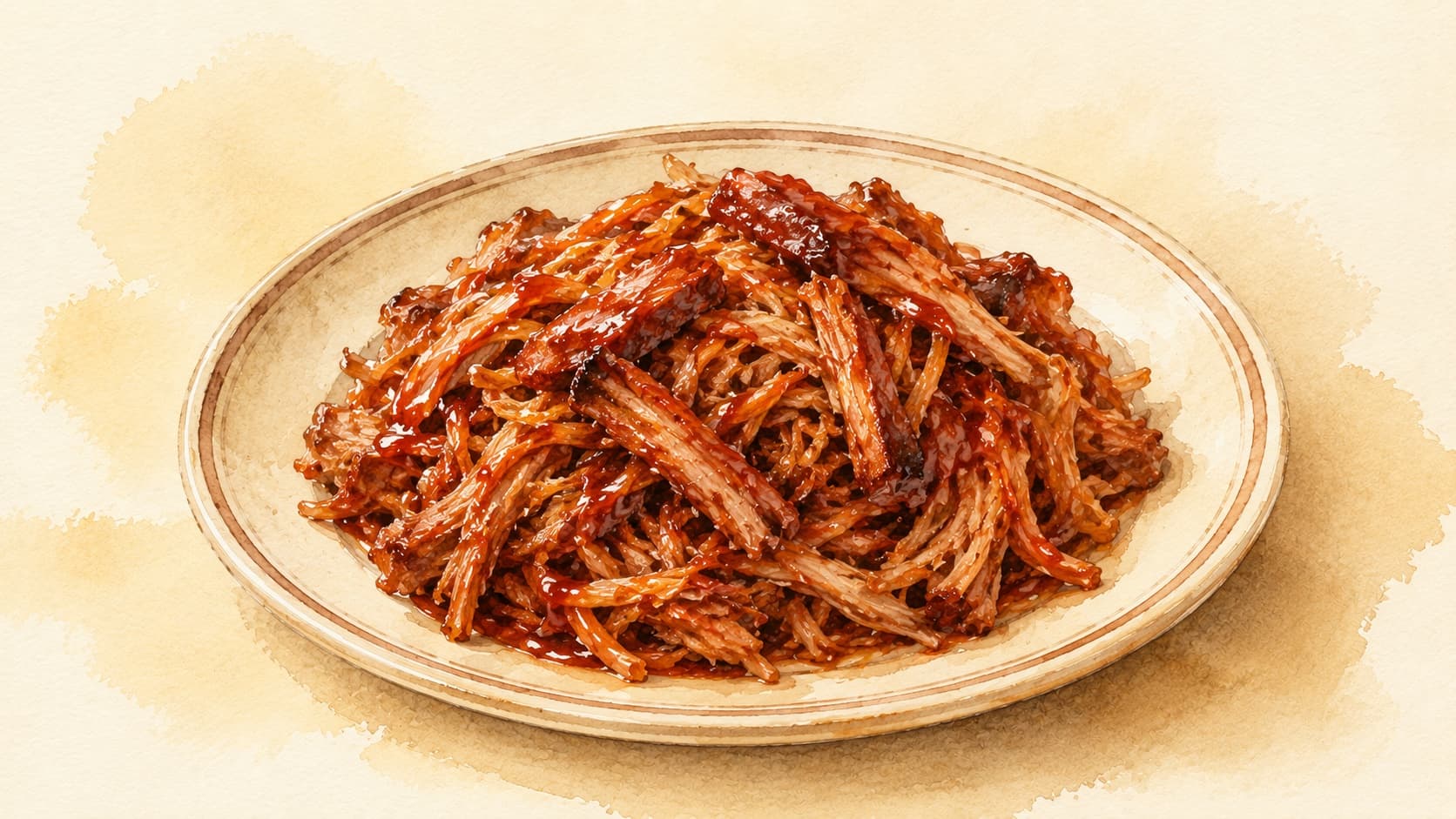
Ingredients
- 4 lbs pork shoulder
- 2 tbsp smoked paprika
- 1 tbsp garlic powder
- 1 tbsp onion powder
- 1 tbsp brown sugar
- 2 tsp salt
- 1 tsp black pepper
- 1 cup apple cider vinegar
- 1 cup BBQ sauce
- 1 tbsp Worcestershire sauce
- 1 tsp cayenne pepper (optional)
- Buns for serving
Steps
Mix spices in a bowl to create a rub.
Apply rub generously to the pork shoulder.
Place pork in a slow cooker with apple cider vinegar and Worcestershire sauce.
Cook on low for 20 hours until tender.
Shred pork with two forks and mix with BBQ sauce.
Serve on buns with additional sauce and toppings.
Tools you'll want
Why this works
Slow cooking at low temperatures breaks down collagen (the tough connective tissue in the meat) in the pork shoulder, transforming it into gelatin (the soft, silky substance that collagen melts into, which keeps the meat moist). This process creates a rich, moist texture ideal for pulling. The combination of spices infuses the meat with flavor, while the acid from apple cider vinegar helps tenderize. The lengthy cook time allows the flavors to meld, enhancing the overall taste.
The rub forms a crust that adds a layer of flavor and texture. Smoked paprika contributes depth, while sugar balances the spice. The low, consistent heat of the slow cooker ensures even cooking, preventing the meat from drying out. The final addition of BBQ sauce and mixing enhances moisture and flavor.
Common mistakes
Using lean cuts.
Target: Pork shoulder (Boston butt) with visible fat marbling and connective tissue.
Why it matters: Pulled pork's tender shredding texture comes from rendered fat (solid fat that has slowly melted out during cooking) + dissolved collagen. Lean cuts (loin, tenderloin) lack both — they dry out and turn stringy, no matter how slow you cook.
What to do: Buy bone-in pork shoulder (4-5 lbs / 2 kg) if possible — bone adds flavor and helps gauge doneness (bone pulls clean when ready).
Workarounds:
- Only boneless available → buy with the fat cap on; don't trim until after cooking.
Insufficient rub coverage.
Target: Heavy rub patted into all surfaces, applied 12-24 hours before cooking.
Why it matters: Pulled pork is mass-meat — flavor needs to penetrate, not just season the surface. Light dusting = bland interior. Heavy application + overnight rest = seasoning reaches the meat through osmosis.
What to do: Coat aggressively, pat in. Wrap and refrigerate overnight if possible.
Workarounds:
- Short on time → minimum 1 hour rest with rub; less ideal but still better than immediately.
Cooking temperature too high.
Target: 95-110°C (200-225°F) for 8-12 hours depending on size.
Why it matters: Above 120°C, the meat dries out before collagen has time to convert to gelatin. Low and slow gives the connective tissue time to break down without losing moisture. This is the heart of "low and slow."
What to do: Use a smoker, oven, or slow cooker set to the right temperature. Internal target: 93-95°C at the thickest part.
Workarounds:
- Time-constrained → pressure cooker at high pressure for 90 minutes can produce acceptable (not great) results.
Pulling the stall too early.
Target: Internal temp 93-95°C (200-203°F). Bone pulls clean. Meat tears with two forks.
Why it matters: Pork hits a "stall" around 70°C as evaporative cooling competes with the cooker — temperature can plateau for hours. Cooks who give up here have under-cooked meat. The collagen-to-gelatin conversion happens above 88°C.
What to do: Probe thermometer. Push through stall by waiting (or wrapping in foil to break the stall — Texas Crutch). Don't pull until 93°C+.
Workarounds:
- Stalled too long → wrap in butcher paper or foil to retain heat and push through.
Skipping the rest.
Target: Rest 30-60 minutes wrapped in foil before shredding.
Why it matters: Pork pulled straight from the cooker is at its hottest, and shredding it then drives more moisture out onto the board. A short rest lets it cool a little off that peak before you pull it, so less is driven out as you shred.
What to do: Wrap tightly, place in cooler or warm oven (60°C). Rest hour minimum.
Workarounds:
- Need to shred fast → at least 15 minutes wrapped is meaningfully better than zero.
Adding sauce too early.
Target: Sauce after pulling, mixed in to taste. Reserve extra for serving.
Why it matters: Sauce cooked in for hours = vinegary, over-reduced, dominates the meat. Sauce added at the end = bright, balanced, distinct from the meat flavor. Real Southern BBQ traditions actually serve sauce on the side, not pre-mixed.
What to do: Pull → toss with vinegar/Carolina-style "mop" if desired → BBQ sauce at the table.
Workarounds:
- Want sauce-saturated style → mix in half the sauce after pulling, serve the rest on the side.
What to look for
- Shredded meat that pulls apart easily.
- A shiny, sticky glaze from the BBQ sauce.
- Meat that has a dark, caramelized exterior.
- A slight pink color indicating proper smoke penetration.
- Tenderness that allows the meat to fall apart with little effort.
Chef's view
Pulled pork has roots in Southern American BBQ traditions, where cooking techniques have been passed down through generations. The method embodies the essence of patience and care in cooking. The balance of smoke, spice, and time creates a communal dish that brings people together.
Understanding the cultural significance of BBQ in America adds depth to the cooking process. It's not just about the food but also the experience of sharing and enjoying meals with loved ones. This recipe reflects a commitment to authenticity and traditional flavors, ensuring a satisfying outcome every time.
<!-- beginner-glossed v1 -->Get the essays in your inbox — free
Weekly notes on flavor, fermentation, and food history — the writing behind the Atlas of Flavor. No spam; unsubscribe anytime.