
Arancini
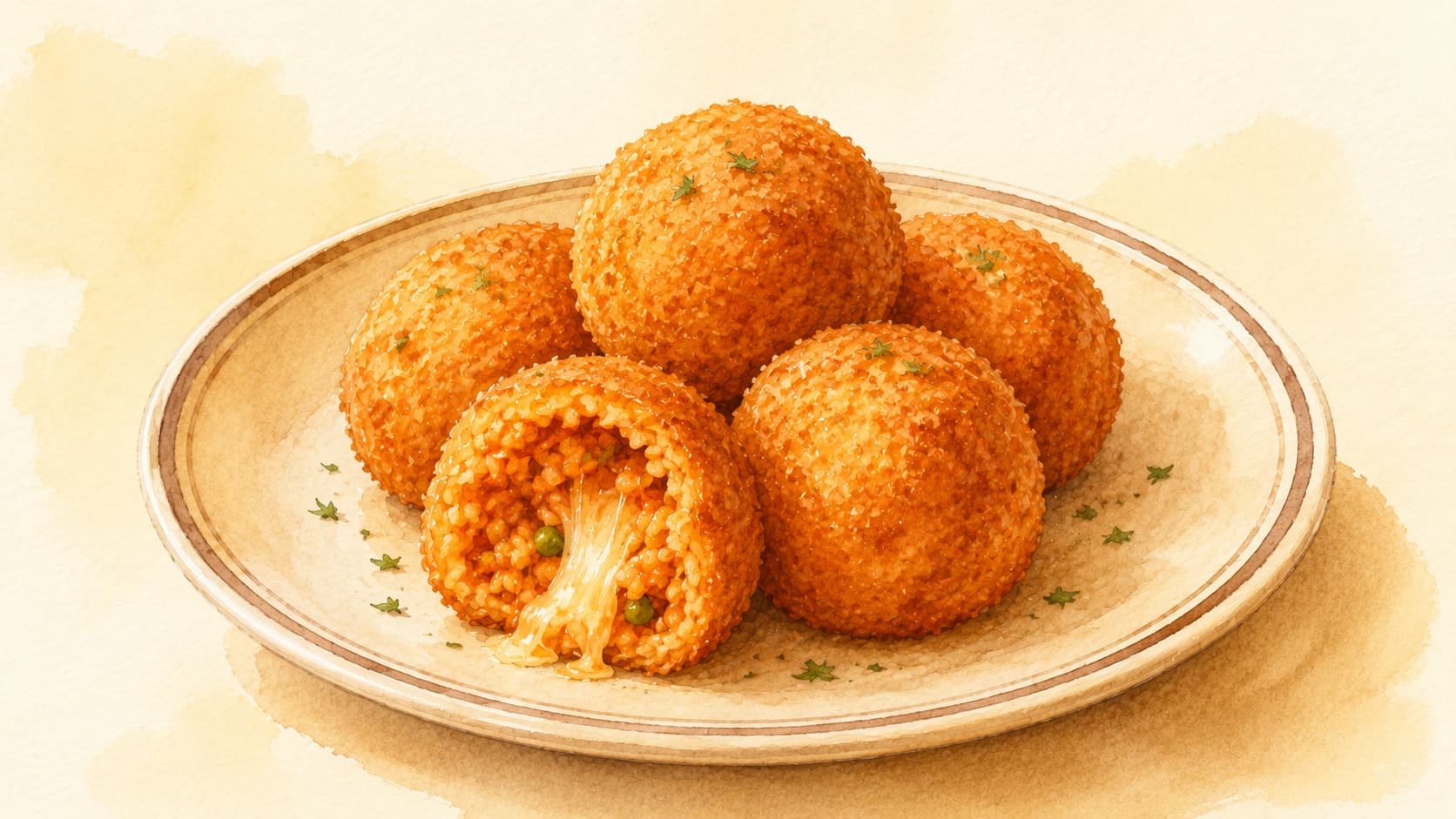
Arancini are stuffed rice balls that achieve a crispy exterior through frying, while retaining a creamy filling.
Contents (5 sections)▾
Ingredients
- 2 cups cooked risotto
- 1/2 cup grated Parmesan cheese
- 1/2 cup mozzarella cheese, cubed
- 1/2 cup all-purpose flour
- 2 large eggs
- 1 cup breadcrumbs
- Salt to taste
- Oil for frying
Steps
Mix risotto, Parmesan, and salt in a bowl.
Form small balls, placing a cube of mozzarella inside each.
Dredge each ball in flour, then dip in beaten eggs, and coat with breadcrumbs.
Heat oil in a skillet to 350°F (175°C).
Fry arancini until golden, about 4-5 minutes per batch.
Drain on paper towels and serve hot.
Tools you'll want
- · Digital kitchen scale (gram precision)
Why this works
Arancini thrive on a balance between moisture and crunch. The risotto (a creamy Italian rice dish, cooked slowly so the grains turn soft and sticky) should be firm enough to hold shape yet creamy enough to melt in the mouth. Frying at 350°F (175°C) allows the exterior to crisp while cooking the interior without absorbing excess oil. The breadcrumb coating traps heat, creating a steam effect that enhances texture.
A combination of eggs and flour helps bind the ingredients and create a cohesive structure. Using mozzarella ensures a gooey center that contrasts with the crisp shell. The frying process caramelizes (browns with heat until the flavor deepens) the breadcrumbs, adding flavor complexity and color.
Cooking in batches prevents overcrowding, which can lower oil temperature and lead to soggy results. Monitor the temperature for optimal frying; adjust heat as necessary to maintain the 350°F target.
Common mistakes
Using risotto that's too soft or too dry.
Target: Cold, firm risotto that holds shape when pressed — slightly drier than freshly-cooked risotto.
Why it matters: Soft risotto won't hold ball shape; very dry risotto won't bind. The night-old leftover risotto is structurally ideal.
What to do: Use day-old risotto from the fridge, or cool fresh risotto thoroughly (1+ hour) before forming.
Workarounds:
- Risotto too soft → spread thin on tray, refrigerate 30 min to firm.
Skipping the chill before frying.
Target: Formed balls chilled 30+ min in fridge before breading.
Why it matters: Cold balls hold shape during the rapid temperature change in hot oil. Room-temp balls deform or split open during frying.
What to do: Form, place on tray, refrigerate 30 min minimum before breading and frying.
Workarounds:
- Time-short → freeze 10 min for similar effect; don't freeze longer or interior won't heat through.
Skipping the flour layer.
Target: Standard breading sequence: flour → egg → breadcrumbs. All three layers.
Why it matters: Flour gives the egg something to adhere to; egg gives breadcrumbs the bond. Skip flour = breadcrumbs slide off during frying.
What to do: Three bowls: flour, beaten egg, breadcrumbs. Coat in order, shaking off excess.
Workarounds:
- Want extra crunchy → use panko (light, flaky Japanese breadcrumbs that fry up extra crisp) for the breadcrumbs.
Oil too cold.
Target: 175-180°C maintained throughout. Use a thermometer.
Why it matters: Cold oil = arancini absorb oil, become greasy without crisp shell. Hot oil = immediate crust formation, oil stays out.
What to do: Thermometer mandatory. Wait for temperature to recover between batches.
Workarounds:
- No thermometer → wooden chopstick test: steady bubbles around chopstick when dipped.
Overcrowding the oil.
Target: 3-4 arancini per batch in a 25cm pan/wok with 5cm oil depth.
Why it matters: Crowded oil temperature drops dramatically. Arancini stick together, poach instead of fry (poach = cook gently in liquid, here the cooling oil, so they go soft instead of crisp).
What to do: Work in batches, give each ball space to float independently.
Workarounds:
- Want all done together → multiple parallel pans or deep fryer.
Cutting open too soon after frying.
Target: Rest 2-3 minutes after frying before serving — cheese needs to settle.
Why it matters: Immediately cut arancini have molten cheese that runs everywhere; slight rest lets the structure set while keeping cheese gooey.
What to do: Drain on rack, wait 2 min, then plate.
Workarounds:
- Need immediate serving → handle by skewer to avoid cheese running over your hand.
What to look for
- Golden-brown color on the outside.
- A firm but yielding exterior when bitten.
- Melting cheese oozing from the center.
- A crisp sound when breaking the shell.
- Steam escaping when the arancini are cut open.
Chef's view
Arancini originated in Sicily, reflecting the region's resourcefulness. Traditionally, they repurposed leftover risotto into a new dish, showcasing Italian culinary creativity. Over time, variations emerged, incorporating different fillings and flavors, adapting to local tastes.
The technique emphasizes the interplay between texture and flavor. Achieving the right balance transforms simple ingredients into a delightful experience, making arancini a staple in Italian cuisine. The dish encapsulates the spirit of sharing and community, often enjoyed at gatherings and celebrations.
<!-- beginner-glossed v1 -->Get the essays in your inbox — free
Weekly notes on flavor, fermentation, and food history — the writing behind the Atlas of Flavor. No spam; unsubscribe anytime.