
Apple Crumble
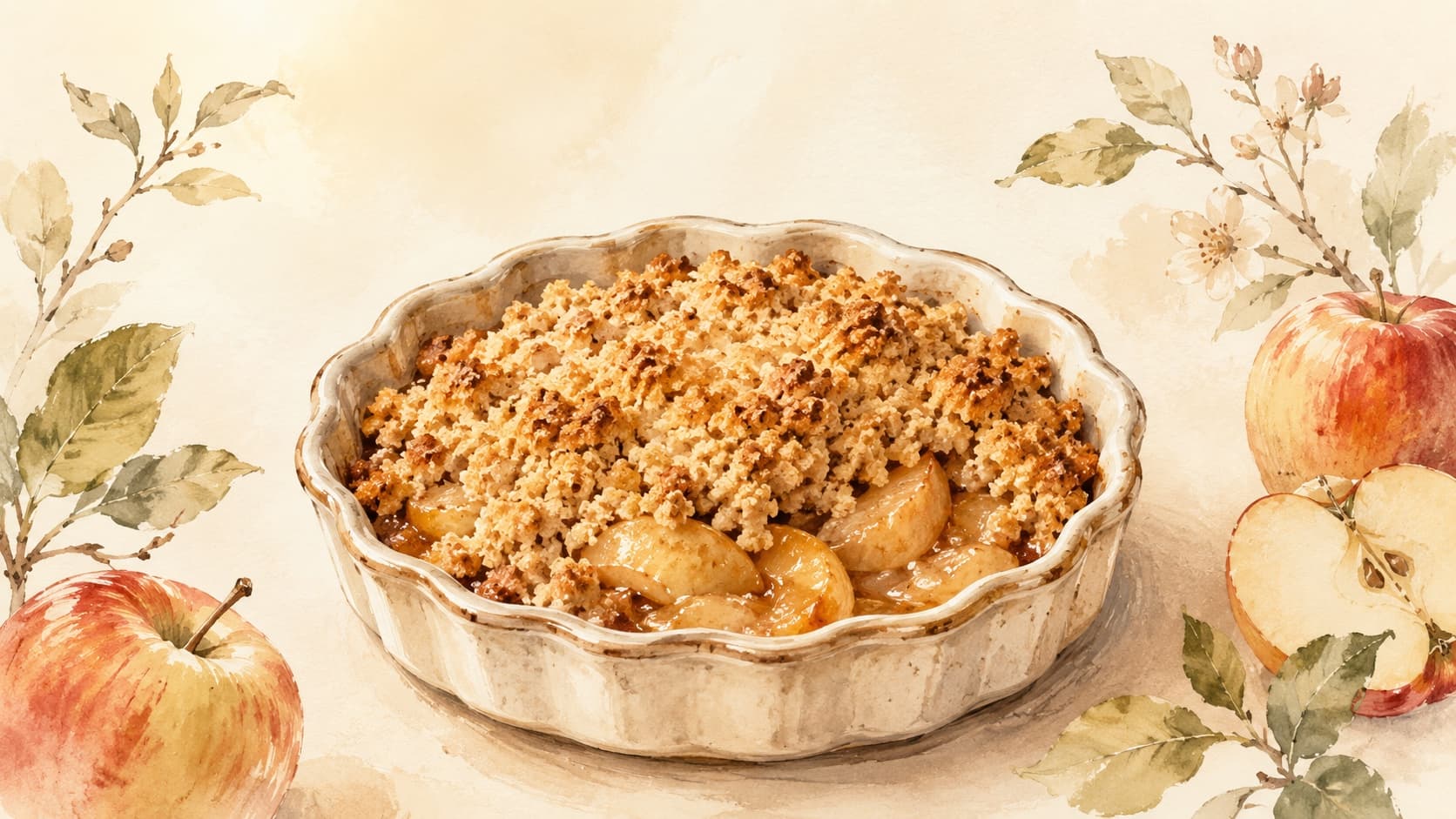
Apple crumble layers tender spiced apples beneath a crisp, buttery topping.
Contents (5 sections)▾
Ingredients
- 4 medium apples, peeled and diced
- 100g sugar
- 1 tsp cinnamon
- 150g plain flour
- 75g unsalted butter, softened
- 50g rolled oats
- 1 tsp vanilla extract
- Pinch of salt
Steps
Preheat the oven to 190°C (375°F).
In a bowl, mix diced apples, sugar, and cinnamon. Place in a baking dish.
In another bowl, combine flour, oats, salt, and butter until crumbly.
Spread the crumble mixture over the apples evenly.
Bake for 20 minutes until golden and bubbling.
Tools you'll want
Why this works
Apple crumble succeeds due to a balance of textures and flavors. The tender apples provide moisture and sweetness, while the crisp topping offers contrast. The baking process caramelizes (browns the sugars with heat until they taste deeper and slightly toffee-like) the natural sugars in the apples, creating depth. A 2:1 ratio of flour to sugar in the topping ensures it browns evenly. Butter contributes richness and promotes browning through the Maillard reaction (the heat-driven reaction between proteins and sugars that turns food golden-brown and tasty). Precise oven temperature, at 180°C, facilitates even cooking without burning.
Common mistakes
Wrong apple variety.
Target: Firm acidic apples (Bramley, Granny Smith, Braeburn) — NOT Red Delicious or Gala.
Why it matters: Soft sweet apples collapse into mush and release excess water — base becomes soggy. Firm acidic apples hold their shape and balance the sweet topping.
What to do: Buy specifically Bramley or Granny Smith. Mix varieties for complexity if available.
Workarounds:
- Only soft apples → toss with 1 tbsp cornstarch to absorb released water.
Warm butter in the topping.
Target: Cold butter, cubed, rubbed into flour with cool fingertips until pea-sized chunks remain.
Why it matters: Warm butter melts and coats the flour — topping becomes dense like pastry instead of crumbly. Cold butter keeps the crumble loose and bakes into distinct crisp pieces.
What to do: Butter from fridge, work quickly. If butter softens, refrigerate the mixture 10 min before using.
Workarounds:
- Hot kitchen → use a pastry cutter instead of fingertips; less heat transfer.
Overworking the topping.
Target: Visible butter pieces the size of peas or smaller — uneven texture preferred.
Why it matters: Over-worked topping = uniform paste that bakes as cake. Uneven mixture = crumbly bakery-style topping with crisp surface and slightly tender interior.
What to do: Stop rubbing when pea-sized chunks remain. Don't aim for uniform crumb.
Workarounds:
- Over-worked → spread thinly on tray, freeze 20 min, crumble into chunks before topping.
Baking dish too deep.
Target: Apple layer 2-3 cm thick, even surface. Wide shallow dish > narrow deep dish.
Why it matters: Deep apple pile = soggy bottom, undercooked center, topping doesn't crisp. Shallow layer = even cooking, full crispness.
What to do: Choose a wider baking dish. Spread apples evenly.
Workarounds:
- Only deep dish available → bake longer at lower heat (165°C) to let center cook through.
Oven temperature too low.
Target: 180°C preheated. Bake until top is golden and apples are bubbling at edges.
Why it matters: Lower temp doesn't develop the Maillard crust on the topping — pale and gummy. The browning is part of the dish's identity.
What to do: Preheat fully. Test crumble color at 30 minutes; should be deeply golden.
Workarounds:
- Top not browning enough → finish under broiler (the oven's overhead high-heat element, called the grill in the UK) 1-2 min; watch closely.
What to look for
Select apples that balance sweetness and acidity, such as Bramley or Granny Smith. Look for firm flesh and intact skin. The topping should resemble coarse breadcrumbs, with pea-sized butter pieces visible. During baking, the top should turn golden brown and the edges should bubble slightly. A skewer inserted into the center should meet little resistance, indicating tender apples.
Chef's view
Experienced chefs understand the importance of ingredient choice and technique. They often use a mix of apple varieties to achieve complexity. Some chefs add a pinch of salt to the topping to enhance flavor contrast. The topping should be scattered rather than pressed, allowing for an airy, crumbly texture. Baking on the middle rack ensures even heat distribution. Finally, resting the crumble for 10 minutes post-bake allows flavors to meld and topping to firm up.
<!-- beginner-glossed v1 -->Get the essays in your inbox — free
Weekly notes on flavor, fermentation, and food history — the writing behind the Atlas of Flavor. No spam; unsubscribe anytime.