
Anmitsu
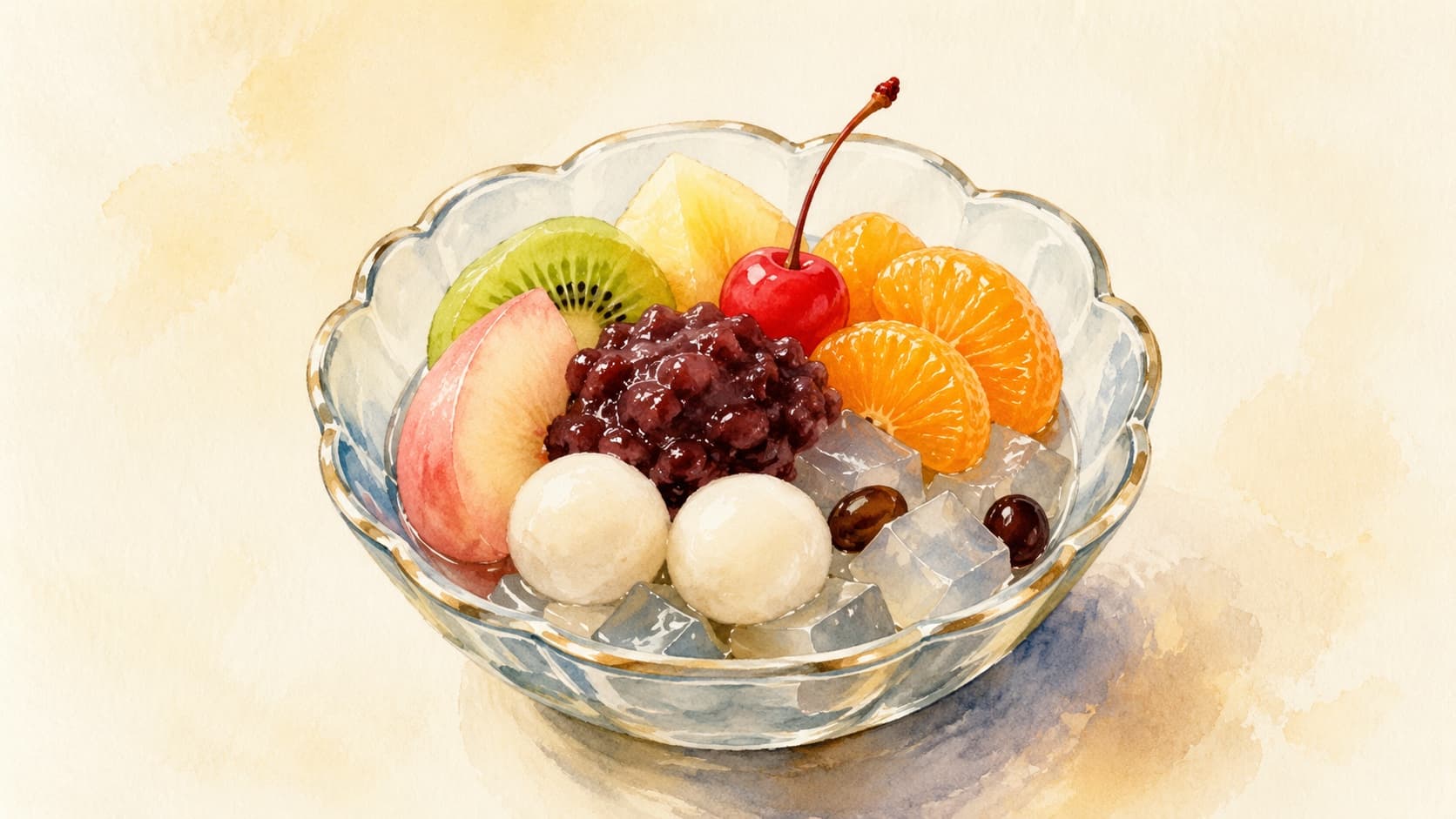
Anmitsu is a traditional Japanese dessert that harmonizes various textures and flavors through a careful assembly of ingredients.
Contents (5 sections)▾
Ingredients
- 100g agar-agar
- 800ml water
- 200g red bean paste (anko)
- 200g diced seasonal fruits (peaches, strawberries, etc.)
- 100ml kuromitsu (black sugar syrup)
- 200ml shiratama (sweet rice dumplings)
- 1 tablespoon matcha powder
- Pinch of salt
Steps
Dissolve agar-agar in 800ml water and bring to a boil.
Simmer for 5 minutes, stirring occasionally.
Pour mixture into a mold and let it set in the refrigerator for at least 1 hour.
Cut set agar into cubes and arrange on a serving plate with fruits and shiratama.
Drizzle with kuromitsu and sprinkle with matcha powder before serving.
Tools you'll want
Why this works
Anmitsu combines contrasting textures. The firm agar-agar jelly (a plant-based setting agent made from seaweed — like gelatin, but it sets firmer and stays firm at room temperature) provides stability against the soft fruits and chewy shiratama. Each element brings a unique flavor, balanced by the sweetness of kuromitsu.
Temperature control is crucial. Agar-agar must reach boiling to activate its gelling properties. Cooling allows it to set properly, creating a smooth and firm texture. The ratio of water to agar-agar affects the jelly's firmness.
Serving chilled enhances freshness. Cold ingredients amplify the dessert's refreshing qualities, especially in warmer months. Using seasonal fruits ensures optimal flavor and texture.
Common mistakes
Not boiling agar-agar long enough.
Target: Bring agar-agar + water to a full boil for 2 minutes minimum while stirring constantly.
Why it matters: Agar-agar dissolves only at boiling temperature. Insufficient boiling produces grainy texture with undissolved agar particles. The 2-minute boil ensures complete dissolution.
What to do: Whisk agar into cold water, bring to a boil, REDUCE to medium heat, simmer 2 minutes while stirring. Then pour into mold.
Workarounds:
- For double-check, lift the spoon — should look completely uniform, no visible grains.
Wrong agar-to-water ratio.
Target: 4 g agar powder per 500 ml water (about 1% by weight). Produces firm but tender kanten (the Japanese name for agar jelly).
Why it matters: Too much agar produces hard, brittle jelly. Too little doesn't set firmly enough to slice. The 1% ratio is the firm-but-pleasant sweet spot.
What to do: Measure agar precisely. Different brands have slightly different strengths — calibrate to your brand.
Workarounds:
- For softer jelly (anmitsu-style), use 3 g per 500 ml.
- For firmer (for sculpting), use 5 g per 500 ml.
Pouring hot agar into a cold container.
Target: Let the boiled agar cool to about 60 °C BEFORE pouring into mold/container.
Why it matters: Very hot agar poured into cold ceramic or glass can crack the container. Cooling to 60 °C is safer.
What to do: Boil → rest 5 minutes → pour into mold → refrigerate.
Workarounds:
- Use silicone molds if you must pour hot — they handle thermal shock (the stress of a sudden temperature change) better.
Skipping the kuromitsu syrup.
Target: Make kuromitsu (black sugar syrup) from scratch: 100 g brown sugar + 100 ml water, simmer 5 minutes until reduced and slightly thickened.
Why it matters: Kuromitsu is the defining flavor of anmitsu. Honey or maple syrup produce different (and weaker) sweetness profiles.
What to do: Source unrefined Japanese brown sugar (kokuto, kurozato) if possible. Standard brown sugar works as fallback.
Workarounds:
- For deeper flavor, add 1 tsp grated ginger to the simmering syrup.
Wrong fruit choices.
Target: Seasonal fresh fruits — strawberry, kiwi, melon, mandarin. Plus traditional ingredients: anko (sweet red bean paste), shiratama (mochi balls).
Why it matters: Anmitsu's identity is the combination of agar jelly + sweet syrup + fruit + anko + mochi. Each element provides texture and flavor variety. Missing the anko or mochi makes it "fruit jelly" — not anmitsu.
What to do: Source all components. Mochi balls (shiratama) can be made fresh from shiratamako flour (a fine glutinous sweet-rice flour) + water.
Workarounds:
- No anko? Substitute with a small scoop of vanilla ice cream — different but valid modern variation.
What to look for
- Clear, firm jelly that holds its shape.
- Brightly colored, fresh fruits.
- A glossy finish from the kuromitsu drizzle.
- A balanced presentation of textures on the plate.
- A pleasant aroma from the fresh ingredients.
Chef's view
Anmitsu has roots in Japanese culture, dating back to the Meiji era. It reflects the philosophy of seasonal eating, emphasizing fresh, local ingredients. Each component plays a role, creating a harmony of flavor and texture.
The dessert is often enjoyed in summer, providing relief from the heat. Its visual appeal makes it a favorite for gatherings. Understanding the balance of ingredients is essential for mastering this classic dish.
<!-- beginner-glossed v1 -->Get the essays in your inbox — free
Weekly notes on flavor, fermentation, and food history — the writing behind the Atlas of Flavor. No spam; unsubscribe anytime.