
Aglio Olio Peperoncino
This classic Italian dish highlights the balance of garlic and heat through precise technique.
Contents (5 sections)▾
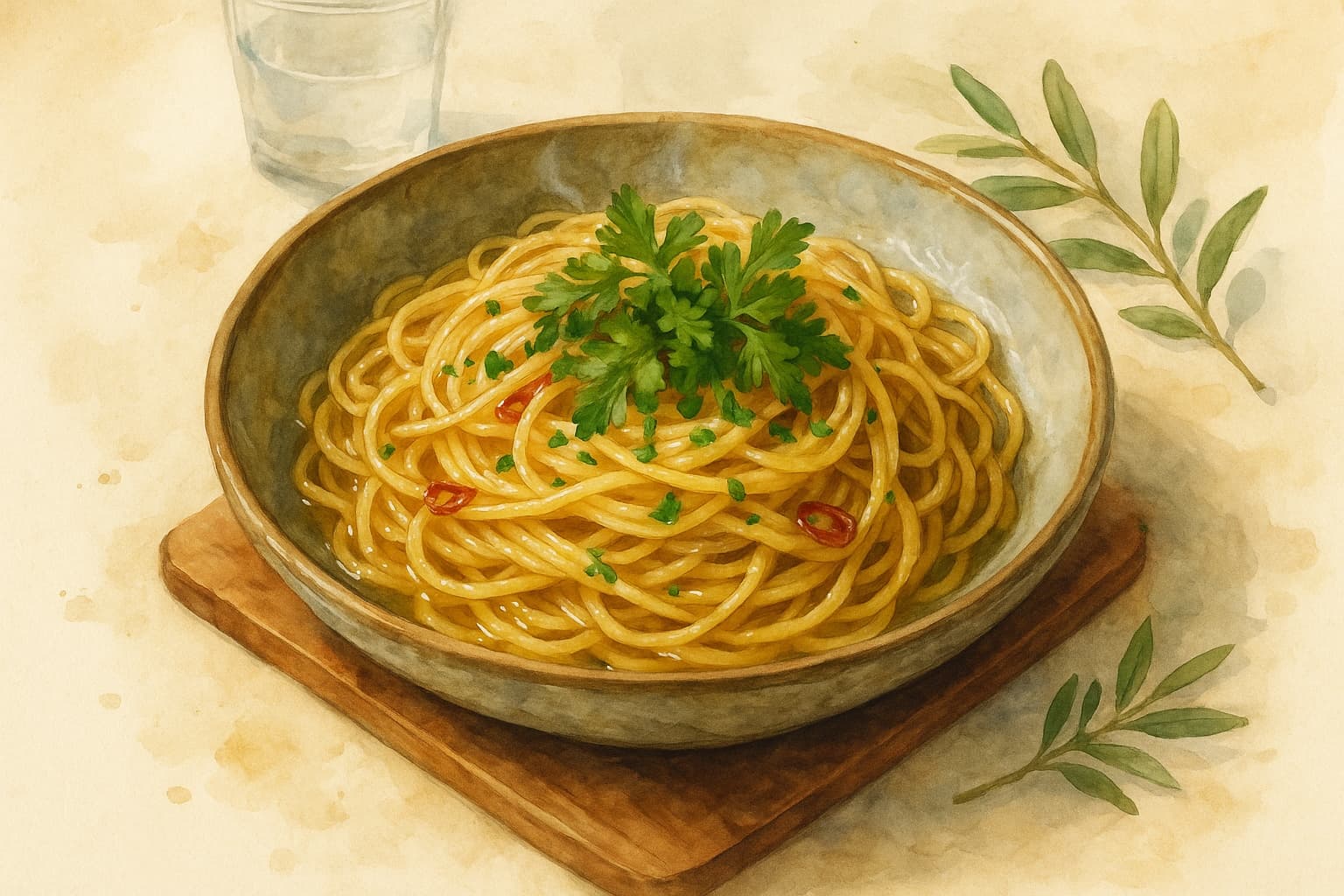
Ingredients
- 400g spaghetti
- 100ml extra virgin olive oil
- 6 cloves garlic, thinly sliced
- 2 tsp red pepper flakes
- Salt, to taste
- Fresh parsley, chopped (for garnish)
- Grated Parmesan cheese (optional)
- Zest of 1 lemon (optional)
Steps
Boil salted water and cook spaghetti until al dente.
In a wide skillet, heat olive oil over medium heat.
Add sliced garlic and red pepper flakes; sauté until garlic is golden.
Drain spaghetti, reserving some pasta water, and add to skillet.
Toss spaghetti with oil, garlic, and pepper, adding reserved pasta water as needed.
Garnish with parsley, lemon zest, and Parmesan if desired.
Tools you'll want
- · Digital kitchen scale (gram precision)
Why this works
Aglio Olio Peperoncino relies on the infusion (slowly steeping an ingredient in warm oil so its flavor seeps out into it) of garlic flavor into oil. Heating oil to medium allows garlic to release its essence without burning. The balance of oil and pasta creates a smooth sauce, coating each strand. Al dente (cooked so the pasta still has a slight firm bite at the center) spaghetti absorbs flavors, enhancing the dish's overall taste.
The use of red pepper flakes provides heat, which complements the garlic's richness. Adjusting salt levels is crucial; it enhances flavors without overwhelming them. The optional lemon zest brightens the dish, adding a refreshing contrast to the savory garlic.
Common mistakes
Burning the garlic.
Target: Garlic sliced thin, infused into cold oil and brought up SLOWLY over medium-low heat — pale golden, never dark brown.
Why it matters: Burnt garlic turns acrid and bitter — once it goes dark, the entire dish is ruined. Aglio e olio's flavor is built ENTIRELY on the gentle infusion of garlic into oil; no amount of pasta water hides burnt garlic.
What to do: Start garlic in COLD oil, not hot. Bring up gradually over medium-low. Pull from heat the moment garlic reaches pale golden.
Workarounds:
- Just barely burnt → reduce heat and add a splash of pasta water immediately. Marginal save.
- Truly burnt → start over with fresh oil and garlic. Cheap insurance.
Wrong olive oil.
Target: Good extra-virgin olive oil. Aglio e olio's flavor is 50 % oil — don't economize.
Why it matters: With only 4 ingredients (pasta, oil, garlic, pepper/parsley), each ingredient is exposed. Bland or rancid oil produces bland or rancid pasta. The dish exists to showcase good oil.
What to do: Italian or Spanish single-estate EVOO. Smell test before using — should smell green, peppery, slightly bitter.
Workarounds:
- For deeper flavor, use a peppery Tuscan EVOO.
- For milder, use a Ligurian EVOO.
Not enough garlic.
Target: A LOT — 6+ cloves per portion. Sliced thin (NOT minced).
Why it matters: Aglio e olio is "garlic and oil" — the garlic is the dish. Most home versions are timid. Thin slices allow the oil to extract flavor while maintaining textural identity.
What to do: Slice garlic on a mandoline (a flat tool with a sharp blade that shaves food into thin, even slices) or with a very sharp knife. Aim for 1 mm slices — visible flakes, not minced paste.
Workarounds:
- For sweeter flavor, smash garlic cloves and use whole, removing before plating (oil infusion only).
- For an even more aggressive version, use 8 cloves and don't remove any.
Skipping the pasta water emulsification (whisking or swirling oil and starchy water together into one creamy, unified sauce).
Target: Add 1/2 cup hot starchy pasta water to the garlic-oil pan, swirl vigorously to form a milky emulsion BEFORE adding pasta.
Why it matters: Oil + pasta water + starch + agitation = emulsified sauce that clings to pasta. Without this step, the oil runs off the pasta and pools at the bottom of the plate.
What to do: Reserve 1 cup pasta water before draining. Add to pan with garlic-oil. Swirl/whisk until milky and unified.
Workarounds:
- For more emulsion stability, cook pasta in less water than usual — increases starch concentration.
Adding chili at the wrong time.
Target: Red chili flakes added with the garlic in COLD oil. Heat extracts flavor and color over the gentle infusion.
Why it matters: Chili flakes added at the end taste raw and acrid. Infused with the garlic, they release their capsaicin (the natural compound in chilies that makes them taste hot) and color into the oil for an integrated heat.
What to do: 1/2 tsp chili flakes per portion. Add with the garlic from the start.
Workarounds:
- Fresh chili? Slice thin, add at the same time. More heat, less complexity.
- For chili-averse, use just a pinch — even minimal chili adds dimension.
Skipping the parsley.
Target: Generous handful of flat-leaf (Italian) parsley, chopped, stirred in OFF heat at the end.
Why it matters: Parsley adds freshness that cuts the oil-garlic richness. Without it, the dish reads as heavy. Curly parsley doesn't work — too rough textured.
What to do: Have parsley ready. Add OFF heat, after the emulsion is set, before plating.
Workarounds:
- No parsley? Fresh basil + a squeeze of lemon approximates the freshness.
- For deeper finish, finish with toasted breadcrumbs (pangrattato) — adds texture without dairy.
What to look for
- Golden-brown garlic slices, not dark.
- Spaghetti that clings to the sauce, not swimming in oil.
- A vibrant color contrast from the parsley and lemon zest.
- Aromatic garlic and chili scents wafting from the skillet.
- A glossy coating on the pasta, indicating proper emulsification.
Chef's view
Aglio Olio Peperoncino is Italian culinary simplicity. It showcases the beauty of few ingredients coming together to create a complex flavor. Originating from Naples, this dish reflects the Italian ethos of using quality ingredients to achieve maximum flavor.
The technique emphasizes precision and attention to detail. Each step, from oil temperature to pasta cooking time, is vital. This dish is not just a meal; it is a celebration of Italian culture and the joy of cooking with love and care.
<!-- beginner-glossed v1 -->Get the essays in your inbox — free
Weekly notes on flavor, fermentation, and food history — the writing behind the Atlas of Flavor. No spam; unsubscribe anytime.